
Beautiful Plants For Your Interior
Beautiful Plants For Your Interior
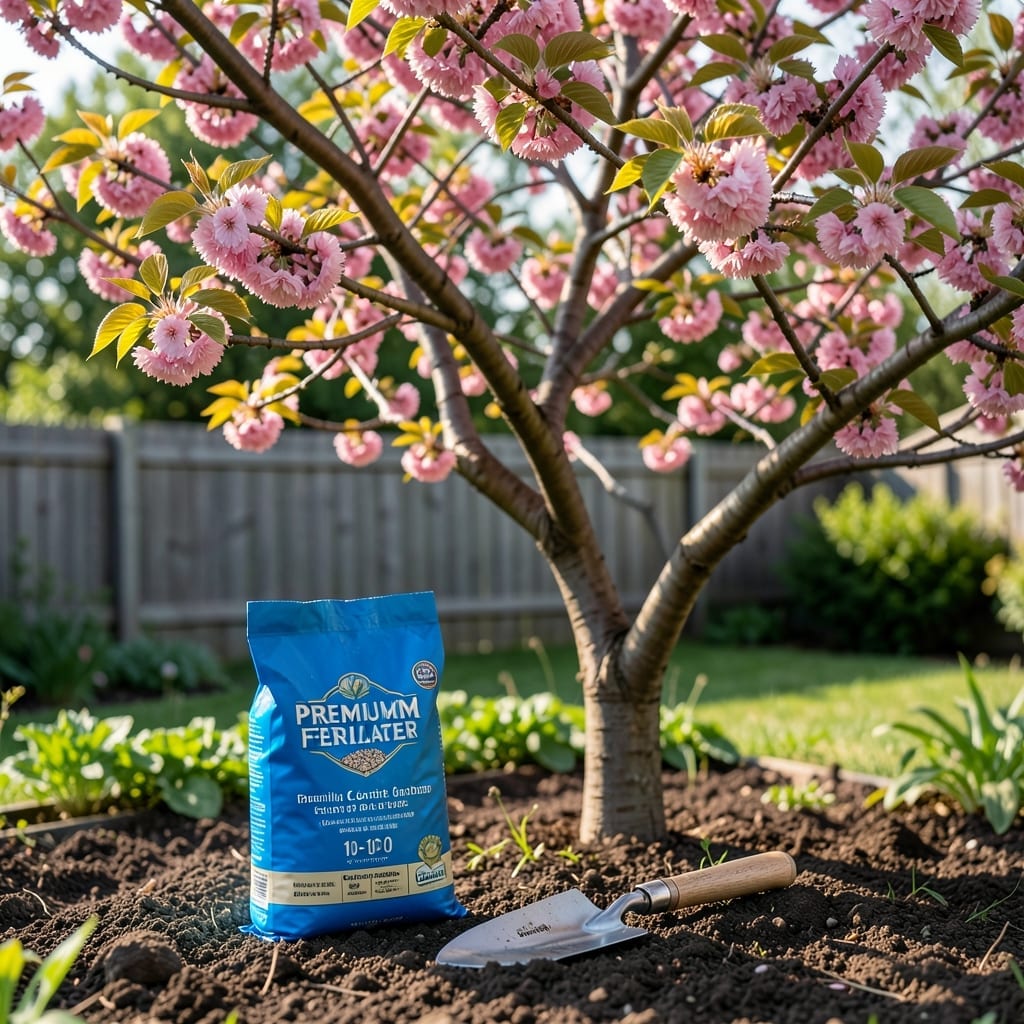
A lush, blooming cherry tree is the crown jewel of any garden, but achieving those vibrant spring flowers requires more than just wishful thinking. The 🌸 Flowering Cherry Tree needs the right nutrients at the right time.
Proper fertilization can mean the difference between a lackluster display and a breathtaking burst of color. I’ve seen firsthand how the correct approach transforms these trees from ordinary to extraordinary.
Discover the simple yet powerful strategies that will help your cherry tree thrive. With just a little know-how, you’ll be rewarded with the most stunning blooms your neighborhood has ever seen.
Choosing the right fertilizer for your flowering cherry tree is the first step toward those stunning spring blooms. I always recommend starting with a balanced NPK ratio, like 10-10-10, to support overall tree health and vibrant flowers.
Whether you prefer organic options like compost or bone meal, or synthetic fertilizers for quick results, each has its place. The key is matching the fertilizer type to your tree’s specific needs and the growing season. 🌸
| Fertilizer Type | NPK Ratio | Best For | Season |
|---|---|---|---|
| Balanced Slow-Release | 10-10-10 | Overall health | Spring, Fall |
| High-Phosphorus | 5-10-5 | Bloom boost | Early Spring |
| Organic Compost | Varies | Soil improvement | Year-round |
| Liquid Bloom Booster | 7-9-5 | Quick color | Spring |
For spring feeding, I love using a high-phosphorus fertilizer to give my cherry trees that extra boost for flower production. Phosphorus is the middle number in the NPK ratio and is crucial for blooming.
A balanced slow-release fertilizer works wonders throughout the growing season. It provides a steady supply of nutrients, which prevents the feast-or-famine cycle that can stress your tree.
Don’t overlook organic options like compost or worm castings. They improve soil structure while providing gentle, long-term nutrition. I mix compost into the soil around my trees every spring.
Liquid fertilizers are great for a quick pick-me-up, especially if your tree looks a bit lackluster. They’re easily absorbed and can give your cherry tree an almost immediate boost.
Remember, the application method matters as much as the fertilizer type. Granular fertilizers are best worked into the top few inches of soil, while liquids can be applied as a soil drench.
Always water your tree before and after fertilizing to prevent root burn. This helps the nutrients move into the soil where the roots can access them.
If you’re unsure about your soil’s nutrient levels, I recommend doing a soil test. This takes the guesswork out of fertilizing and helps you choose the perfect product for your specific conditions.
With the right fertilizer and proper timing, your flowering cherry tree will reward you with the most spectacular display of blooms each spring. 🌿
Timing your cherry tree fertilization correctly is crucial for those spectacular spring blooms. I always aim for early spring, just as the buds begin to swell but before they open. This gives the tree nutrients when it needs them most.
For established trees, I apply fertilizer every 6-8 weeks during the growing season. Young trees benefit from lighter, more frequent applications to support their rapid growth. 🌸
The application method matters as much as timing. For granular fertilizers, I spread them evenly around the tree’s drip line, then lightly work them into the top inch of soil.
Liquid fertilizers are best applied as a soil drench. I use a watering can to distribute them evenly around the root zone, making sure to avoid the trunk itself.
Always water thoroughly before and after fertilizing. This prevents root burn and helps nutrients penetrate the soil where roots can access them easily.
Remember that morning applications are ideal. This allows the fertilizer to soak in before the heat of the day and reduces the risk of evaporation or runoff. 🌿