
Beautiful Plants For Your Interior
Beautiful Plants For Your Interior
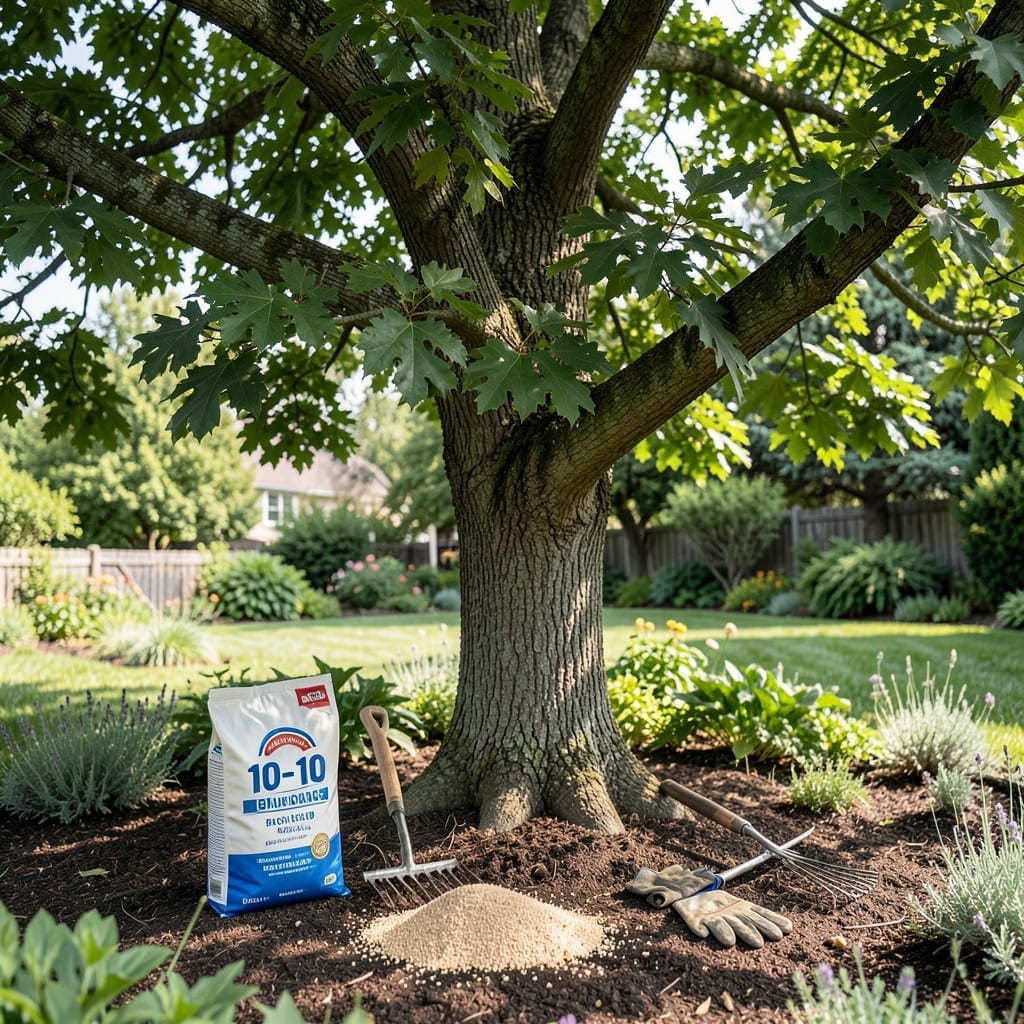
Using 10-10-10 fertilizer can transform your 🌳 Tree, but timing and method are everything. This balanced blend delivers equal parts nitrogen, phosphorus, and potassium to support overall health.
I’ve seen firsthand how proper application leads to stronger roots, lush foliage, and better resistance to disease. Whether your Tree is young or mature, getting this right makes a noticeable difference.
Discover the simple yet effective steps to fertilize your Tree for optimal growth. Let’s get started on giving your landscape the boost it deserves.
Timing is everything when fertilizing trees with 10-10-10 fertilizer. I recommend applying it in early spring just as new growth begins, and again in early summer for sustained nourishment. Avoid late summer or fall applications, as this can trigger new growth that won’t harden off before winter.
The balanced NPK ratio of 10-10-10 provides equal parts nitrogen, phosphorus, and potassium, which supports root development, foliage growth, and overall tree health. This makes it ideal for most tree varieties, from young saplings to mature specimens.
| Season | Action | Dosage |
|---|---|---|
| Spring | Full feeding | 2 lbs per 100 sqft |
| Early Summer | Light feeding | 1 lb per 100 sqft |
| Late Summer | Avoid | None |
| Fall/Winter | Skip | None |
For application methods, I prefer granular fertilizer for its ease of use and slow-release properties. Spread it evenly over the root zone, which extends about 1.5 times the width of the tree’s canopy. Be sure to water thoroughly after application to help the nutrients soak into the soil.
Liquid fertilizers work well too, especially for quick nutrient uptake. They’re ideal for giving your trees an immediate boost, but they require more frequent application. I find them particularly useful for young trees or those showing signs of nutrient deficiency.
The dosage depends on your tree’s size. For newly planted trees, use about 1/2 pound of 10-10-10 per inch of trunk diameter. For mature trees, increase this to 1 pound per inch. Always measure the canopy area to ensure you’re applying the right amount.
Soil conditions play a crucial role in how effective your fertilizer will be. I always recommend testing your soil pH first. Trees generally prefer a pH between 6.0 and 7.0. If your soil is too acidic or alkaline, you may need to amend it before fertilizing.
After applying fertilizer, water deeply to help dissolve the granules and carry the nutrients down to the root zone. A good rule of thumb is to provide about 1 inch of water immediately after application. This ensures the fertilizer reaches the roots where it’s needed most.
Remember that more isn’t better when it comes to fertilizer. Over-application can lead to nutrient burn or environmental runoff. Stick to the recommended rates and always water thoroughly after application to prevent these issues.
Finally, consider the tree species when planning your fertilization schedule. While 10-10-10 works well for most trees, some may have specific needs. For example, acid-loving trees like oaks or pines might benefit from a specialized fertilizer in addition to your regular 10-10-10 applications.
With proper timing, method, and dosage, your trees will thrive with the balanced nutrition that 10-10-10 fertilizer provides 🌳
Your trees often show clear signs when they need a nutrient boost. Look for yellowing leaves, stunted growth, or thinning canopy—these are classic indicators of deficiency. A simple soil test can confirm what’s missing.
I always check for poor leaf color or slow branch growth before reaching for fertilizer. These visual cues often appear before more serious problems develop. Catching them early makes treatment much more effective.
One of the most common mistakes I see is over-fertilizing. More isn’t better with 10-10-10—excess nutrients can burn roots and harm beneficial soil microbes. Always follow the recommended dosage for your tree’s size.
Another frequent error is improper placement. Many people apply fertilizer too close to the trunk. Instead, spread it over the entire root zone, which extends well beyond the canopy’s drip line.
Timing mistakes can also reduce effectiveness. Never fertilize during drought conditions or when heavy rain is forecasted. The nutrients need time to soak into the soil.
For young trees, be especially cautious. Their root systems are still developing and can be easily overwhelmed. I recommend using half the standard dose for the first year or two.
By watching for these signs and avoiding common pitfalls, you’ll get the most from your 10-10-10 fertilizer applications 🌳