
Beautiful Plants For Your Interior
Beautiful Plants For Your Interior
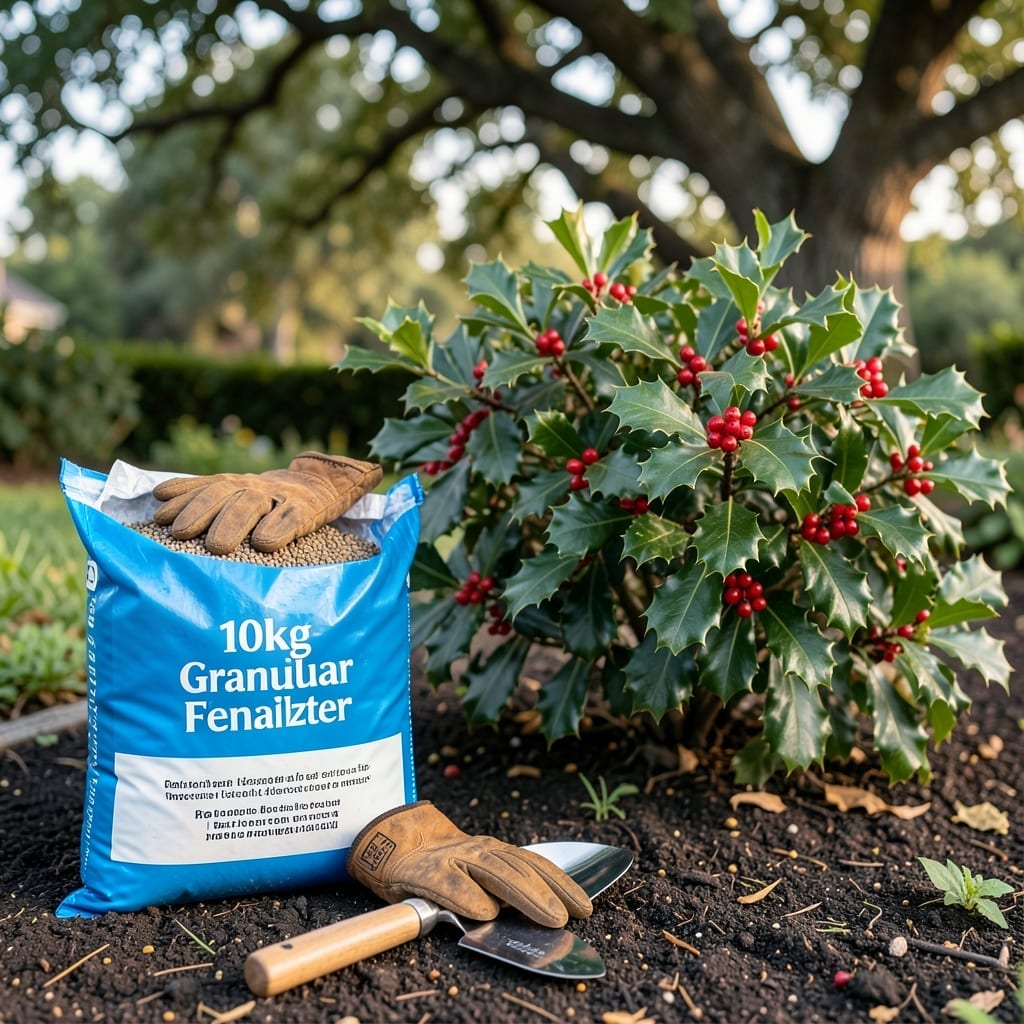
Holly plants flourish with the right care, but many gardeners unknowingly use fertilizers that do more harm than good. The 🌿 holly thrives in acidic conditions, so choosing the wrong formula can leave your shrubs struggling.
I’ve seen firsthand how the right fertilizer transforms lackluster hollies into vibrant, healthy plants. It’s not just about feeding them—it’s about feeding them correctly with the right balance and timing.
Let me walk you through the best approaches to keep your holly looking its best, from soil prep to seasonal feeding schedules that actually work.
Holly plants are acid-loving shrubs that demand specific nutrients to thrive. The wrong fertilizer can turn your vibrant holly into a sad, yellowing bush. I always recommend starting with a soil pH test before feeding.
These plants prefer a pH between 5.0 and 6.0. If your soil is alkaline, you’ll need to amend it first. Now, let’s compare the best fertilizer options to keep your holly healthy and lush.
| Fertilizer Type | Best For | pH Impact | Application Frequency |
|---|---|---|---|
| Sulfur-Coated Urea | Quick acidification | Lowers pH | Every 6 weeks |
| Ammonium Sulfate | Immediate nitrogen | Strongly acidic | Spring & fall |
| Cottonseed Meal | Organic feeding | Mildly acidic | Every 8 weeks |
| Iron Sulfate | Iron deficiency | Lowers pH | As needed |
For fast results, I love using ammonium sulfate. It delivers quick nitrogen while acidifying the soil. Just be careful—it’s strong, so follow package instructions exactly.
Cottonseed meal is my go-to for organic gardeners. It slowly releases nutrients and gently acidifies the soil. Perfect for those who prefer natural solutions.
If your holly shows yellow leaves with green veins, it’s likely an iron deficiency. A dose of iron sulfate can fix this while also lowering soil pH.
For long-term soil health, I recommend mixing sulfur-coated urea into the soil at planting. It provides steady nitrogen release while maintaining acidic conditions.
Remember, more isn’t better with fertilizers. Over-application can burn roots and damage your holly. Always water thoroughly after applying any fertilizer.
I’ve found that early spring and late fall are the best times to fertilize holly. This supports new growth in spring and helps the plant store nutrients for winter.
For newly planted hollies, wait until you see new growth before fertilizing. This usually takes about 6-8 weeks after planting.
Always choose a slow-release fertilizer for established plants. This prevents nutrient spikes that can stress your holly and provides consistent feeding over time.
Timing is everything when it comes to fertilizing holly plants. I’ve learned that early spring is the best time to start, just as new growth begins to emerge. This gives your holly the nutrients it needs for a strong growing season.
For established plants, I recommend feeding again in late fall, about 6-8 weeks before the first frost. This helps the plant store nutrients for winter and supports root development.
For newly planted hollies, wait until you see new growth before fertilizing. This usually takes about 6-8 weeks after planting. Until then, focus on keeping the soil consistently moist.
I prefer granular fertilizers for holly because they’re easy to apply and provide slow, steady feeding. Just sprinkle them around the drip line of the plant and water thoroughly. Avoid getting fertilizer on the leaves.
Liquid fertilizers work well for a quick boost, especially if your holly looks pale or weak. I use these for correcting deficiencies or giving plants a mid-season pick-me-up. Just follow the package directions carefully.
Remember that less is often more with fertilizers. Over-feeding can lead to leaf burn or excessive growth that’s susceptible to pests. Stick to the recommended rates and frequencies for your specific fertilizer type.
Finally, always water your holly before and after fertilizing. This helps prevent root burn and ensures the nutrients reach the root zone where they’re needed most.