
Beautiful Plants For Your Interior
Beautiful Plants For Your Interior
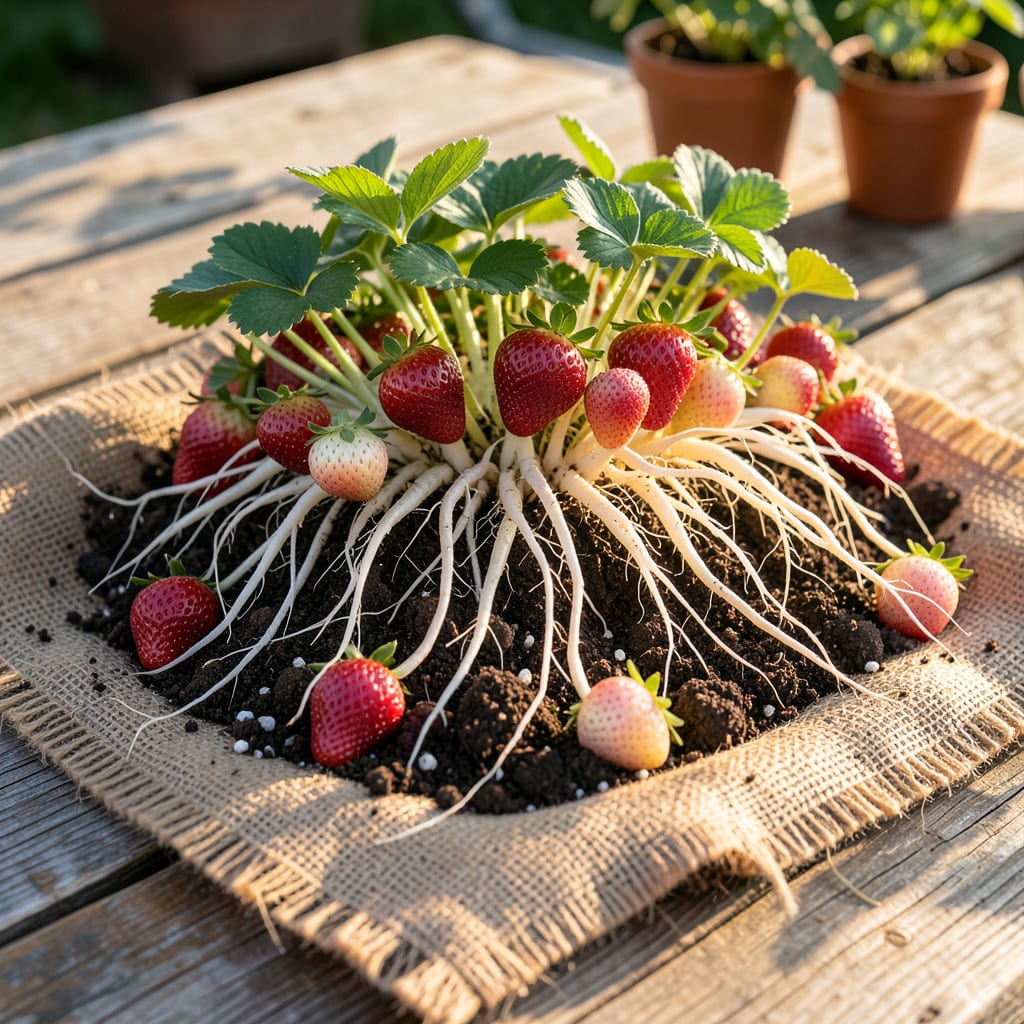
Three tiny bare roots now mean strawberries from June through October. I killed my first batch by planting too deep—learned that roots need to breathe just above soil level.
You’ll get fruit the first year with proper care. These plants produce 2-3 harvests per season, and the flavor beats anything from the store. Simple setup, big rewards.
📚 In This Guide
Here’s the method I’ve used for years to get consistent, productive strawberry plants from bare roots.
Begin by soaking the bare roots in lukewarm water for 1-2 hours to rehydrate them after shipping. This step revives the roots and kickstarts growth. While they soak, inspect each plant carefully—you want firm, white roots with no signs of mold or rot.
Discard any roots that feel mushy or smell foul. I’ve found that even one bad plant can spread disease to others, so it’s better to be ruthless here. After soaking, trim any broken or excessively long roots to about 4-6 inches to encourage fresh growth.
Choose a location with full sun (at least 6-8 hours daily) and well-draining soil. Strawberries hate wet feet, so avoid low-lying spots where water pools. Work the soil to a depth of 12 inches, removing weeds and breaking up clumps.
Mix in 2-3 inches of compost to improve fertility and drainage. If your soil is heavy clay, consider planting in raised beds or containers. I always add a handful of balanced fertilizer (like 10-10-10) to the soil before planting to give the roots an extra boost.
Dig a hole wide enough to spread the roots out naturally—never cram them in. The crown (where the roots meet the stem) should sit just above the soil line. Planting too deep smothers the crown, while planting too shallow exposes roots to drying out.
Fan the roots out in the hole and backfill with soil, pressing gently to remove air pockets. Space plants 12-18 inches apart in rows that are 2-3 feet apart. Water each plant with 1 pint of water immediately after planting to settle the soil and hydrate the roots.
Apply a 2-3 inch layer of straw or pine needle mulch around each plant to retain moisture, suppress weeds, and keep berries clean. Avoid mulching directly against the crown, as this can cause rot. I’ve had great success with straw—it’s lightweight and easy to remove when harvesting.
If frost threatens in early spring or late fall, add an extra layer of mulch for protection. Everbearing strawberries produce fruit in cycles, so protecting them from temperature swings ensures a longer harvest. Monitor soil moisture—keep it consistently damp but not soggy during the first few weeks.
After planting, feed with a balanced liquid fertilizer every 2-3 weeks during the growing season to support the heavy fruiting habit of everbearing varieties. Reduce watering slightly once plants are established, but never let the soil dry out completely.
Remove runners as they appear to direct energy toward fruit production instead of plant spread. You’ll see the first flowers in about 4-6 weeks. Pinch off early blooms to encourage stronger root development. Once fruit forms, harvest when berries are fully red and slightly soft to the touch.
Here are the key details that make all the difference for healthy plants.
Soaking Success: Don’t rush the 1-2 hour soak in Step 1. Lukewarm water revives roots faster than cold, but avoid hot water which can damage the plants. I learned this the hard way after trying to speed up the process.
Sunlight Strategy: The 6-8 hours of daily sun in Step 2 is non-negotiable for everbearing varieties. If your garden doesn’t get this much sun, consider containers you can move to follow the sunlight throughout the day.
Crown Placement: In Step 3, the crown must sit just above soil level. Here’s what nobody tells you—if you bury it even a half inch too deep, the plant will rot. Use a ruler if you need to be precise.
Moisture Management: Those first few weeks are critical. Keep soil consistently damp but not soggy as stated in Step 4. I check moisture by sticking my finger an inch into the soil—if it feels dry, it’s time to water.
Plant in early spring or fall, 4-6 weeks before the last frost or first freeze. This gives roots time to establish before extreme temperatures.
Keep roots moist and cool (32–40°F) in a dark place for up to 1 week. Soak in water for 1–2 hours before planting if they dry out.
Yes! Use a container at least 8–12 inches deep with drainage. Fill with well-draining potting mix and ensure 6+ hours of sunlight daily.
Check for insufficient sunlight, poor soil fertility, or overcrowding. Remove runners and fertilize with a balanced 10-10-10 feed to boost production.
Everbearing produces 2–3 harvests per season, while June-bearing yields one large crop in early summer. Everbearing is great for extended fresh berries!
