
Beautiful Plants For Your Interior
Beautiful Plants For Your Interior
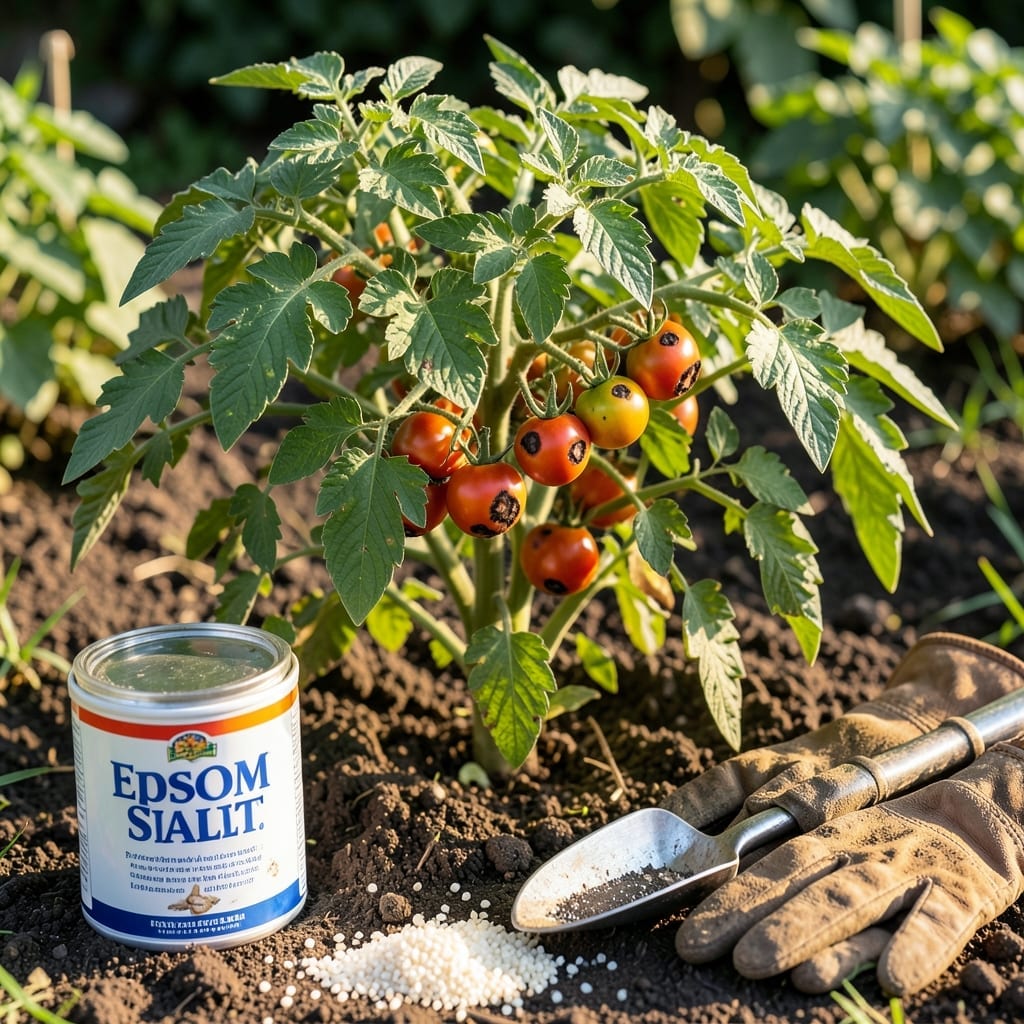
Blossom end rot hit my tomatoes hard last season. The black, sunken spots ruined half my harvest before I figured out the real issue wasn’t disease—it was a calcium deficiency.
Here’s the thing—epsom salt isn’t the direct fix most people think. It’s about understanding how calcium moves through the plant and what actually stops the rot from spreading.
You’ll see results within 7-10 days of proper treatment, with new fruit forming clean and healthy. The method works for peppers and squash too, not just tomatoes.
No complicated setups here, just a simple adjustment to your watering and soil routine that prevents this problem from coming back next year.
Blossom end rot isn’t caused by a pathogen—it’s a physiological disorder triggered by environmental and nutritional imbalances. Here’s what’s really going on in your soil and plants.
The primary culprit is insufficient calcium in the developing fruit. Calcium is a structural component of cell walls, and when plants can’t access enough, the tissue at the blossom end (farthest from the stem) breaks down. This often happens in sandy or acidic soils, where calcium is either scarce or chemically unavailable to roots.
Even if calcium is present, uneven moisture levels disrupt its uptake. Drought stress or overwatering creates a calcium transport bottleneck—roots can’t absorb the nutrient efficiently, and cells in fast-growing fruit collapse. Mulching and drip irrigation help stabilize soil moisture to prevent this.
During heatwaves or fertilizer heavy in nitrogen/phosphorus, tomatoes grow too quickly for calcium to keep pace. The blossom end, the last to receive nutrients, suffers first. Balancing soil fertility with calcium-rich amendments (like gypsum or, yes, Epsom salt in magnesium-deficient cases) can restore equilibrium.
Blossom end rot is fixable with a few targeted steps. Here’s how to address the root causes and prevent future issues.
While Epsom salt (magnesium sulfate) isn’t a direct calcium source, it can improve nutrient uptake. Mix 1 tablespoon of Epsom salt per gallon of water and spray foliage weekly. For a calcium boost, add crushed eggshells or calcium nitrate to the soil. Tip: Test soil pH first—calcium is less available in acidic conditions.
Uneven watering disrupts calcium absorption. Water deeply 1-2 times per week (more in heat) and mulch with straw to retain moisture. Avoid wetting leaves to prevent disease. 💡 Pro tip: Use drip irrigation for consistent soil hydration.
Extreme heat or cold stresses plants, limiting calcium uptake. Shield seedlings with row covers during cold snaps and provide afternoon shade in scorching weather. Apply compost to insulate roots.
Over-fertilizing with nitrogen causes fast, weak growth. Switch to a balanced fertilizer (10-10-10) and avoid overfeeding. ✨ Prevention: Prune suckers to direct energy to fruit, not foliage.
Prevention
New growth should show improvement within 7-10 days of consistent treatment. Existing affected fruit won’t recover, but new tomatoes will form clean and healthy.
Yes! Peppers, squash, and cucumbers also benefit from this method. Use the same 1 tablespoon per gallon ratio for foliage spray on any calcium-deficient plants.
Test your soil first—Epsom salt adds magnesium, not calcium. If magnesium is sufficient, switch to calcium nitrate or crushed eggshells for a direct calcium boost.