
Beautiful Plants For Your Interior
Beautiful Plants For Your Interior
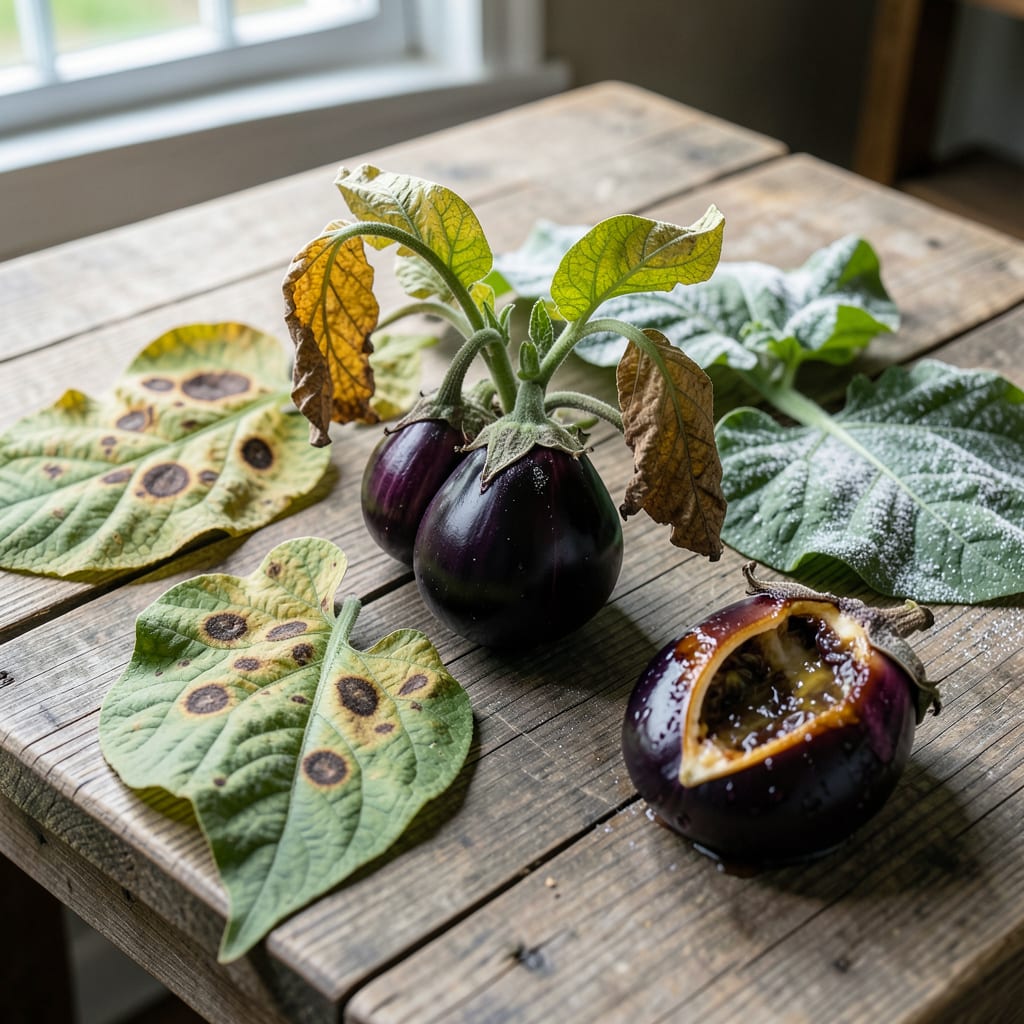
That sinking feeling when healthy eggplant leaves suddenly spot and curl. I’ve lost entire crops to diseases that started as tiny markings—easy to miss until it’s too late.
Early detection changes everything. This guide shows you exactly what to look for: yellowing patterns, unusual growths, or wilting that doesn’t match watering habits. Most issues announce themselves weeks before they spread.
You’ll spot the difference between fungal invaders and bacterial culprits at a glance. Clear images make symptoms unmistakable, and the solutions are simpler than you’d expect—often just a change in watering or airflow.
Works for garden beds, containers, and greenhouse setups. Here’s how to protect your plants.
Eggplant diseases often stem from a mix of environmental, biological, and cultural factors. Understanding the root causes helps prevent outbreaks and keeps your plants thriving. Below are the primary triggers behind common eggplant ailments.
Fungal diseases like Phomopsis blight and Verticillium wilt thrive in warm, humid conditions. Overwatering, poor air circulation, or contaminated soil create ideal breeding grounds. Fungal spores spread via wind, water, or infected tools, entering plants through wounds or natural openings.
Bacteria such as Ralstonia solanacearum (bacterial wilt) and Pseudomonas syringae (bacterial leaf spot) exploit weakened plants. These pathogens often enter through damaged tissues or are introduced via contaminated seeds, water, or gardening equipment. Wet foliage and high temperatures accelerate their spread.
Insects like aphids, whiteflies, and flea beetles don’t just damage plants directly—they also transmit viral diseases such as Tomato Spotted Wilt Virus. Their feeding creates entry points for pathogens, while their movement between plants spreads infections rapidly.
Extreme weather—drought, excessive rain, or temperature swings—weakens eggplants, making them more susceptible to disease. Poor soil drainage leads to root rot, while high humidity encourages fungal growth. Nutrient deficiencies (e.g., calcium or potassium) can also compromise plant immunity.
Overcrowding plants, improper crop rotation, or failing to sanitize tools can introduce or exacerbate diseases. Using infected seeds or transplanting diseased seedlings is another common misstep. Even excessive nitrogen fertilization can promote lush but weak growth, inviting pests and pathogens.
Tackling eggplant diseases early can save your crop. Below are targeted fixes for common issues, paired with prevention tips to keep your plants thriving.
Fix: Remove infected leaves immediately and apply a copper-based fungicide or a homemade mix of 1 tsp baking soda + 1 quart water + a drop of dish soap. Spray every 5–7 days until symptoms fade.
Prevention: Improve airflow by spacing plants 18–24 inches apart. Water at the base (not overhead) to keep foliage dry. 💡 Pro tip: Mulch with straw to prevent soil splash.
Fix: Blast pests off with a strong water spray or use neem oil (mix 2 tbsp oil + 1 gallon water + 1 tsp dish soap). For severe infestations, introduce ladybugs or lacewings as natural predators.
Prevention: Rotate crops yearly and use floating row covers early in the season. 🌡️ Pro tip: Plant trap crops like nasturtiums to lure pests away.
Fix: Remove and destroy infected plants immediately—do not compost them. Solarize soil by covering it with clear plastic for 4–6 weeks to kill bacteria.
Prevention: Use disease-resistant varieties (e.g., ‘Black Beauty’ or ‘Ichiban’). Sterilize garden tools with rubbing alcohol between uses. ✨ Pro tip: Avoid working in wet soil to limit bacterial spread.
Fix: Adjust soil pH to 6.0–6.8 with lime (if too acidic) or sulfur (if too alkaline). Add calcium-rich amendments like crushed eggshells or gypsum to the soil.
Prevention: Maintain consistent moisture—mulch helps! Avoid over-fertilizing with nitrogen, which can block calcium uptake. 🎯 Pro tip: Test soil before planting to catch imbalances early.
Look for white powdery spots, dark circular lesions, or yellowing leaves. Fungal issues often appear on lower leaves first and spread upward.
Remove and destroy infected leaves or plants immediately. Never compost diseased material. Sterilize tools with rubbing alcohol between cuts.
Yes! Improve airflow, water at the base, and rotate crops yearly. Neem oil and baking soda sprays work well for many common issues.
This usually signals a calcium deficiency. Add crushed eggshells to soil and maintain consistent moisture. Test soil pH for best results.
