
Beautiful Plants For Your Interior
Beautiful Plants For Your Interior
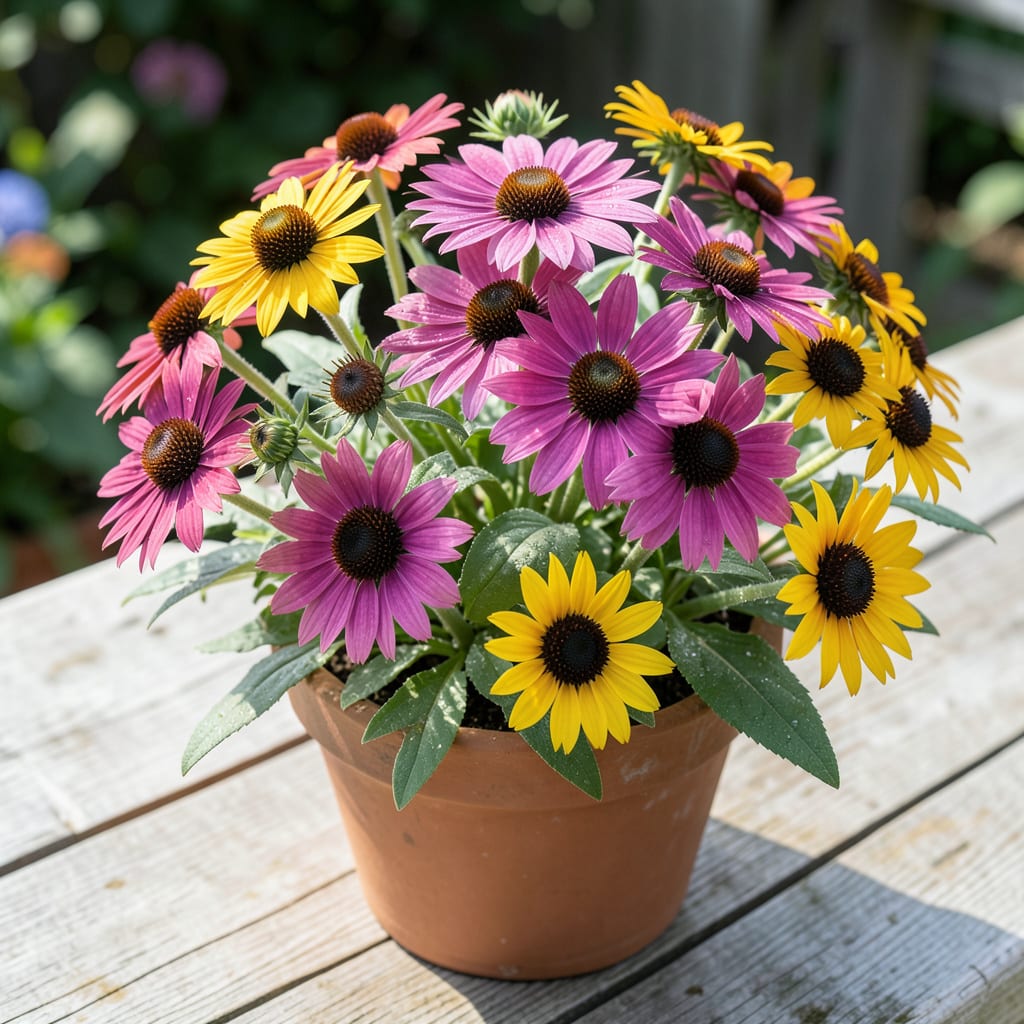
Every summer, my garden explodes with color when these two plants meet. The purple cones of Echinacea stand tall beside the golden faces of Black-Eyed Susans, drawing bees and butterflies like a Magnet.
They share the same needs: full sun, well-draining soil, and moderate water. Plant them together in spring, and by midsummer, you’ll have a low-maintenance pollinator paradise that keeps blooming through first frost.
📚 In This Guide
This pairing creates a pollinator magnet that thrives with minimal effort once established.
Choose a location with full sun exposure—both species require at least 6-8 hours of direct sunlight daily. Echinacea tolerates light afternoon shade, but Black Eyed Susan demands unfiltered sun to maintain its vibrant color and prolific blooming.
Test your soil drainage by digging a 12-inch deep hole and filling it with water. If it drains within 2-3 hours, you’re good to go. Both plants despise soggy roots, so amend heavy clay with compost or sand to improve drainage. Work the soil to a depth of 18 inches, removing rocks and breaking up clumps.
Space Echinacea plants 18-24 inches apart to accommodate their mature width. Black Eyed Susan spreads more aggressively, so plant them 12-18 inches apart. When interplanting, position the Black Eyed Susan slightly forward in the arrangement—its shorter stature creates a natural border.
Dig planting holes twice as wide as the root ball but no deeper. Set each plant so the crown sits slightly above soil level to prevent rot. Backfill with native soil, pressing gently to eliminate air pockets. Water immediately with 1 gallon per plant to settle the soil around the roots.
For the first 2-3 weeks, water deeply 2-3 times per week, providing about 1 inch of water total (including rainfall). The goal is consistent moisture without waterlogging. Check soil by inserting your finger 2 inches deep—if it feels dry, it’s time to water.
After establishment, both plants become remarkably drought-tolerant. You’ll know they’re settled when new growth appears and the soil stays moist for 24-48 hours after watering. At this point, reduce to 1 inch per week, allowing the top 1-2 inches of soil to dry between waterings.
Apply a 2-3 inch layer of organic mulch like shredded bark or straw around the plants, keeping it 3 inches away from stems to prevent rot. This conserves moisture, suppresses weeds, and keeps roots cool during summer heat.
Deadhead spent blooms regularly to encourage continuous flowering. For Echinacea, cut stems back to the next set of leaves. Black Eyed Susan responds well to a light shearing mid-season—cut back by one-third to promote bushier growth and a second wave of blooms. Both plants benefit from a 1-inch layer of compost each spring.
These planting insights will help your garden thrive with minimal effort.
Sunlight Strategy: Both plants need that 6-8 hours of full sun daily, but I’ve found that positioning Black Eyed Susan on the southern side of Echinacea ensures it gets unfiltered light while Echinacea gets a bit of afternoon relief if needed. This mimics their natural growing conditions.
Drainage Test Tip: When you dig that 12-inch hole for the drainage test, make sure to time it precisely—if the water doesn’t drain within 2-3 hours, you’ll need to amend the soil more aggressively. I’ve seen clay-heavy soils take twice as long, which spells trouble for these plants.
Spacing for Success: Stick to the 18-24 inches for Echinacea and 12-18 inches for Black Eyed Susan—crowding them leads to poor air circulation and increased disease risk. I learned this the hard way after losing a patch to powdery mildew.
Watering Wisdom: During those first 2-3 weeks, consistency is key. That 1 inch of water total per week (including rainfall) should be deep and thorough, not frequent and shallow. Check the soil at 2 inches deep—if it’s dry, water immediately. Trust me, these plants will thank you with vibrant blooms.
Yes! They’re perfect companions, both loving full sun and well-drained soil. Their similar care needs and complementary colors create a pollinator-friendly, low-maintenance garden display.
Plant in early spring or fall. This gives roots time to establish before extreme heat or cold. Both are hardy perennials, so they’ll return year after year with proper care.
Try swamp milkweed or bee balm, which tolerate moist conditions. Alternatively, amend soil with compost or sand to improve drainage before planting echinacea or black-eyed Susan.
Check for over-fertilizing (they prefer lean soil), too much shade, or overcrowding. Ensure they get 6+ hours of sun daily and divide clumps every 3-4 years to rejuvenate growth.
They’re generally pest-resistant, but watch for aphids or powdery mildew. Spray with neem oil or encourage ladybugs for natural control. Proper spacing improves airflow to prevent fungal issues.
