
Beautiful Plants For Your Interior
Beautiful Plants For Your Interior
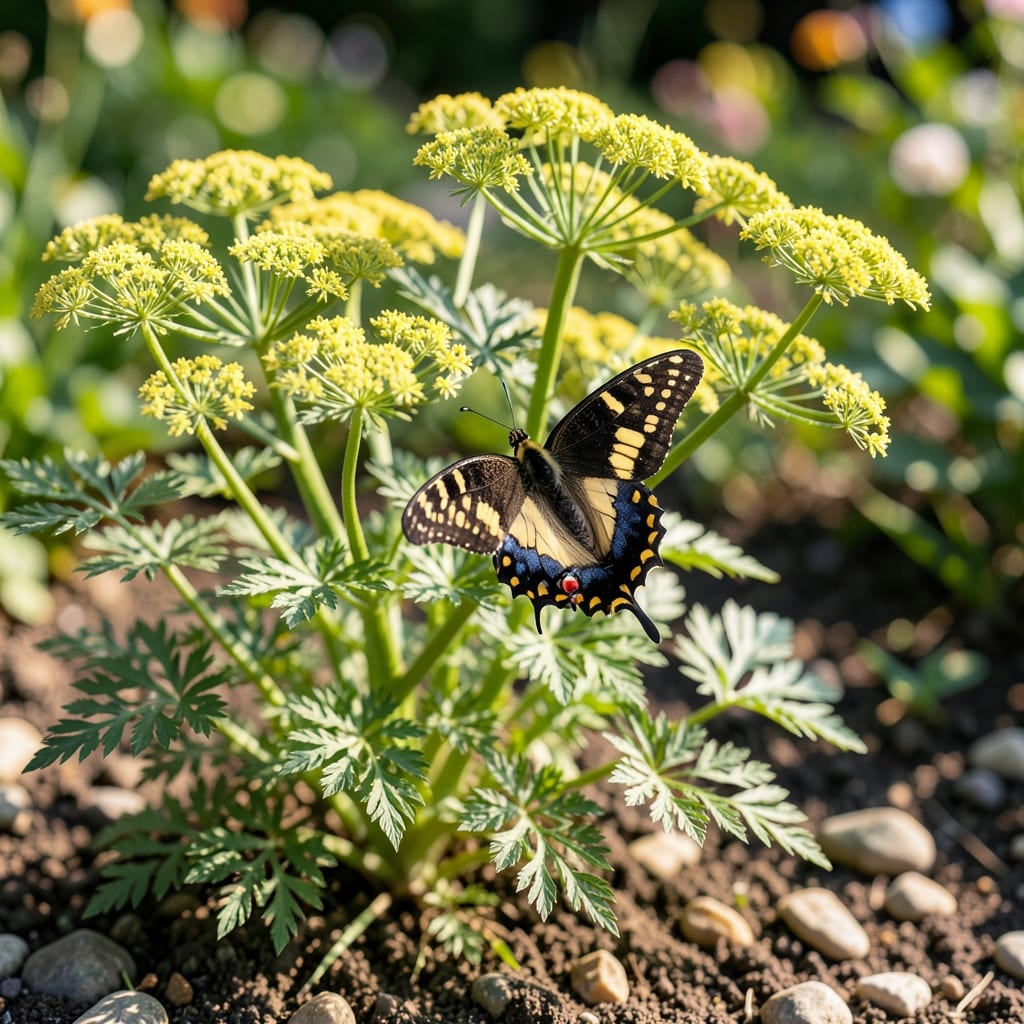
My garden came alive the year I planted dill and parsley for the first time. Eastern black swallowtails appeared like magic, fluttering between the leaves to lay their tiny eggs.
Now I know the secret: give them host plants like dill, parsley, and fennel, plus some nectar sources nearby. You’ll watch the full life cycle unfold right in your own space.
📚 In This Guide
Creating a butterfly-friendly space is simpler than you think and incredibly rewarding.
Choose dill, parsley, fennel, or carrots as primary host plants for the eastern black swallowtail. These are the plants where females will lay their eggs, and caterpillars will feed exclusively. Plant them in a sunny spot with well-drained soil, as these plants thrive in full sun.
I recommend planting at least 3-4 host plants to ensure enough foliage for the caterpillars. Space plants 12-18 inches apart to allow for growth and airflow. Water them deeply after planting to help roots establish. You’ll see new growth within 7-10 days, signaling the plants are ready.
Adult eastern black swallowtails need nectar-rich flowers to feed on. Plant a variety of blooming plants like butterfly bush, milkweed, or cone flowers nearby. These should be in a location that gets 6+ hours of sun daily to attract the most butterflies.
Group flowers in clusters of the same species to make it easier for butterflies to find them. I’ve found that planting in groups of 3-5 plants works best. Keep the area free of pesticides, as these can harm both adult butterflies and caterpillars.
You’ll notice more butterfly activity within 2-3 weeks of planting, especially on warm, sunny days.
Ensure your garden includes shelter from wind and predators. Place a few flat stones in sunny spots where butterflies can bask. Add a shallow water source, like a dish filled with pebbles and water, to give them a place to drink without drowning.
For the caterpillars, avoid disturbing the host plants once you spot eggs or larvae. The eggs are tiny and yellow, turning darker before hatching in 3-5 days. Caterpillars will go through 5 stages (instars) over 10-30 days, molting between each stage as they grow.
Check your host plants regularly for eggs and caterpillars. If you find them, resist the urge to move them—this can disrupt their development. Instead, protect them from predators like birds by placing lightweight mesh or netting over the plants if needed.
Watch for the caterpillar to form a chrysalis, which typically happens on a sturdy stem or nearby structure. The chrysalis stage lasts 9-18 days, depending on temperature. Once the adult emerges, it will need a few hours to dry its wings before flying off.
This is the most magical part—seeing the transformation firsthand. Keep a journal to track the timeline, as it varies with weather conditions.
Took me a few seasons to get this right, so let me share what I’ve learned.
Plant Placement Matters: In Step 1, those 12-18 inches apart spacing guidelines are crucial—closer plants compete for roots while farther ones waste space. I learned the hard way that crowded dill gets leggy and less appealing to egg-laying females. Full sun really does mean 6+ hours daily; partial shade just won’t cut it for these plants.
Nectar Source Strategy: For Step 2, grouping your butterfly bush, milkweed, or cone flowers in clusters of 3-5 plants isn’t just for looks. Butterflies use visual cues to find food, and a mass of color is like a neon sign. Skip the pesticides entirely—they’ll kill caterpillars and adults alike.
Protection Timing: In Step 4, resist the urge to “help” those caterpillars. The eggs hatch in 3-5 days, and disturbing them even slightly can be fatal. If you find eggs, mark the plant with a ribbon so you remember not to water or prune that area. The chrysalis stage is when they’re most vulnerable to predators.
Patience Pays Off: That 2-3 weeks wait for butterfly activity can feel long, but it’s worth it. I keep a journal to track when I first see eggs versus when adults emerge—it helps me understand the life cycle better and adjust my garden for future seasons.
Popular host plants include dill, parsley, fennel, and Queen Anne’s lace. These provide essential food for caterpillars and attract adult butterflies to lay eggs.
The life cycle spans 30-45 days, from egg to adult. This includes 5-10 days as an egg, 10-30 days as a caterpillar, 9-18 days as a chrysalis, and a 5-10 day adult lifespan.
They’re most active from spring to early fall, with peak sightings in summer. Look for them in gardens, meadows, or near host plants during sunny days.
Predators like birds, spiders, or parasites may be the cause. Ensure plants are pesticide-free and provide sheltered areas to protect caterpillars.
Yes! Use a ventilated container with fresh host plants. Keep the environment clean and humidity-controlled to support their development.