
Beautiful Plants For Your Interior
Beautiful Plants For Your Interior
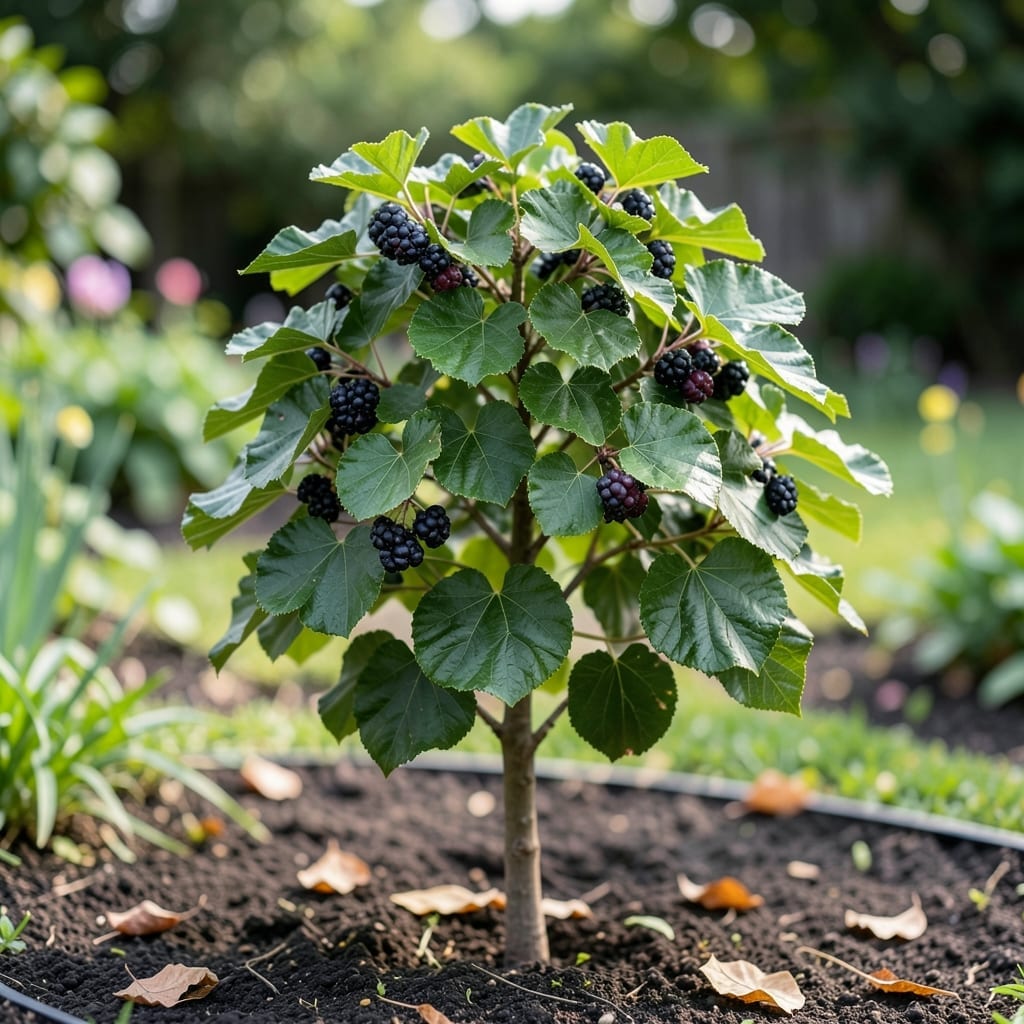
Imagine harvesting sweet, juicy mulberries from a tree that fits perfectly in your small garden or even a large container. The Dwarf Everbearing Mulberry 🍇 makes this possible with its compact size and bountiful yield.
I was amazed to discover how this variety packs all the flavor and productivity of full-size mulberries into a more manageable package. It’s the ideal solution for urban gardeners or anyone with limited space.
Understanding its mature dimensions is key to proper placement and care. You’ll be surprised at how much fruit these petite powerhouses can produce when given the right conditions.
Let me walk you through everything you need to know about the Dwarf Everbearing Mulberry’s size and how to help it thrive in your space.


When I first planted my dwarf everbearing mulberry, I was amazed by how quickly it established itself. These compact trees typically reach a mature height of 6 to 10 feet, making them ideal for small yards or even large containers.
The spread or width of a dwarf everbearing mulberry usually matches its height, creating a rounded canopy that’s manageable in tight spaces. This balanced growth habit is a huge advantage for urban gardeners like me.
| row”> | cell” style=”padding:12px;border-bottom:1px solid #e0e0e0;text-align:left;vertical-align:top”>6-10 feet |
|---|---|
| row”> | cell” style=”padding:12px;border-bottom:1px solid #e0e0e0;text-align:left;vertical-align:top”>Moderate to fast |
| row”> | cell” style=”padding:12px;border-bottom:1px solid #e0e0e0;text-align:left;vertical-align:top”>Yes, 20+ gallon pot |
I’ve noticed that container-grown specimens tend to stay on the smaller end, often maxing out at 6 to 8 feet. This is perfect for patio gardeners who want fruit without sacrificing space.
In contrast, in-ground plantings can reach the full 10-foot height if given ideal conditions. The key is providing well-draining soil and full sun exposure for optimal growth.
Seasonal variations also play a role. My mulberry tree seems to flush new growth in spring, adding 12 to 18 inches per year under good conditions. This growth slows as the tree matures.
Pruning is essential for maintaining size. I make it a point to prune in late winter to shape the tree and control its dimensions. This keeps my dwarf everbearing mulberry at a manageable 7 feet tall.
The root system is surprisingly compact for a fruit tree. It’s not as aggressive as standard mulberries, which means it’s safer to plant near structures or other plants.
For those in USDA zones 4-8, these trees are a great fit. I’ve found they’re cold-hardy and can handle temperature fluctuations well, which contributes to their consistent size.
One thing I love is how the canopy shape can be trained. With regular pruning, I’ve shaped mine into a neat, rounded form that fits perfectly in my garden layout.
Whether you’re planting in the ground or in a pot, understanding these size characteristics helps you place your tree where it can thrive without overwhelming your space. 🌿
I’ve found that dwarf everbearing mulberry size isn’t set in stone—it’s shaped by pruning practices and growing conditions. Regular trimming keeps these trees compact, while neglect can let them stretch toward their 15-foot maximum. 🌿
Climate plays a huge role too. In warmer zones like 7-8, these trees may grow taller faster, while cooler areas often result in a more bush-like form. Soil quality also influences vigor and final dimensions.
I always recommend starting pruning early to establish a strong framework. This prevents leggy growth and encourages a fuller, more productive tree. Even a single missed season can add 2-3 feet of unexpected height.
For container gardeners, root restriction is your best friend. A 15-gallon pot typically caps growth at 6-8 feet, perfect for patios. Just ensure it has drainage holes to prevent root rot.
Water and nutrients directly affect size too. I’ve seen over-fertilized mulberries shoot up quickly, while drought-stressed plants stay stunted. Aim for consistent moisture and balanced feed every 4-6 weeks.
Finally, remember that variety matters. Some dwarf cultivars naturally stay smaller, while others push the upper limits. Always check the nursery tag for specific expectations before planting. ✂️