
Beautiful Plants For Your Interior
Beautiful Plants For Your Interior
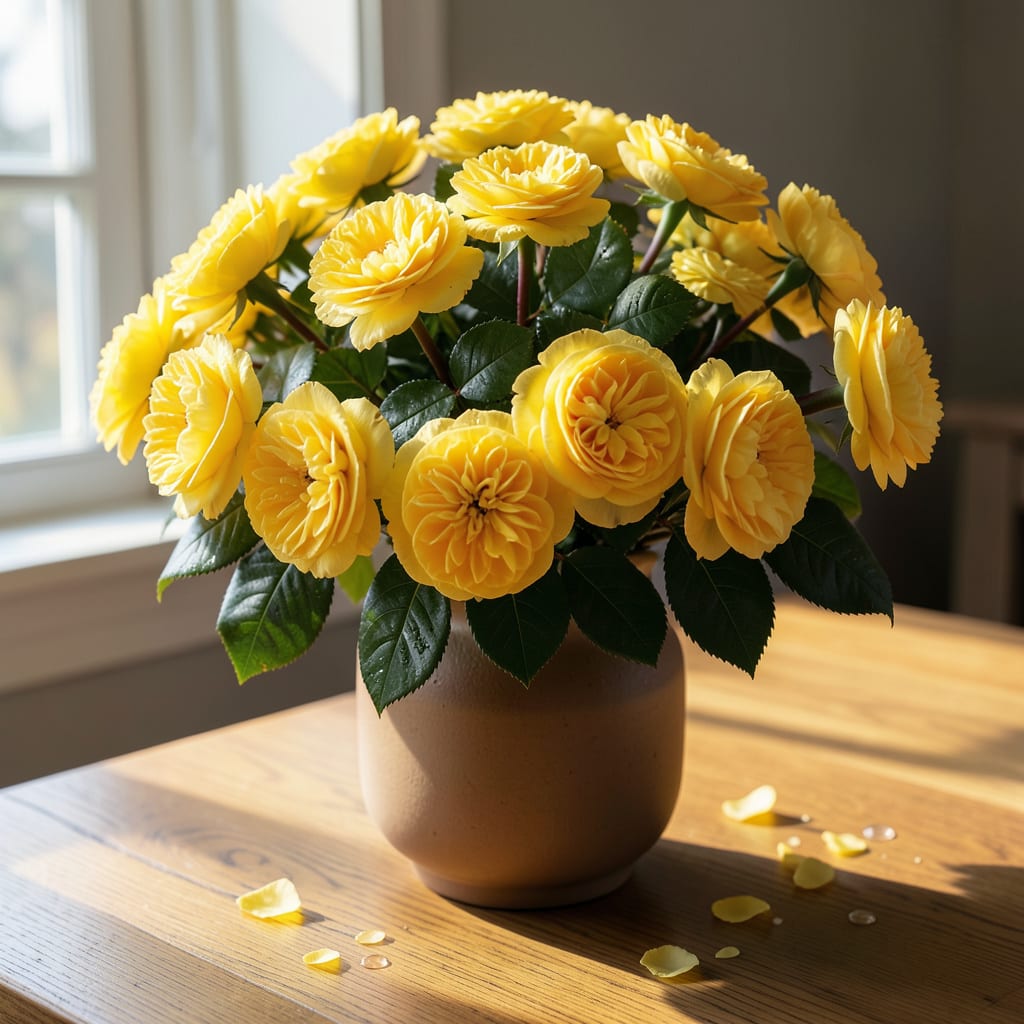
These yellow stunners changed my garden game. Continuous blooms from spring to frost, with almost zero maintenance—just the perfect pop of color in full sun.
Plant them in well-draining soil, water deeply once a week, and watch them thrive. No fancy pruning, no high-maintenance care. They handle heat, drought, and even my occasional neglect beautifully.
📚 In This Guide
Here’s the method I use to get continuous yellow blooms that thrive in full sun.
Choose a spot with full sun exposure—at least 6-8 hours of direct sunlight daily. Double Knock Out roses perform best in areas with good air circulation to prevent fungal diseases. I always avoid low-lying areas where cold air settles, as this can damage the plants during unexpected frosts.
Test your soil’s drainage by digging a 12-inch-deep hole and filling it with water. If it drains within 1-2 hours, you’re good to go. These roses tolerate a range of soil types but prefer well-draining loam with a pH between 6.0-6.5.
Amend the planting area with compost or well-rotted manure to improve soil structure and fertility. Dig a hole twice as wide as the root ball but no deeper. This encourages roots to spread outward rather than circling, which is critical for long-term health.
Place the rose in the hole, ensuring the bud union (the swollen area where the canes meet the roots) sits 1-2 inches above soil level in warm climates or 1-2 inches below in cold regions. Backfill with native soil, water thoroughly, and avoid fertilizing at planting time—this prevents root burn.
Water deeply at planting and then 2-3 times per week for the first 4-6 weeks to help roots establish. After that, reduce to 1-2 times per week, giving 1-2 gallons per plant each time. The goal is consistent moisture without soggy soil.
I water at the base in the early morning to allow foliage to dry quickly, which minimizes disease risk. A 2-3 inch layer of mulch around the plant (kept 3 inches away from the stem) retains moisture and suppresses weeds. Watch for wilting or yellowing leaves—these signal over- or under-watering.
Begin fertilizing in early spring after the first flush of blooms. Use a balanced rose fertilizer or a 10-10-10 formula, applying every 4-6 weeks through the growing season. I stop fertilizing 6-8 weeks before the first frost to avoid encouraging tender new growth that winter can damage.
Scratch the fertilizer lightly into the soil around the plant and water thoroughly. Yellowing leaves between veins often indicate iron deficiency—treat with chelated iron if this occurs. Always follow package instructions for application rates to prevent over-fertilization, which can burn roots.
Prune in late winter or early spring, removing dead, diseased, or crossing canes. Thin out about one-third of the oldest canes to encourage new growth and better air circulation. I use clean, sharp bypass pruners to make cuts at a 45-degree angle, just above an outward-facing bud.
Deadhead spent blooms by cutting back to the first 5-leaflet leaf below the flower. This encourages faster reblooming—Double Knock Out roses are prolific, and regular deadheading keeps them covered in yellow blooms all season. Remove any suckers (shoots from below the bud union) immediately to maintain plant energy on the desired canes.
These small adjustments make a surprising difference in your garden’s success.
The Sunlight Factor: Those 6-8 hours of direct sunlight aren’t just a suggestion—they’re critical for vibrant blooms. I learned the hard way that even partial shade can lead to leggy growth and fewer flowers. If your garden has spots with dappled sunlight, save those for plants that tolerate less light.
Drainage Test Insight: When you dig that 12-inch-deep hole for the drainage test, use a timer. If water hasn’t drained within 1-2 hours, you’ll need to amend the soil with compost or consider raising the bed. Soggy roots are the fastest way to kill these otherwise hardy plants.
Planting Depth Precision: That 1-2 inches above or below soil level for the bud union isn’t arbitrary. In warm climates, keeping it slightly above ground protects against heat stress, while in cold regions, planting deeper shields against freeze damage. I mark the spot with a stick before backfilling to ensure accuracy.
Watering Wisdom: During the first 4-6 weeks, that 2-3 times per week watering schedule is non-negotiable for root establishment. After that, the 1-2 gallons per plant might seem like a lot, but remember—these are thirsty plants when they’re blooming profusely. The 2-3 inch mulch layer truly helps retain that moisture.
Yellowing leaves often indicate overwatering, poor drainage, or nutrient deficiencies. Check soil moisture and ensure proper drainage. A balanced fertilizer can help restore vibrant green leaves.
Water deeply 1-2 times per week, depending on weather. These roses are drought-tolerant once established, so avoid overwatering. Mulching helps retain moisture.
They thrive in full sun (6+ hours daily) but can tolerate partial shade. However, blooming may be less abundant in shadier spots.
Use a slow-release, balanced rose fertilizer (10-10-10) or organic options like compost. Feed in early spring and mid-summer for continuous blooms.
Prune in late winter or early spring to remove dead wood and shape the plant. Cut back by ⅓ to encourage new growth and more flowers.
