
Beautiful Plants For Your Interior
Beautiful Plants For Your Interior
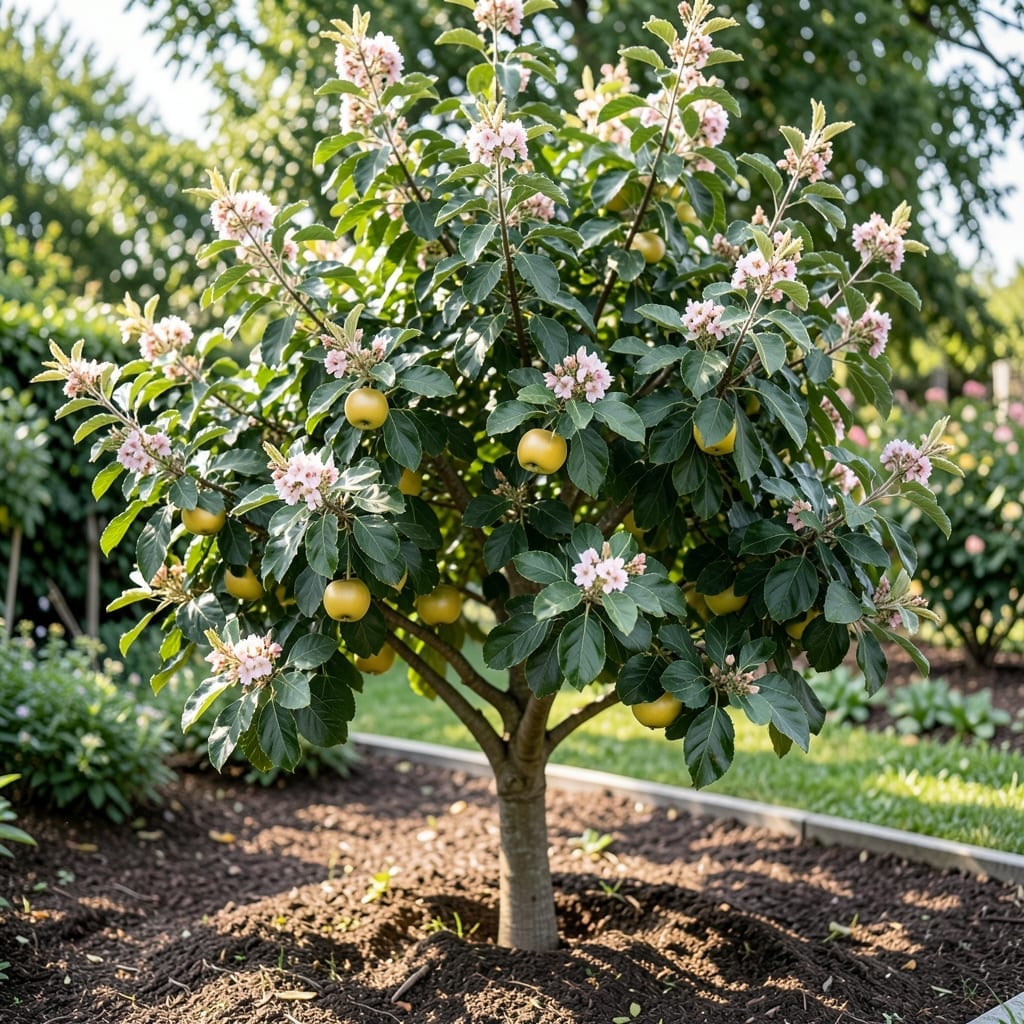
Imagine adding a Dorsett Golden Apple Tree to your landscape, only to realize it’s outgrown its space in just a few years. This common mistake can be avoided with proper planning.
I’ve seen too many gardeners struggle with trees that become unmanageable because they didn’t understand the mature size. The 🍎 Dorsett Golden has specific dimensions that affect everything from planting placement to pruning needs.
Let me walk you through what to expect as your tree grows, so you can create the perfect space for it from the start. The right knowledge now saves years of frustration later.

When planning your Dorsett Golden Apple Tree planting, understanding its mature dimensions is essential. This tropical-adapted variety typically reaches 15-25 feet tall at full maturity when grown on standard rootstock. Its spread often matches its height, creating a rounded canopy.
The tree’s growth habit is upright and spreading, with strong central leader development. In ideal conditions with proper care, it can achieve 10-12 feet in just the first 5-6 years. The canopy width usually extends to 15-20 feet at maturity.
| Measurement | Standard Size | Dwarf Size |
|---|---|---|
| Height | 15-25 ft | 8-12 ft |
| Width | 15-20 ft | 6-10 ft |
| Annual Growth | 2-3 ft | 1-2 ft |
| Mature Age | 8-10 years | 5-7 years |
I’ve found that rootstock selection dramatically affects final size. Dwarfing rootstocks can limit height to 8-12 feet, while semi-dwarf varieties typically reach 12-18 feet. This makes them perfect for smaller landscapes or container growing.
The tree’s vigor is impressive in warm climates, often outpacing more temperate varieties. In my experience, proper spacing is crucial – allow at least 20-25 feet between standard trees and 10-12 feet for dwarf varieties.
Environmental factors also play a role. Trees grown in rich, well-drained soil with full sun exposure tend to reach the upper end of the size range. Conversely, those in poorer conditions or partial shade may stay smaller.
For home gardeners, I recommend considering the mature canopy diameter when choosing a planting location. A 15-foot radius clear of structures, power lines, and other trees ensures proper air circulation and maintenance access.
The branch structure is another important consideration. Dorsett Golden develops strong, slightly upright branches that benefit from structural pruning in the first few years to establish a sturdy framework.
Remember that pruning practices can influence final size. Regular thinning cuts help control height while maintaining fruit production. I’ve seen well-pruned specimen trees kept at 12-15 feet with annual attention.
In container culture, size is naturally limited by root restriction. With proper care, a Dorsett Golden can thrive in a 20-25 gallon pot, typically reaching 6-8 feet tall. This makes it an excellent choice for patio or balcony gardens.
🌳
Managing your Dorsett Golden Apple Tree size starts with smart planting decisions. I always recommend choosing dwarf rootstocks if space is limited, as they naturally restrict height to 8-12 feet. This makes pruning and harvesting much easier.
For standard-sized trees, proper spacing is your first line of defense. I maintain 20-25 feet between specimens to prevent crowding. This also improves air circulation, which is vital for disease prevention in humid climates.
I’ve had great success with summer pruning to control size. By removing water sprouts and suckers in June, I can reduce height without stimulating excessive new growth. This technique works particularly well in warm climates where the tree grows vigorously.
For container growing, select a 20-25 gallon pot with good drainage. I use a soil mix of 60% potting soil and 40% perlite. Remember that container-grown trees need more frequent watering and feeding than in-ground specimens.
If you’re working with limited space, consider espalier training. This method involves tying branches to a support system, creating a flat, two-dimensional tree. It’s perfect for growing against fences or walls while maximizing fruit production.
The key to successful size management is consistency. I recommend marking your calendar for annual pruning in late winter and summer maintenance in June. This regular attention prevents the tree from becoming overgrown and unmanageable.
✂️