
Beautiful Plants For Your Interior
Beautiful Plants For Your Interior
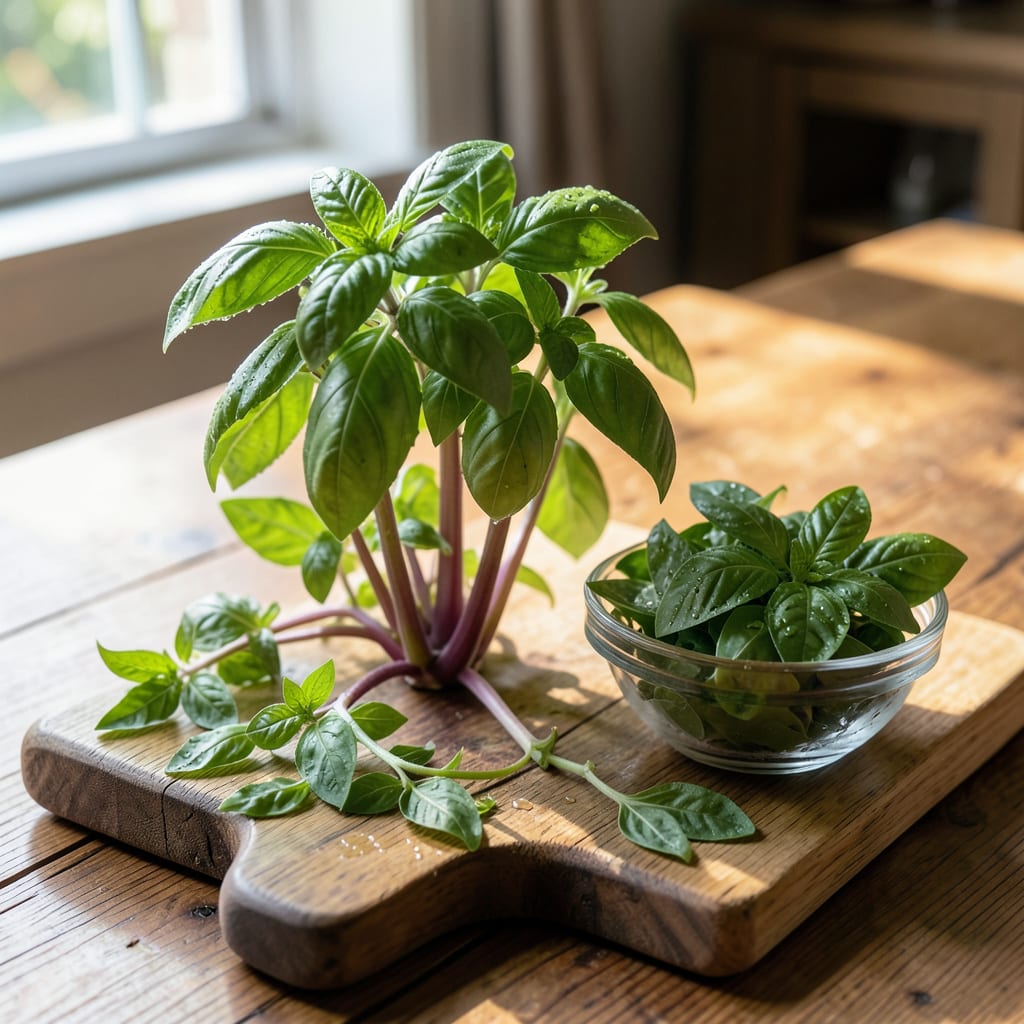
I used to tear basil leaves and wonder why my plants looked sad. The right harvesting method makes all the difference for continuous growth.
Plucking works for single leaves, but cutting stems just above a leaf pair encourages bushier growth. Within 2-3 weeks, you’ll see new shoots forming where you made the cut, and your plant stays productive all season.
📚 In This Guide
Here’s the method I use to harvest basil without stunting its growth or losing flavor intensity.
Start by examining your plant for stems with at least 3-4 sets of true leaves. The most critical detail is locating the node pairs—these are the tiny bumps where leaves emerge in opposite pairs. I never harvest from stems with fewer than three sets, as the plant needs that foliage to maintain photosynthesis and energy production.
Look for the topmost pair of leaves, as this is where your cut will encourage bushier growth. The stem above this pair is your target. This method prevents the plant from becoming leggy and actually stimulates more lateral branching, which means more leaves for future harvests.
With clean, sharp scissors or pruning shears, make a precise cut just above the second set of leaves from the top. This leaves at least two sets of leaves below your cut to continue supporting the plant. I always cut at a slight angle to prevent water from pooling on the stem, which can lead to rot.
Avoid tearing or pulling leaves, as this damages the plant tissue and creates entry points for disease. The cut should be clean and decisive. If you’re harvesting multiple stems, work your way around the plant rather than focusing on one area—this maintains balanced growth.
Basil responds exceptionally well to frequent harvesting. I make it a habit to check my plants every 7-10 days during the growing season. Each time you harvest, you’re signaling the plant to produce more foliage, which means a constant supply of fresh leaves.
The best time to harvest is in the morning after the dew has dried but before the heat of the day sets in. At this time, the leaves contain the highest concentration of essential oils, which gives basil its distinctive flavor. Avoid harvesting when the plant is wet, as this can spread disease.
While it might be tempting to take a large harvest all at once, I’ve learned that removing more than one-third of the plant’s foliage at a time stresses the basil and can lead to stunted growth. This rule ensures the plant retains enough leaves to continue photosynthesizing effectively.
If you need a larger quantity, stagger your harvests over a few days. This approach allows the plant to recover between harvests while still providing you with plenty of leaves. Watch for signs of stress like wilting or yellowing leaves, which indicate you may be harvesting too aggressively.
After harvesting, give your basil a thorough watering at the base to help it recover. I use room temperature water and avoid wetting the leaves to prevent fungal issues. The plant will typically produce new growth from the nodes where you made your cuts within 7-14 days.
If you notice any stems becoming too woody or leggy, don’t hesitate to prune them back more severely. This rejuvenation cut encourages fresh, tender growth. Regular harvesting not only provides you with fresh basil but also keeps the plant compact, healthy, and productive throughout the growing season.
Master these details to keep your basil thriving and productive all season long.
The Technique That Changed Everything: In Step 2, always use clean, sharp scissors or pruning shears—dull tools crush stems, creating entry points for disease. A precise, angled cut just above the second leaf set prevents water pooling and rot while encouraging robust regrowth.
Timing Secret: Step 3’s 7-10 day harvest window is ideal because basil produces the highest concentration of essential oils in the morning. Harvesting too late in the day or when leaves are wet can dilute flavor and invite fungal issues.
Critical Limitation: Step 4’s one-third rule isn’t arbitrary. Removing more than this stresses the plant, reducing its ability to photosynthesize and recover. If you need a larger harvest, stagger it over several days to maintain plant health.
What to Watch For: In Step 5, new growth should appear from the nodes within 7-14 days. If you don’t see regrowth, you may have harvested too aggressively or the plant may need more water at the base.
Plucking individual leaves can stress the plant. Instead, cut stems just above a pair of leaves to encourage bushier growth. This method promotes continuous harvesting and keeps your basil healthy!
Harvest in the morning after the dew dries for the best flavor. Avoid picking during extreme heat or when the plant is flowering, as leaves may taste bitter.
Yes! Clean, sharp scissors or pruning shears work perfectly. Always cut at a 45-degree angle to prevent water pooling and reduce the risk of disease.
Blackening can signal overwatering or poor air circulation. Ensure the soil drains well and avoid wetting the leaves. Harvest regularly to keep the plant vibrant.
