
Beautiful Plants For Your Interior
Beautiful Plants For Your Interior
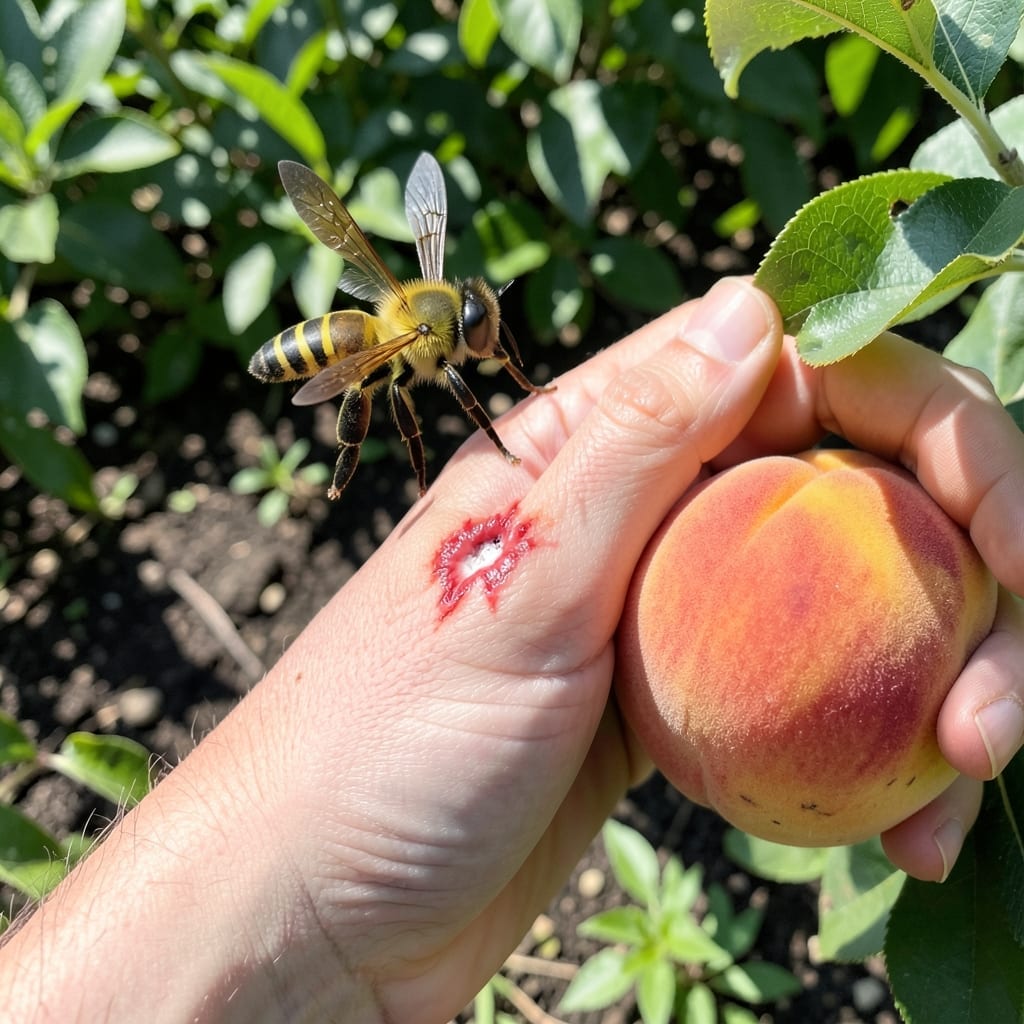
Yellow jackets sting rather than bite, using their smooth stingers to inject venom repeatedly. Their aggression spikes when defending nests, making them far more dangerous than biting insects.
Unlike bees that lose their barbed stingers after one use, these wasps can attack again and again with precision. I’ve seen their smooth stingers allow for rapid venom delivery, which is why they’re such effective defenders of their colonies. Their venom contains acetylcholine and other compounds that trigger sharp pain and swelling in humans. ✨
What makes them particularly threatening is their territorial nature—disturbing a nest can provoke a swarm response. 💫
💡 In This Article
The smooth stinger of a yellow jacket is a key evolutionary adaptation. Unlike honeybees with barbed stingers that tear away after one use, yellow jackets have micro-serrations that allow them to withdraw and reinsert their stingers rapidly. This design enables multiple venom injections in quick succession, a critical advantage during colony defense.
Their venom is a complex cocktail containing acetylcholine, phospholipases, and kinins. Acetylcholine triggers immediate pain, while phospholipases break down cell membranes, causing tissue damage. Kinins amplify inflammation, explaining why stings often result in prolonged swelling. The pH of their venom is slightly acidic (4.8-5.2), which enhances its spread through human tissue.
What most people don’t realize is that yellow jackets can control venom dosage. A single sting typically delivers 2-3 micrograms of venom, but they can inject up to 10 micrograms in repeated attacks. This precision makes them more dangerous than many other stinging insects, which have fixed venom delivery systems. ⚡
Temperature affects their aggression. Studies show yellow jackets become more defensive at temperatures above 70°F, with peak activity between 80-90°F. Their smooth stingers also allow for deeper penetration than the mandibles of biting insects, which typically only break the skin’s surface.
The biological mechanism behind their smooth stingers involves a specialized exoskeleton structure. Their stingers are connected to internal muscles that can contract and relax 15-20 times per second, enabling rapid, repeated strikes. This is why disturbing a nest often results in multiple stings in quick succession. 💫
A single yellow jacket can sting multiple times due to its smooth stinger. Unlike honeybees, they don’t lose their stinger after attacking, allowing for rapid, repeated strikes during a defensive response.
Their venom contains acetylcholine and phospholipases, which trigger immediate pain and tissue damage. The slightly acidic pH of their venom also helps it spread quickly through skin.
They become most defensive at temperatures above 70°F, with peak aggression between 80-90°F. Late summer is especially risky as colonies reach their largest size.
Avoid wearing bright colors or floral prints, and skip perfumes or scented lotions. Keep food sources sealed and clean up fallen fruit to minimize their interest in your space.