
Beautiful Plants For Your Interior
Beautiful Plants For Your Interior
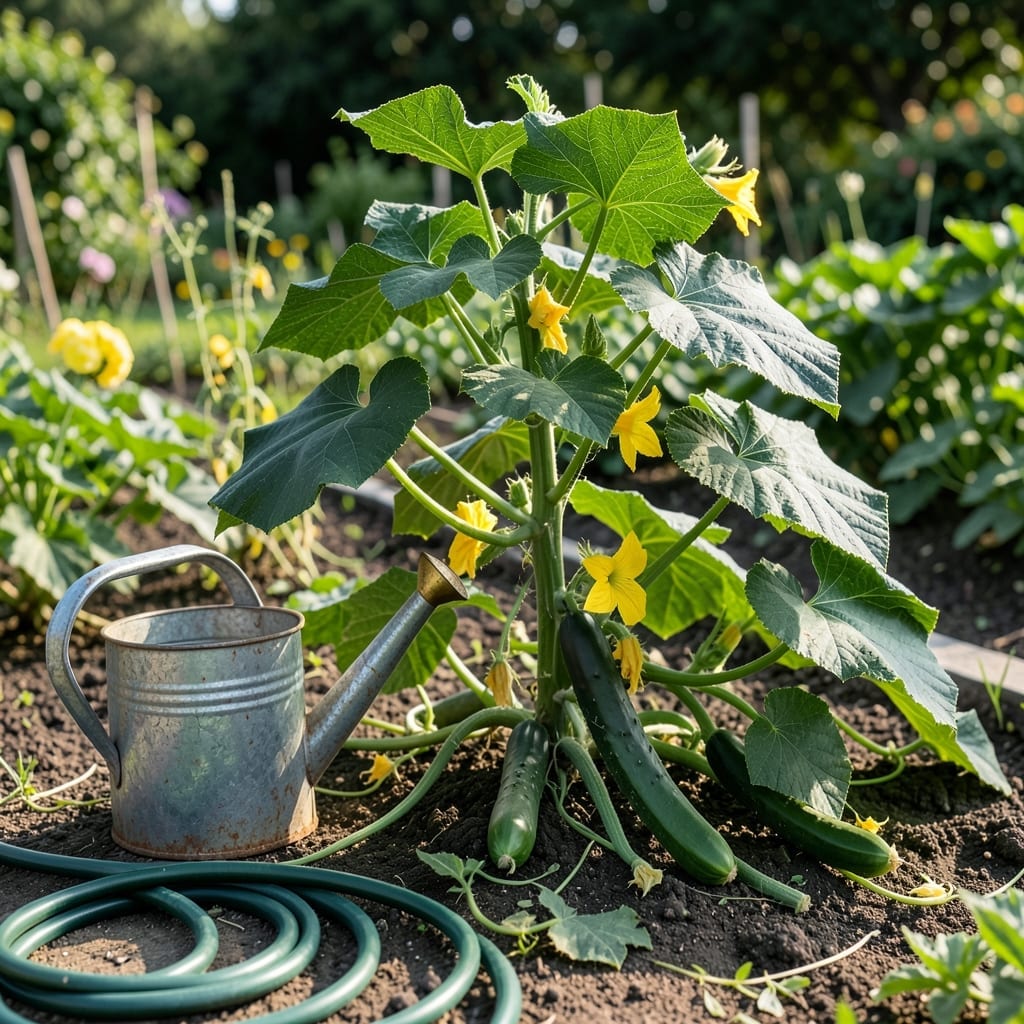
Cucumbers are thirsty plants, but overwatering can be just as harmful as drought. I learned this the hard way with my first 🥒 Cucumber crop.
Getting the water balance right is the key to healthy vines and bountiful harvests. These plants crave consistent moisture, especially during their active growing season.
In this guide, I’ll share exactly how much water your Cucumbers need and when to deliver it. You’ll discover simple techniques to keep your soil perfectly hydrated without going overboard.
Let’s dive into the most important watering practices that will transform your garden this growing season.
Cucumbers are thirsty plants that demand consistent moisture to thrive, but balance is key. I’ve learned that 1-2 inches per week is ideal for most conditions. This keeps the soil evenly damp without waterlogging.
During hot summer months, I increase watering to every 2-3 days, especially if the soil dries out quickly. In cooler weather, once a week is usually sufficient. Always check the top inch of soil before watering again. 🌱
| Growth Stage | Water Requirement | Frequency |
|---|---|---|
| Seedlings | 0.5 inches | Every 2-3 days |
| Flowering | 1 inch | Every 4-5 days |
| Fruiting | 1.5-2 inches | Every 3-4 days |
| Mature Plants | 2 inches | Every 5-7 days |
In my experience, sandy soil drains faster and may need more frequent watering, while clay soil holds moisture longer. I always adjust based on the weather forecast and plant response to avoid stress.
Morning watering is best because it allows foliage to dry during the day, reducing the risk of fungal diseases. I aim to water before 10 AM for optimal results. Avoid wetting the leaves if possible.
For container-grown cucumbers, I check the soil daily. Pots dry out faster, so I often water every 2-3 days in summer. Ensure your containers have drainage holes to prevent root rot. 🪴
If you notice wilting leaves in the afternoon, it might not be a watering issue—cucumbers often recover by evening. However, if wilting persists, it’s a sign of underwatering or root stress.
I use a moisture meter to take the guesswork out of watering. It helps me maintain consistent soil moisture without overdoing it. A simple finger test works too—stick your finger 1-2 inches into the soil.
Mulching is a game-changer for cucumbers. I apply a 2-3 inch layer of organic mulch to retain moisture and suppress weeds. This reduces my watering frequency significantly. 🌿
Finally, remember that overwatering can be just as harmful as drought. Yellowing leaves, mushy stems, and stunted growth are signs you’re giving your cucumbers too much water. Adjust and observe!
I’ve found that cucumber plants show clear signs when they’re getting too much or too little water. The key is observing the leaves and fruit closely for changes.
Overwatered cucumbers often develop yellowing leaves and a wilting appearance, even when the soil is wet. This happens because the roots suffocate in soggy conditions.
| Condition | Symptoms | Solution |
|---|---|---|
| Overwatering | Yellow leaves, mushy stems, root rot | Let soil dry, improve drainage |
| Underwatering | Dry soil, crispy leaves, bitter fruit | Water deeply, add mulch |
Underwatered plants typically have dry, brittle leaves that may curl at the edges. The soil will feel dry 1-2 inches down, and fruits may taste bitter.
I always check the soil moisture before watering by sticking my finger in the dirt. If it feels dry at 1 inch depth, it’s time to water. For container-grown cucumbers, they may need water every 2-3 days in hot weather.
Another telltale sign is the fruit itself. Overwatered cucumbers may develop cracks or soft spots, while underwatered ones often appear stunted or misshapen.
Remember, consistent moisture is key. I recommend using a drip irrigation system to maintain even watering and prevent these common issues. This method also helps avoid foliar diseases from overhead watering 💧