
Beautiful Plants For Your Interior
Beautiful Plants For Your Interior
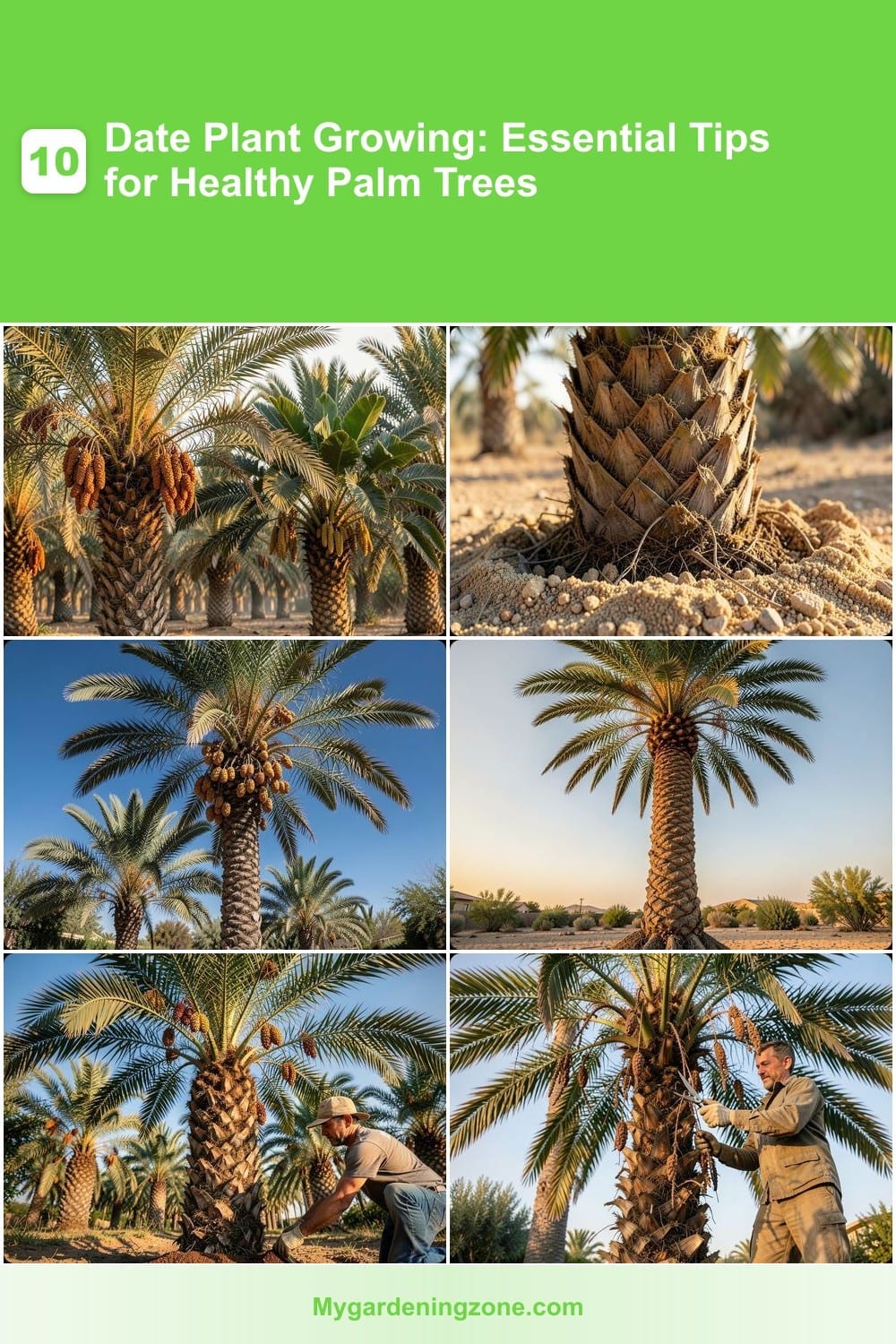
Growing date palms rewards patient gardeners with tropical beauty and delicious fruit. These ten essential tips will help you cultivate healthy, thriving date plants whether you’re in a desert climate or growing indoors.
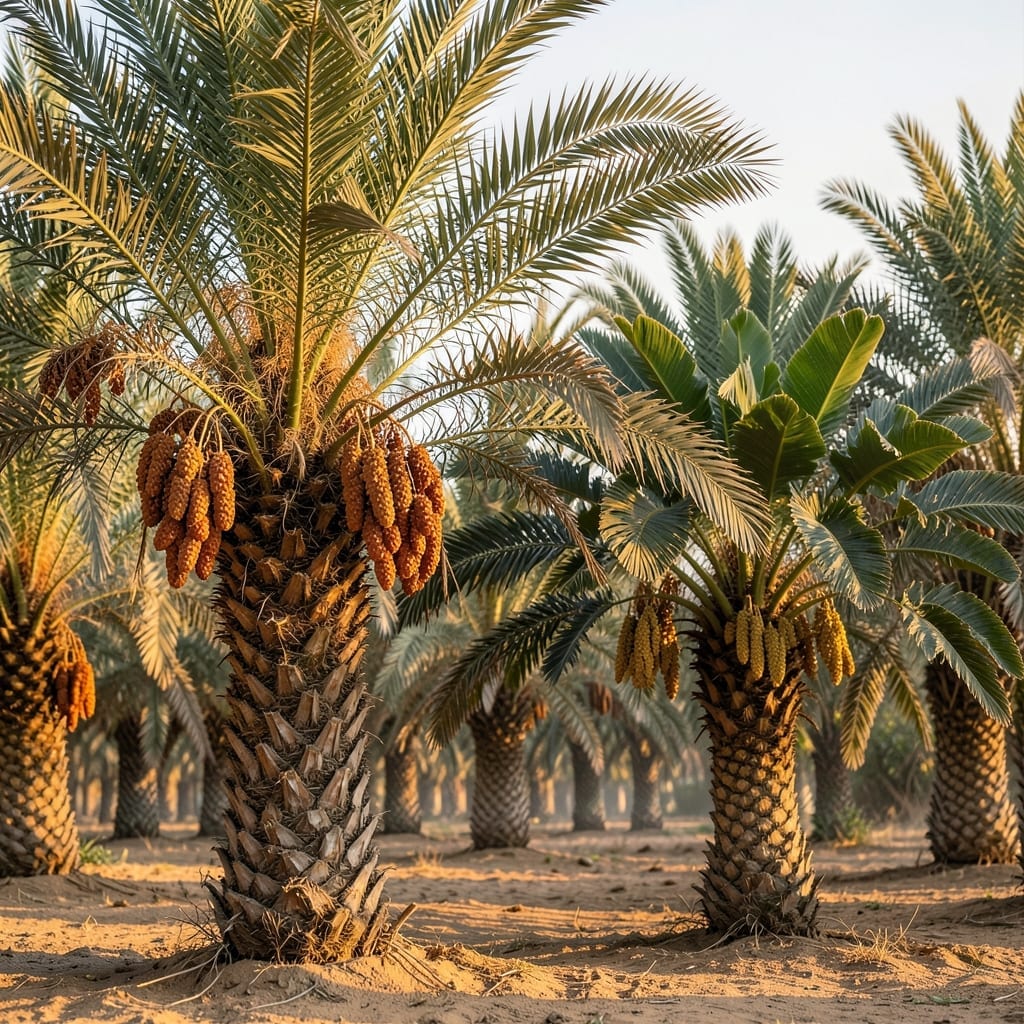
Not all date palms are created equal—your climate determines which variety will flourish. Medjool palms thrive in USDA zones 9-11, loving the heat, while Barhee palms can handle slightly cooler areas down to zone 8.
Medjool offers the famous sweet, soft dates but needs consistent warmth to produce fruit. Barhee, on the other hand, is more cold-tolerant and produces a honey-like date that’s perfect for cooler desert edges or mild coastal areas.
Selecting the right variety for your region means less struggle and more success in your date plant growing journey. 🌱
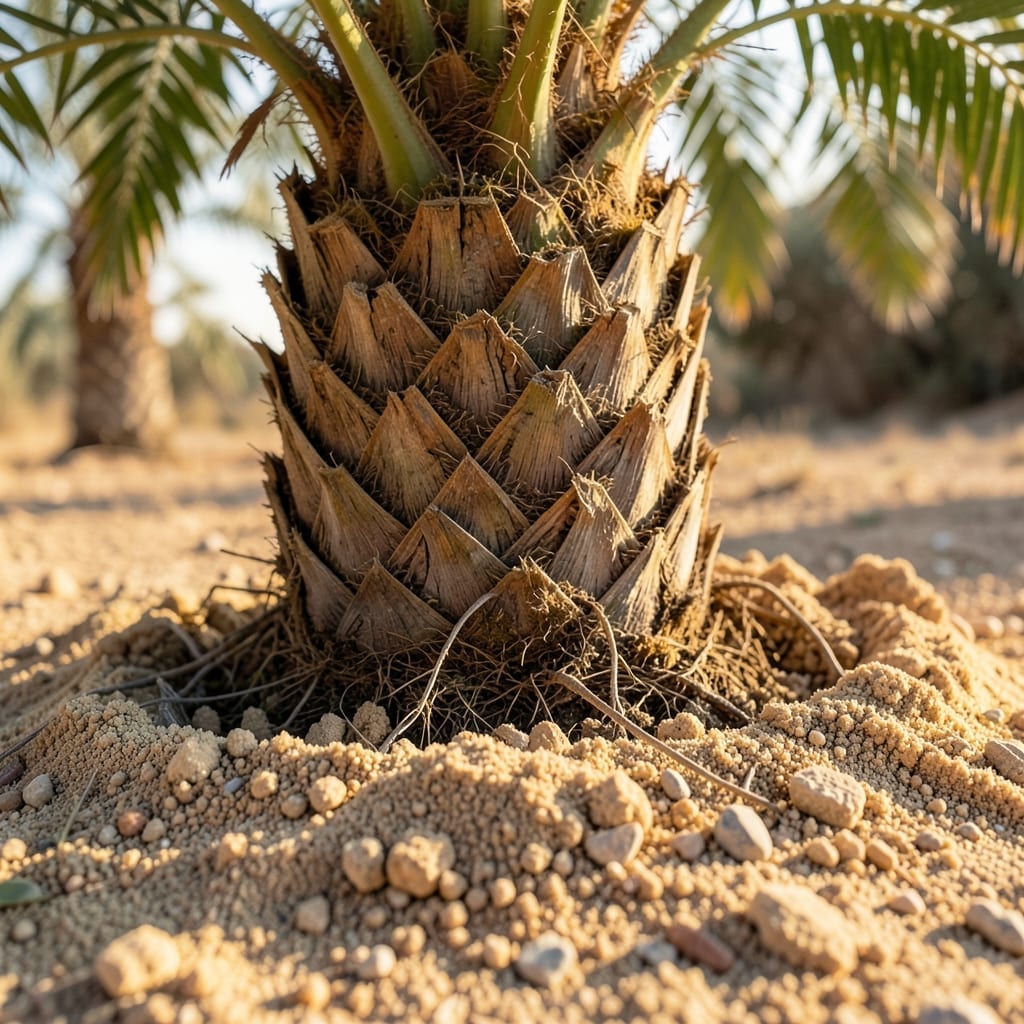
Date palms demand soil that feels like home—well-draining sandy loam that won’t drown their roots. Unlike many plants, they thrive in alkaline conditions, preferring a pH between 8-11, which mirrors their native desert floors.
Poor drainage is the #1 killer of date palms, leading to root rot that’ll take down even the hardiest specimen. Mix in coarse sand or perlite if your soil is heavy, and avoid clay at all costs. A simple pH test kit helps you confirm you’re in the right range.
Gardeners in arid regions will find this setup naturally, but container growers can create it with a custom blend. Healthy roots mean a thriving palm. 🌱
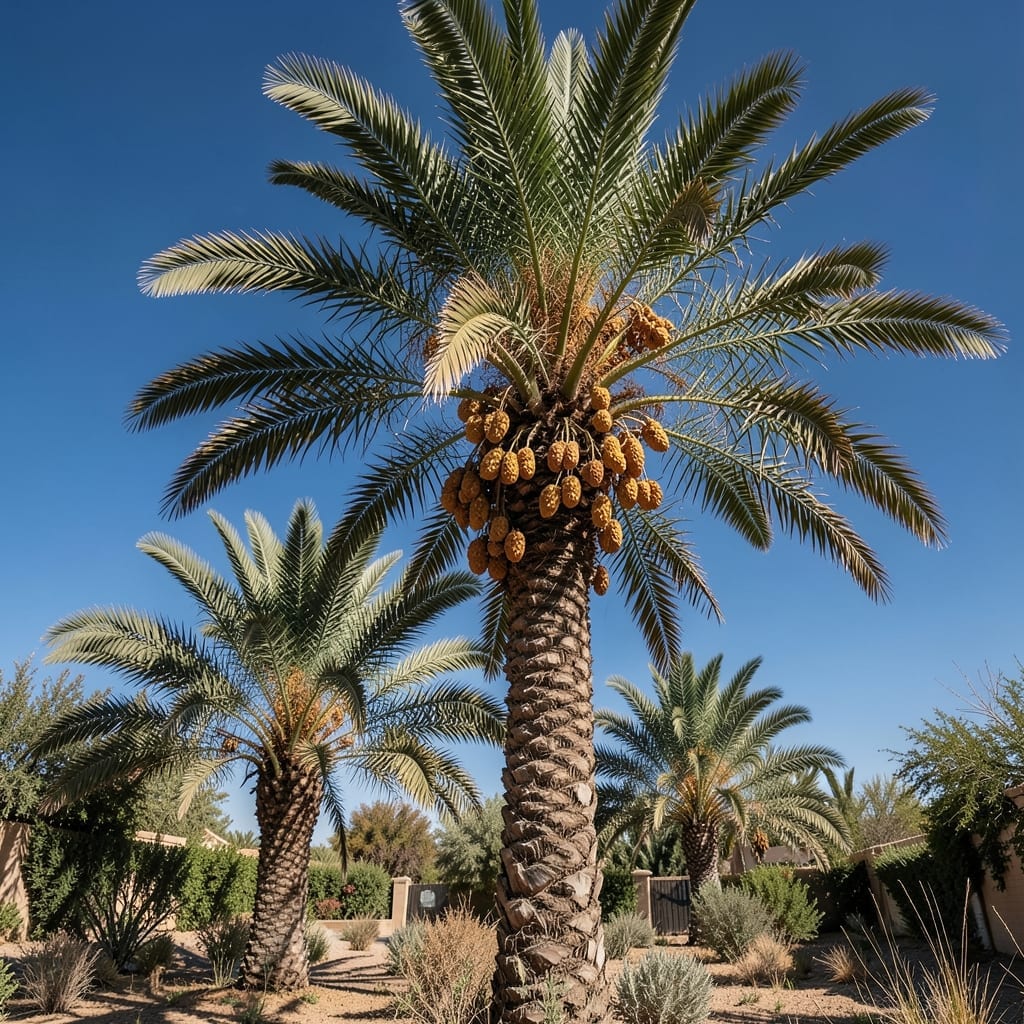
Sunlight is the secret ingredient for thriving date palms. Mature trees demand 6-8 hours of direct sun daily to produce sweet, abundant fruit, mimicking their native desert conditions.
However, young palms need a gentler start—provide partial shade during extreme heat to prevent leaf scorch. This balance ensures they establish strong roots before facing full sun exposure.
Gardeners in hot climates will see the best results by gradually transitioning seedlings to full sun. Healthy light exposure means healthier trees and better harvests. 🌿
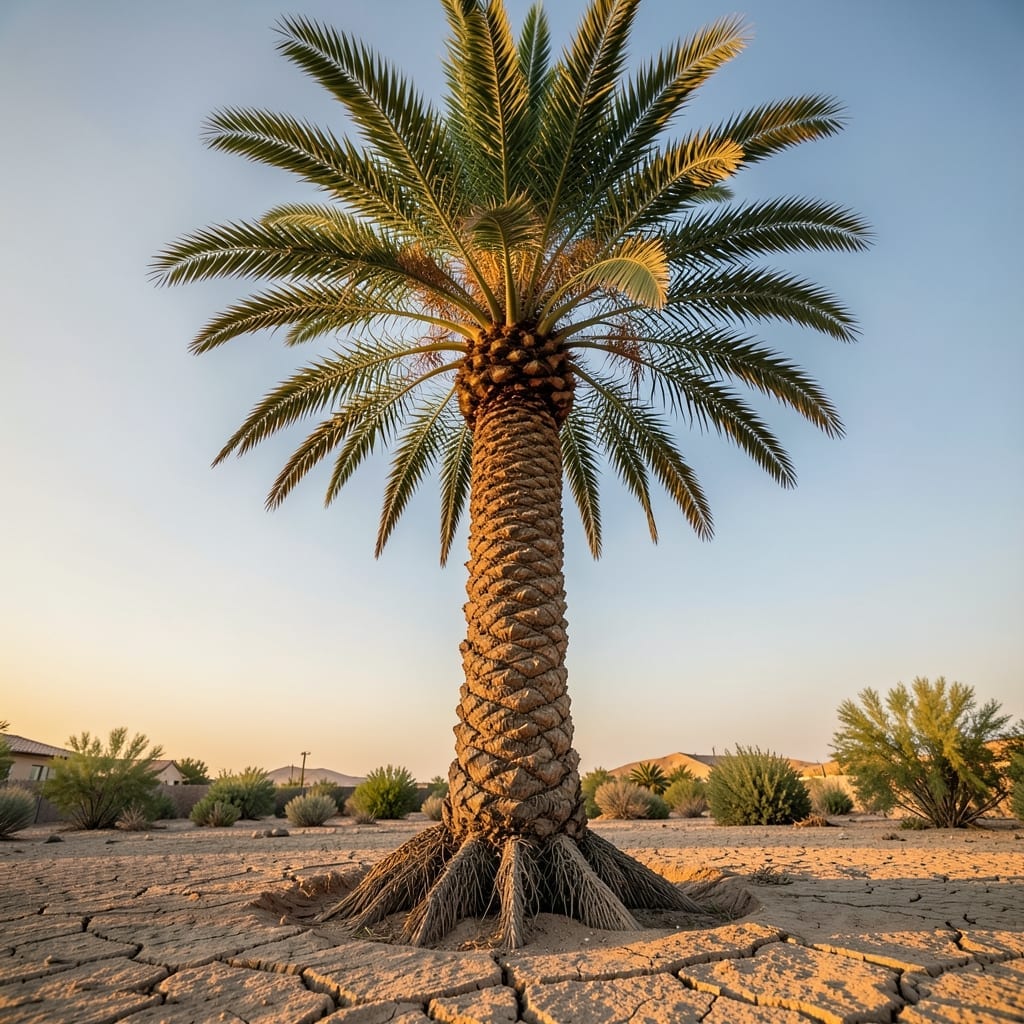
Skip the daily sprinkle—date palms thrive on deep, infrequent watering that trains roots to grow downward, not outward. This method builds drought resilience while preventing shallow root systems that struggle in heat.
Established palms can survive drought, but for fruit production, maintain consistent moisture during the growing season. Aim for 1-2 deep waterings per week in hot climates, letting the top 2-3 inches of soil dry between sessions.
This approach works best for gardeners in arid regions or those growing palms in well-draining soil. Strong roots equal a stronger, more productive tree. 🌱
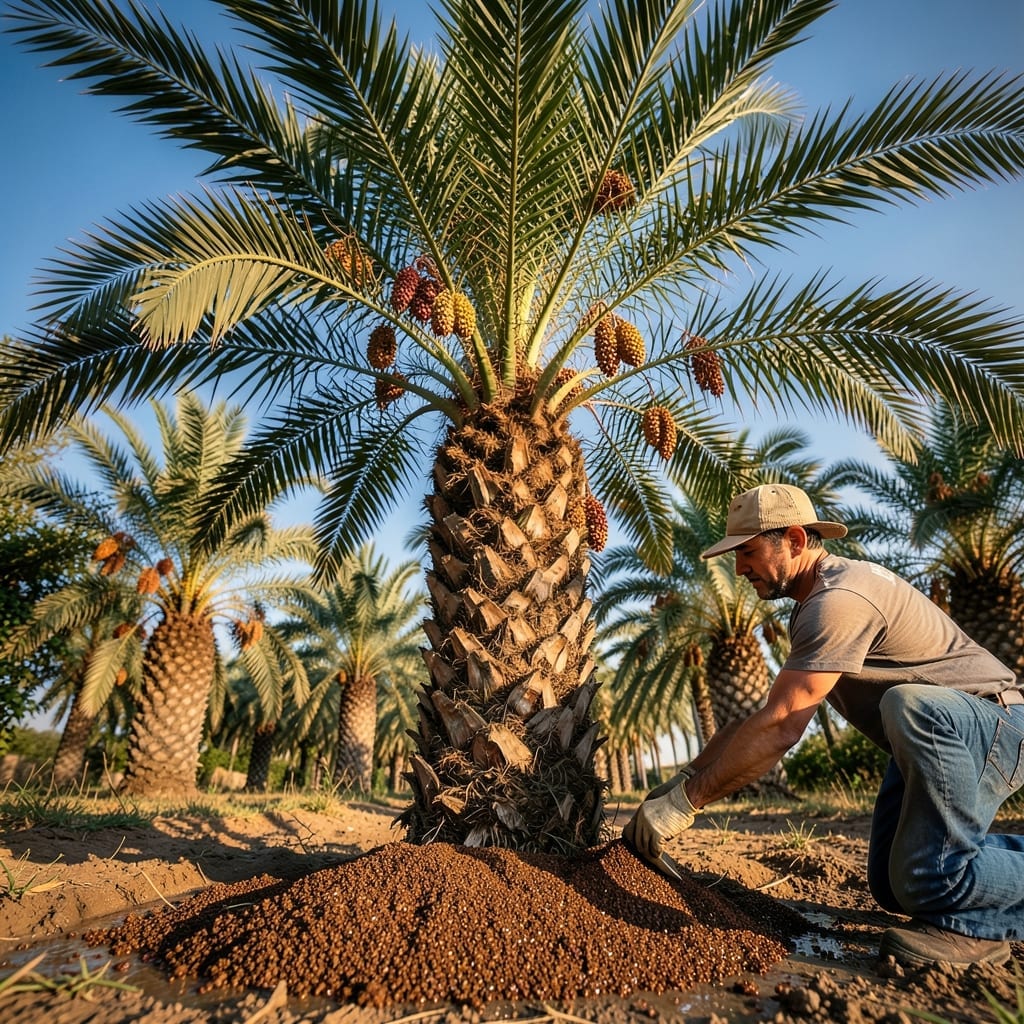
For lush growth and bountiful fruit, a consistent fertilizing routine makes all the difference. Date palms respond best to a balanced palm fertilizer rich in micronutrients like magnesium, iron, and zinc, which are often lacking in standard plant foods.
Apply fertilizer 3-4 times per year, focusing on the active growing seasons of spring and summer. This schedule fuels rapid frond development and maximizes fruit production. Always water deeply after applications to help nutrients reach the root zone.
This approach works especially well for gardeners aiming for both ornamental beauty and a productive harvest. A well-fed palm is a happy palm. 🌿
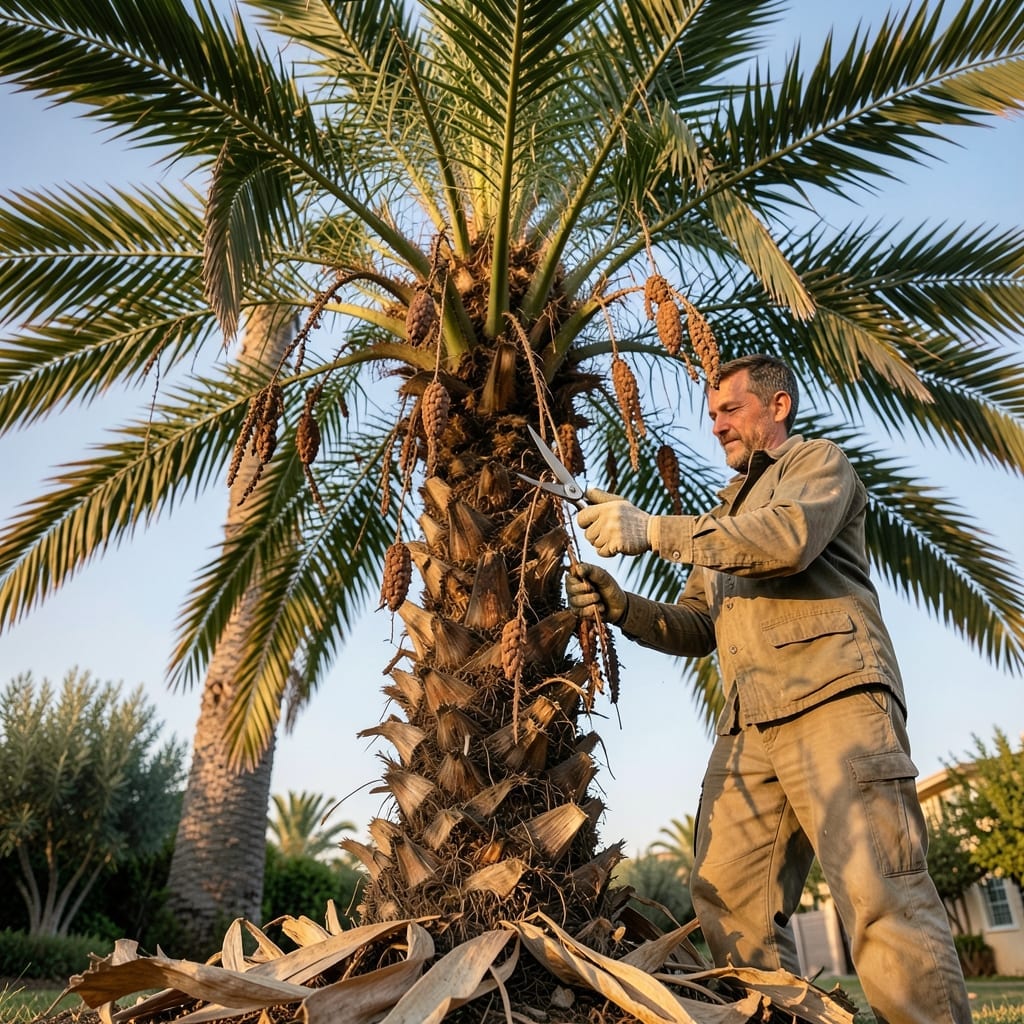
Dead fronds and fruit stalks aren’t just eyesores—they’re invitations for pests and diseases that can compromise your date palm’s health. Regular pruning keeps your tree looking sharp while preventing infestations and structural weaknesses.
Use clean, sharp tools to remove brown, dry fronds and old fruit stalks, making cuts close to the trunk without damaging living tissue. This practice also improves air circulation, reducing humidity that attracts red palm weevils and other threats.
Ideal for gardeners in warm climates, this simple maintenance task ensures your palm stays strong, safe, and productive for years. 🌿
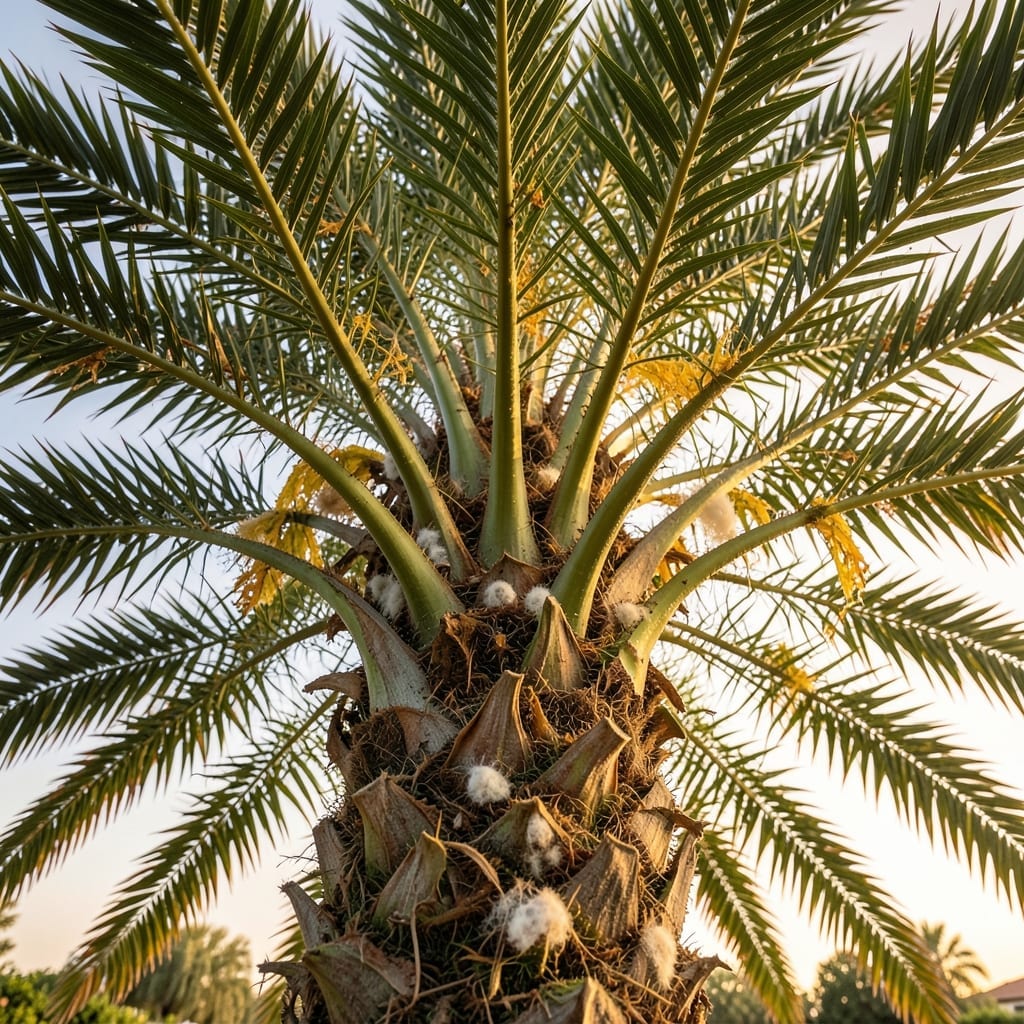
Your date palm might be under silent attack from red palm weevils, spider mites, or mealybugs—three pests that can devastate your tree if left unchecked. These invaders often go unnoticed until the damage is severe.
Inspect fronds regularly for wilting, yellowing, or sticky residue. At the first sign of trouble, treat with neem oil or insecticidal soap, focusing on the crown and undersides of leaves. Early intervention stops infestations before they spread.
This proactive approach is a game-changer for gardeners in warm climates where pests thrive year-round. Healthy palms start with vigilant care. 🌿
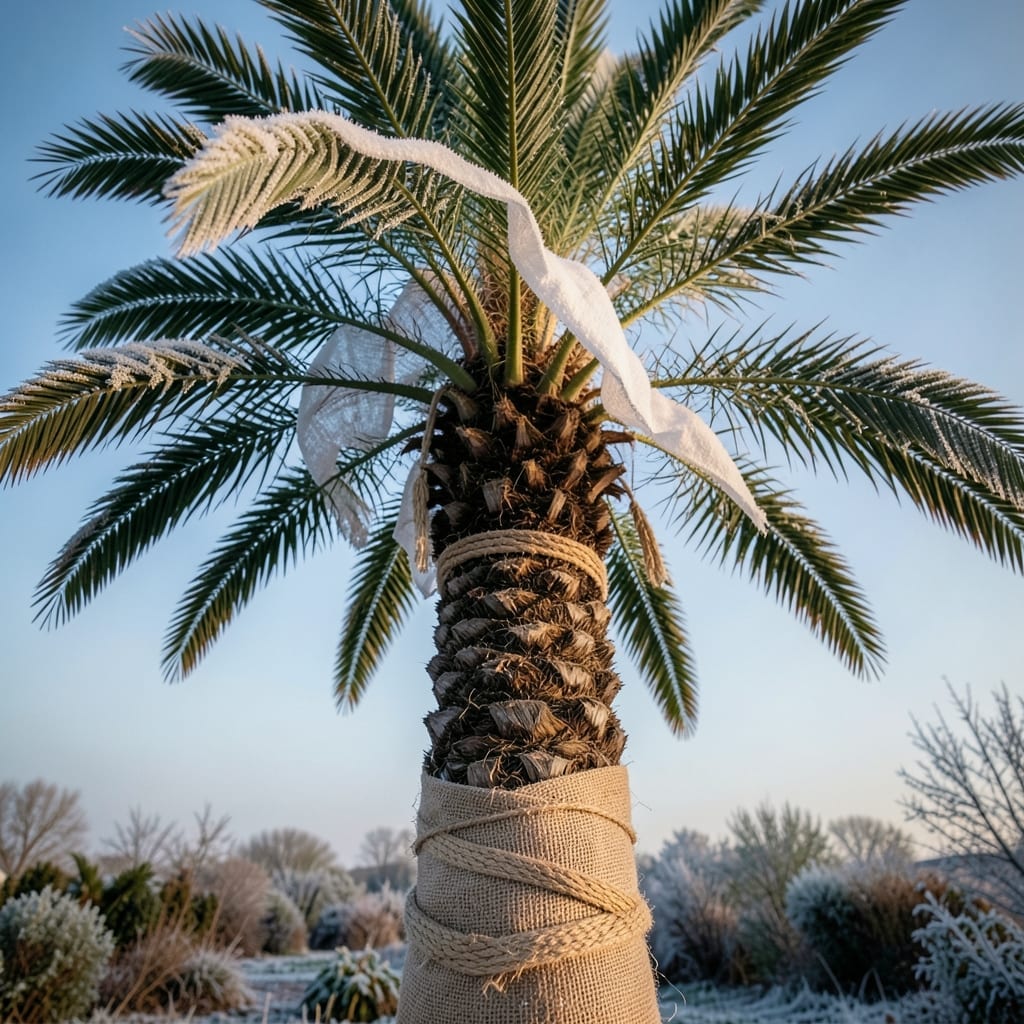
Don’t let winter catch your date palms unprepared. In USDA zones below 9, freezing temperatures can kill young palms, but simple precautions make all the difference.
Wrap trunks with burlap to shield against cold snaps, and drape frost cloth over the canopy to trap heat. Secure the fabric tightly to prevent wind damage, and add a thick layer of mulch at the base for extra insulation.
This method is a lifesaver for gardeners pushing the boundaries of palm hardiness. A little winter prep means your palm will bounce back stronger in spring. 🌱
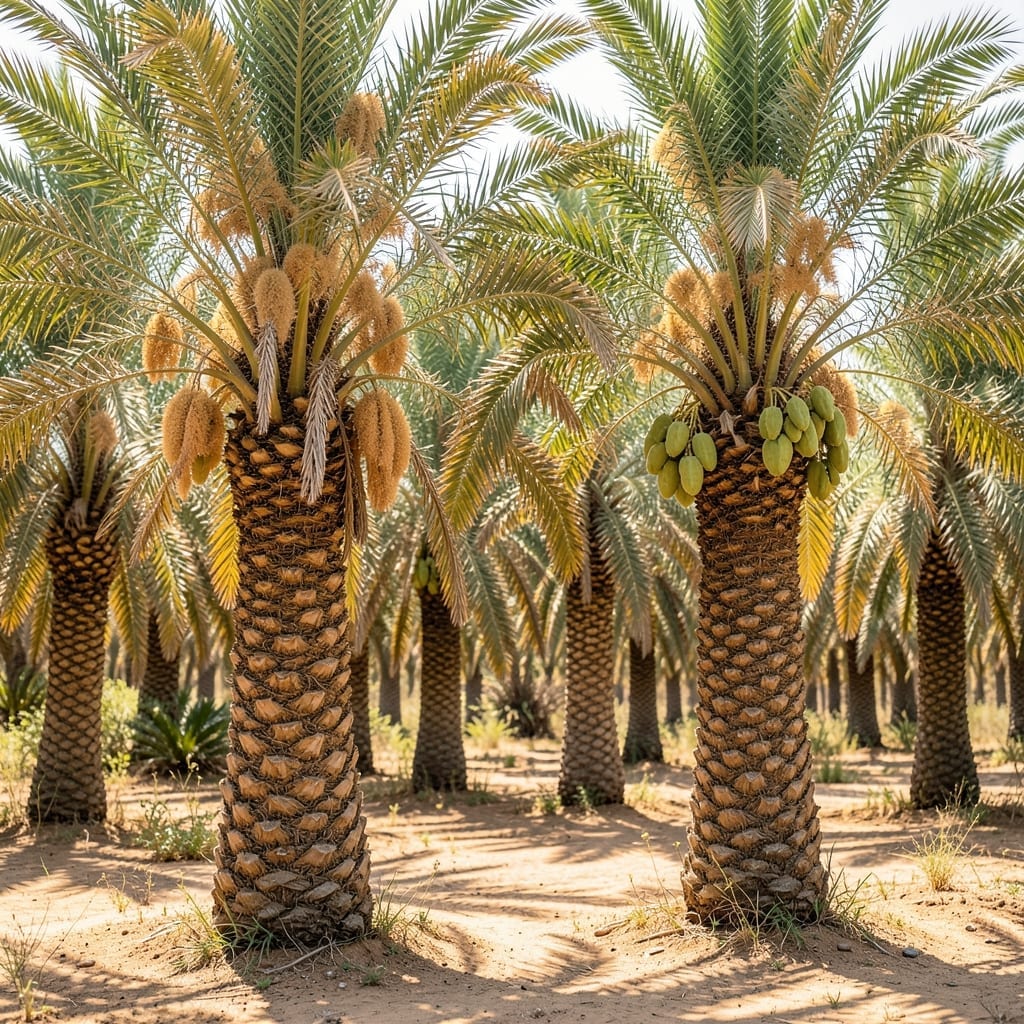
If your date palms aren’t producing fruit, the issue might be their gender. Most date palms are dioecious, meaning you’ll need both male and female plants for pollination to happen naturally.
Plant at least one male and one female within 50 feet of each other to ensure pollen transfer by wind or insects. Without this pairing, female trees will flower but never bear fruit, leaving you with a beautiful but barren palm.
This is especially important for gardeners aiming for a harvest. A little planning in planting ensures your palms can do what they do best—produce delicious dates. 🌿
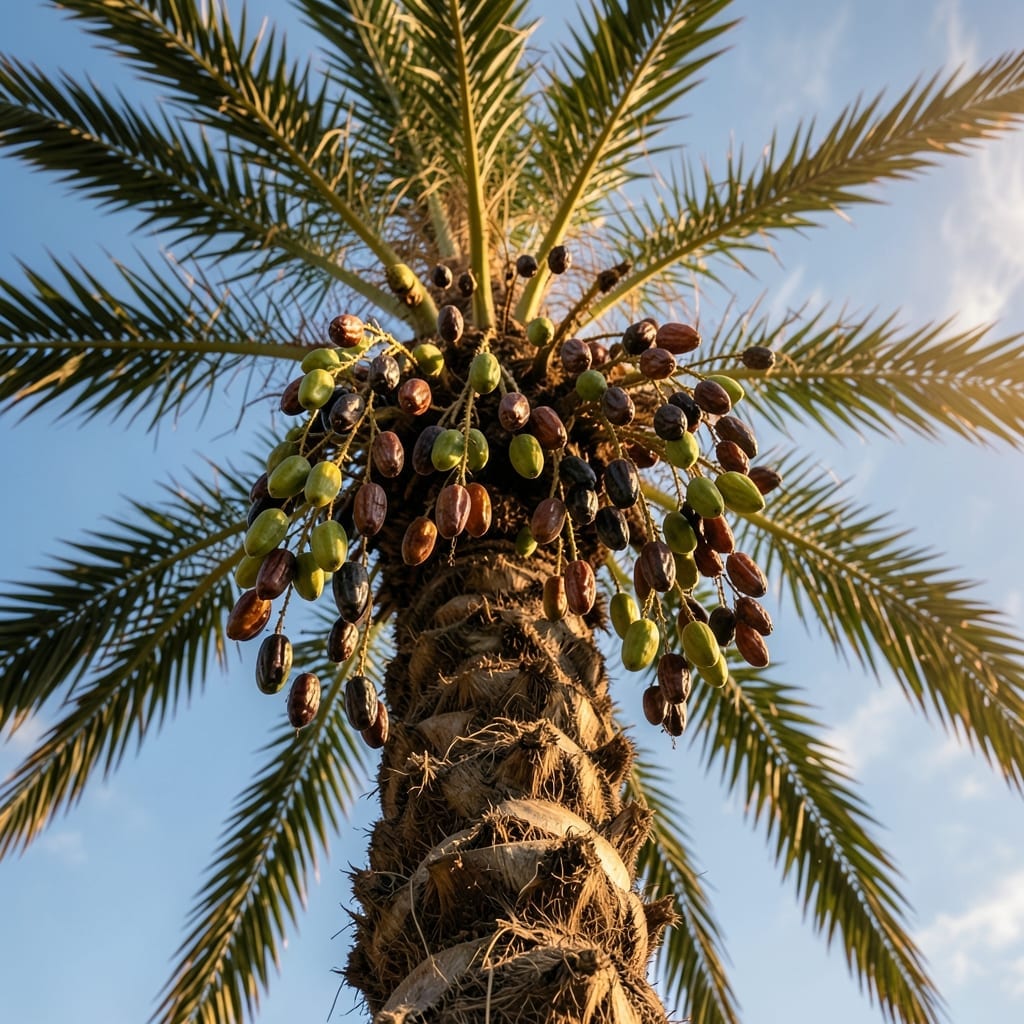
Knowing when to harvest is the final step in your date plant growing journey. Dates transition from green to deep brown or black as they ripen, signaling they’re ready to pick directly from the cluster on the palm.
For the best flavor, harvest the entire cluster and cure the dates in the sun for 10-14 days or use a dehydrator at a low temperature. This process concentrates their natural sugars, making them sweeter and extending their shelf life significantly.
Home gardeners in warm climates will love this simple method for preserving their harvest. Proper curing ensures your dates stay delicious for months. 🌿