
Beautiful Plants For Your Interior
Beautiful Plants For Your Interior
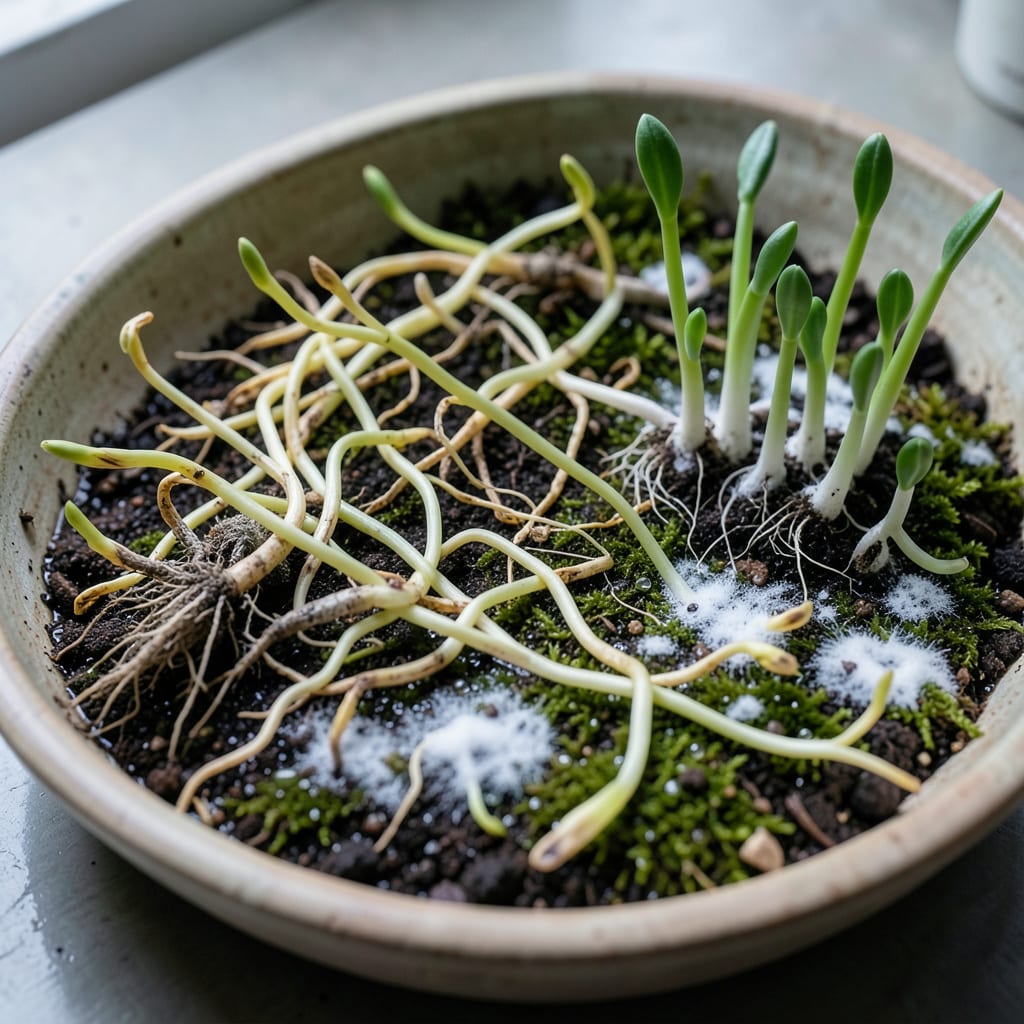
I lost an entire tray of seedlings to damping off last spring. It hits fast—healthy sprouts one day, collapsed and rotting the next. This silent killer strikes at the soil line, turning stems mushy and dark.
Overwatering, poor air flow, or dirty seed-starting mix are usually to blame. I learned the hard way that damp, crowded conditions create the perfect breeding ground for this fungal disease.
Once it appears, there’s no saving infected seedlings. But simple prevention—sterilized soil, proper spacing, and careful watering—keeps it from starting in the first place.
With these strategies, your seedlings will stand strong through their most vulnerable stage. No more heartbreak over lost starts.
Damping off is a devastating fungal disease that strikes young seedlings, but understanding its causes helps you prevent it. Below are the primary triggers, each with a clear scientific basis.
The main culprits are soil-borne fungi like Pythium, Phytophthora, Rhizoctonia, and Fusarium. These pathogens thrive in moist, poorly drained soils, attacking seedling stems at the soil line. They release enzymes that break down cell walls, causing the classic “damping off” collapse.
Excess moisture creates the perfect breeding ground for fungi. Overwatering or using heavy, compacted soil reduces oxygen availability, stressing seedlings and making them more susceptible to infection. Waterlogged conditions also slow root development, giving fungi an easy entry point.
Cool temperatures (below 68°F/20°C) combined with high humidity encourage fungal growth. These conditions weaken seedling defenses, allowing pathogens to take hold. Greenhouses and indoor starts are especially vulnerable if airflow is poor.
Fungi can hitch a ride on unsterilized pots, trays, or garden tools. Even some commercial seed-starting mixes may harbor pathogens if not properly pasteurized. Always use clean, sterile materials to minimize risk.
Dense plantings restrict airflow, trapping moisture around stems—ideal for fungal spores. Thin seedlings early and ensure proper spacing to improve ventilation and reduce humidity buildup.
Damping off can be devastating, but these practical solutions will help you rescue your seedlings and prevent future outbreaks.
If soggy soil is the culprit, stop watering immediately and let the top inch of soil dry out. Repot seedlings in fresh, well-draining potting mix with added perlite or vermiculite. Use pots with drainage holes to avoid waterlogging. Prevention tip: 💡 Water only when the soil feels dry to the touch—early morning watering helps excess moisture evaporate quickly.
For fungal damping off, remove infected seedlings to prevent spread. Apply a natural fungicide like cinnamon (sprinkle lightly on soil) or a copper-based spray. For severe cases, use a commercial fungicide labeled for damping off. Prevention tip: ✨ Sterilize all pots, tools, and trays with a 10% bleach solution before reuse.
Stagnant air encourages fungal growth. Thin seedlings to improve airflow, and place a small fan on low near the tray for gentle circulation. Avoid overcrowding—give each seedling space to breathe. Prevention tip: 🌬️ Start seeds in a bright area with consistent, indirect airflow.
If the soil harbors pathogens, discard it and start fresh with a sterile seed-starting mix. You can also bake soil in the oven at 200°F (93°C) for 30 minutes to kill fungi and bacteria. Prevention tip: 🔥 Always use pasteurized soil for seedlings to avoid introducing diseases.
Leggy, weak seedlings are more susceptible. Ensure they get 12-16 hours of light daily using grow lights or a sunny windowsill. Keep lights 2-4 inches above seedlings and raise them as plants grow. Prevention tip: 💡 Rotate trays daily for even light exposure.
By addressing the root cause and following these prevention tips, you can stop damping off in its tracks and grow strong, healthy seedlings!
Seedlings suddenly wilt or fall over at the soil line. Stems turn soft, dark, and water-soaked. Healthy plants can collapse overnight, often in clusters rather than individually.
No, once symptoms appear, the damage is irreversible. Remove infected plants immediately to prevent spread. Focus on improving conditions for remaining seedlings.
Use sterile seed-starting mix, provide good airflow, and avoid overwatering. Keep temperatures above 68°F and space seedlings properly. Thin crowded trays early.
Choose a light, well-draining mix with perlite or vermiculite. Avoid garden soil or reused potting mix that may harbor fungal spores. Sterilize custom blends at 200°F for 30 minutes.
