
Beautiful Plants For Your Interior
Beautiful Plants For Your Interior
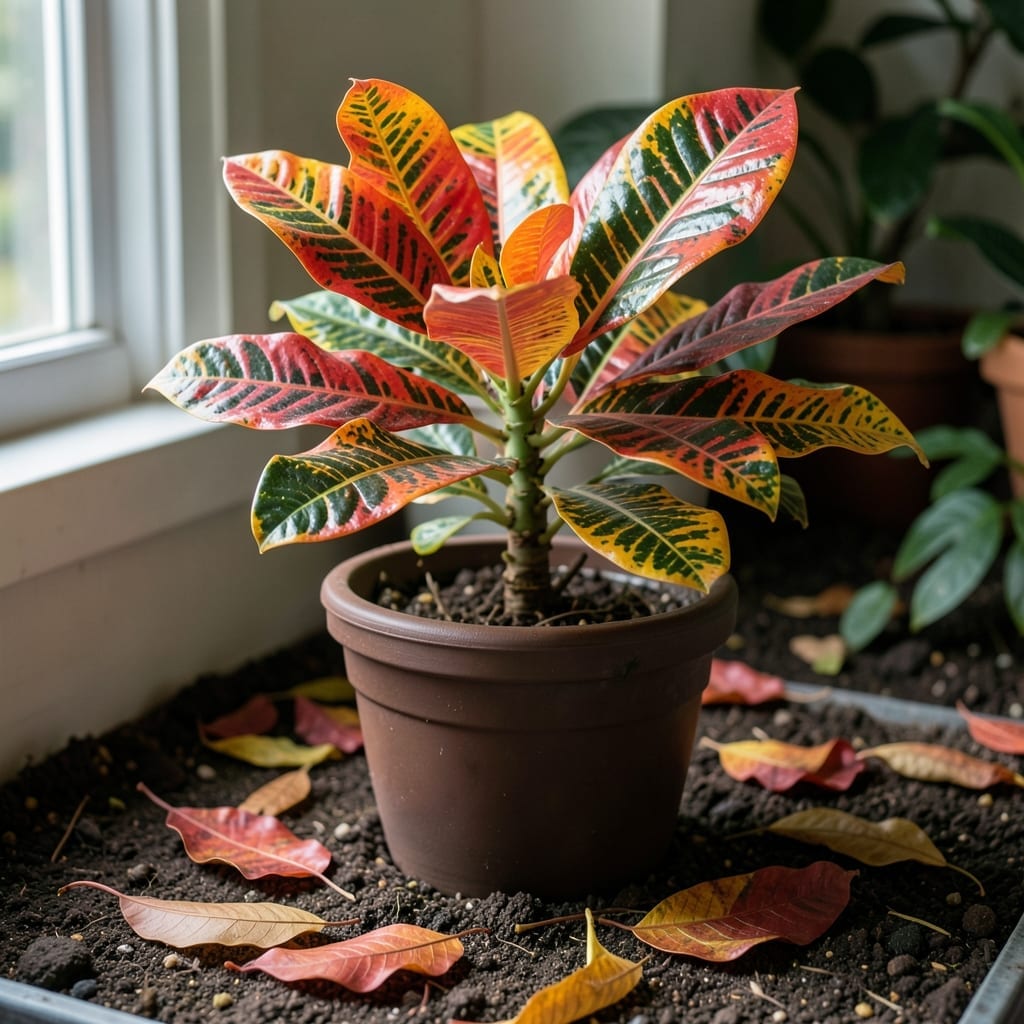
Watching your croton’s vibrant leaves hit the floor is a gut punch. I’ve lost count of how many I’ve revived after this exact panic moment.
Usually it’s one of four culprits: thirst, drowning, dry air, or a temperature swing. Crotons are drama queens—they drop leaves at the slightest discomfort, but they bounce back fast with the right fix.
You’ll see new growth within 2-3 weeks once conditions stabilize. The key is matching their tropical preferences: consistent moisture, 60-70% humidity, and no drafts.
Works for all croton varieties, from petite pots to towering floor plants. Here’s how to diagnose and fix it.
Crotons (Codiaeum variegatum) are stunning tropical plants, but their leaves can fall off due to several environmental or care-related stressors. Below are the most common causes, explained scientifically and with actionable insights.
Crotons thrive in stable temperatures between 60–80°F (15–27°C). Sudden drops, cold drafts (e.g., near AC vents or open windows), or heat stress (above 90°F/32°C) disrupt cellular function, leading to leaf drop. Thermal shock triggers ethylene production—a hormone that accelerates leaf senescence (aging and detachment).
Inconsistent moisture levels harm the roots. Overwatering suffocates roots, promoting root rot (often caused by Phytophthora or Pythium fungi), which cuts off nutrient and water uptake. Conversely, underwatering causes wilting and leaf abscission (shedding) as the plant conserves water. Aim for moist but well-draining soil—water when the top 1–2 inches are dry.
Crotons need bright, indirect light (1,000–2,000 foot-candles) to sustain photosynthesis. Low light weakens the plant, reducing chlorophyll production and causing leaves to yellow and drop. Direct sunlight, especially hot afternoon rays, can scorch leaves, leading to crispy edges and premature fall. Rotate the plant weekly for even exposure.
Native to humid tropics, crotons require 40–80% humidity. Dry air (<30% humidity) increases transpiration rates, stressing the plant. Leaves may turn brown at the tips or edges before falling. Use a humidifier, pebble tray, or group plants together to elevate local humidity.
A lack of nitrogen (N) causes pale, yellow leaves (chlorosis), while magnesium (Mg) or iron (Fe) deficiencies lead to interveinal yellowing (green veins with yellow tissue). Without these nutrients, the plant sheds leaves to redirect resources. Use a balanced, water-soluble fertilizer (e.g., 10-10-10 or 20-20-20) monthly during the growing season.
If your croton’s leaves are falling off, don’t panic—most issues are fixable with a few adjustments. Below are targeted solutions for the most common causes, along with prevention tips to keep your plant thriving.
Fix: Check the soil moisture with your finger—water when the top 1-2 inches feel dry. If the soil is soggy, let it dry out and ensure the pot has drainage holes. For underwatered plants, soak the pot in room-temperature water for 10-15 minutes.
Prevention: Use a well-draining potting mix and water on a consistent schedule, adjusting for seasonal changes. A moisture meter can help avoid guesswork. 🌡️
Fix: Move your croton to a spot with bright, indirect light (east or west-facing windows are ideal). If leaves are scorched from direct sun, filter the light with a sheer curtain. For leggy, dull plants, gradually introduce more light to avoid shock.
Prevention: Rotate the plant every few weeks for even light exposure and monitor leaf color—vibrant patterns mean it’s happy. ✨
Fix: Keep croton plants in a stable environment (60-80°F). Move them away from drafty windows, AC vents, or heaters. If exposed to cold, check for blackened leaves and trim damaged ones to redirect energy.
Prevention: Avoid sudden temperature swings. If moving plants outdoors in summer, acclimate them slowly over a week. 🎯
Fix: Inspect leaves (especially undersides) for spider mites, mealybugs, or scale. Wipe leaves with a damp cloth or spray with insecticidal soap. For severe cases, use neem oil or a systemic pesticide.
Prevention: Mist leaves regularly to deter pests and isolate new plants for 2-3 weeks before introducing them to others. 💡
Fix: Repot in fresh, well-draining soil if the current mix is compacted. Use a balanced liquid fertilizer (10-10-10) every 4-6 weeks during growing season, but dilute to half strength to avoid burning roots.
Prevention: Refresh the top layer of soil annually and flush the pot with water every few months to remove salt buildup. 🌿
Water when the top 1-2 inches of soil feel dry. Typically, this means every 5-7 days in summer and 10-14 days in winter. Always check soil moisture first to avoid overwatering.
Yes! With proper care, new growth appears in 2-3 weeks. Trim damaged leaves to redirect energy, and maintain stable conditions to prevent further stress.
Aim for 40-80% humidity. Use a humidifier or pebble tray if your home is dry. Brown leaf tips often signal low humidity.
Small new leaves usually mean insufficient light or nutrients. Move to brighter indirect light and fertilize with a balanced 10-10-10 every 4-6 weeks in growing season.