
Beautiful Plants For Your Interior
Beautiful Plants For Your Interior
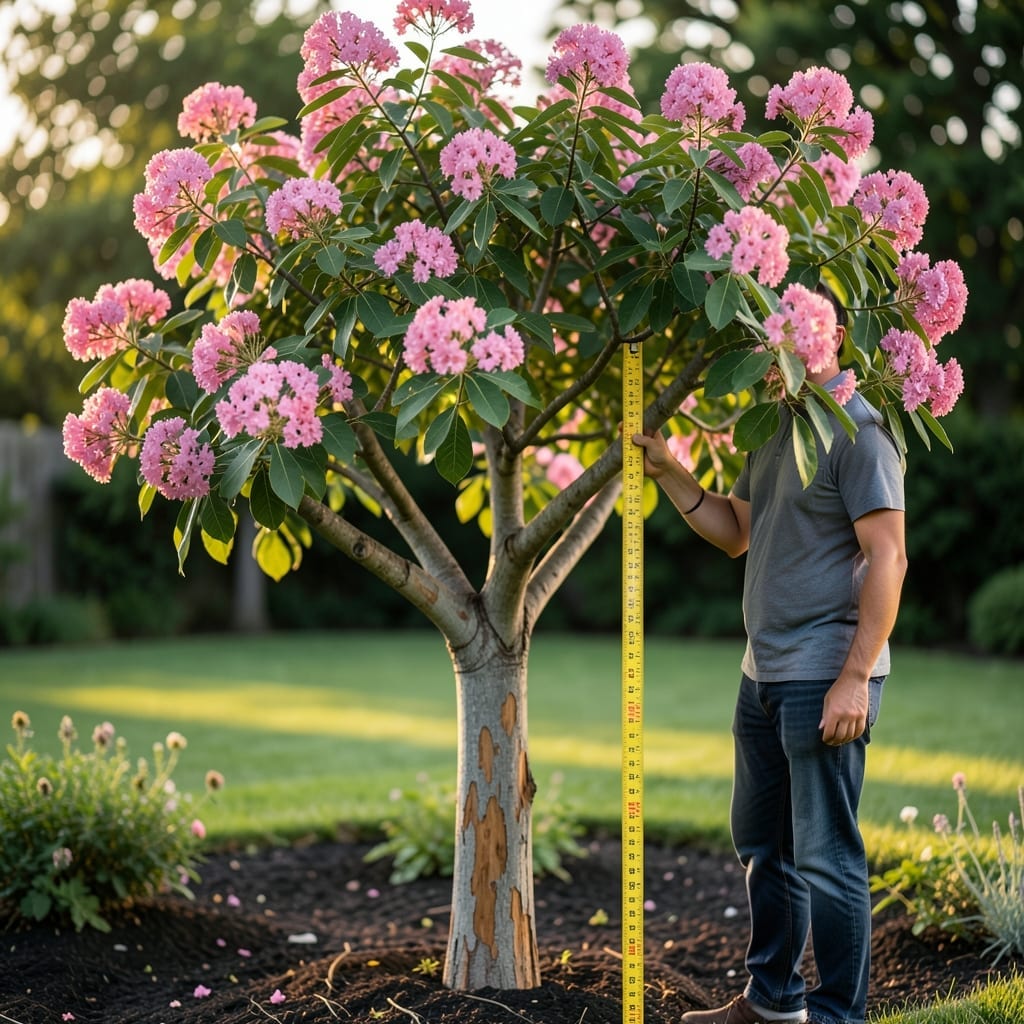
Picture this: a stunning 🌳 Crepe Myrtle Tree adding vibrant color to your landscape. But before you plant, knowing its mature size is the key to a thriving garden.
From dwarf varieties to towering standards, these trees can range from 3 feet to 25 feet tall. Choosing the right one ensures your space looks perfect for years to come.
I’ll walk you through the typical sizes, growth factors, and how to pick the ideal variety for your yard. Let’s make your garden dreams a reality.


Understanding crepe myrtle sizes helps you pick the perfect fit for your yard. These trees come in dwarf, semi-dwarf, and standard varieties, each with unique mature dimensions.
Dwarf types like ‘Pocomoke’ stay compact at 3-6 feet, while semi-dwarfs such as ‘Acoma’ reach 6-10 feet. Standards like ‘Natchez’ can soar to 25 feet tall.
| Variety | Mature Height | Mature Spread |
|---|---|---|
| Dwarf (Pocomoke) | 3-6 ft | 3-5 ft |
| Semi-Dwarf (Acoma) | 6-10 ft | 6-8 ft |
| Standard (Natchez) | 15-25 ft | 10-15 ft |
| Standard (Muskogee) | 20-25 ft | 12-15 ft |
For small spaces, dwarf crepe myrtles fit beautifully in containers or along walkways. Their compact size makes them ideal for patios or urban gardens.
Semi-dwarf varieties work well as focal points in medium-sized yards. They offer stunning blooms without overwhelming the landscape.
In larger landscapes, standard crepe myrtles create dramatic vertical interest. Varieties like ‘Muskogee’ can grow as tall as a 2-story house with proper care.
The spread of these trees is just as important as height. A ‘Natchez’ may stretch 10-15 feet wide, so plan accordingly to avoid crowding.
Remember, these are mature sizes—your crepe myrtle will take several years to reach its full potential. In the first year, expect 3-5 feet of growth under ideal conditions.
By year three, most varieties will be 10-15 feet tall, giving you a good sense of their eventual footprint in your garden.
Always check the specific cultivar before planting, as sizes can vary even within the same category. This ensures your landscape design stays balanced and beautiful.
🌳While genetics play the biggest role in crepe myrtle size, several environmental factors can significantly impact how tall and wide your tree grows. I’ve seen firsthand how proper care can help these trees reach their full potential or keep them more compact.
Pruning practices are one of the most controllable factors. Regular, proper pruning encourages stronger growth and can help maintain a desired size. However, improper pruning (like “crepe murder”) can stunt growth and lead to weak, spindly branches.
1. Soil Quality: Well-draining, fertile soil promotes healthy growth
2. Water Availability: Consistent moisture (especially in first 2 years) supports optimal size
3. Sunlight Exposure: Full sun (6+ hours daily) maximizes growth potential
4. Climate Zone: Warmer zones (7-9) often see faster, larger growth
5. Pruning Technique: Proper timing and method affect size and shape
Soil quality makes a noticeable difference in growth rates. I recommend amending heavy clay or sandy soils with organic matter before planting. This improves drainage while retaining enough moisture for steady growth.
Water availability is crucial, especially during the first two years after planting. While established crepe myrtles are drought-tolerant, consistent watering during dry spells helps them reach their mature size more quickly.
Sunlight exposure directly impacts both height and bloom production. Trees in full sun typically grow taller and produce more flowers than those in partial shade. I’ve noticed shade-grown specimens often remain stunted and leggy.
Finally, climate zone plays a role. In warmer zones (7-9), crepe myrtles often grow faster and larger than in cooler areas. They may also bloom earlier and longer in these regions. 🌳