
Beautiful Plants For Your Interior
Beautiful Plants For Your Interior
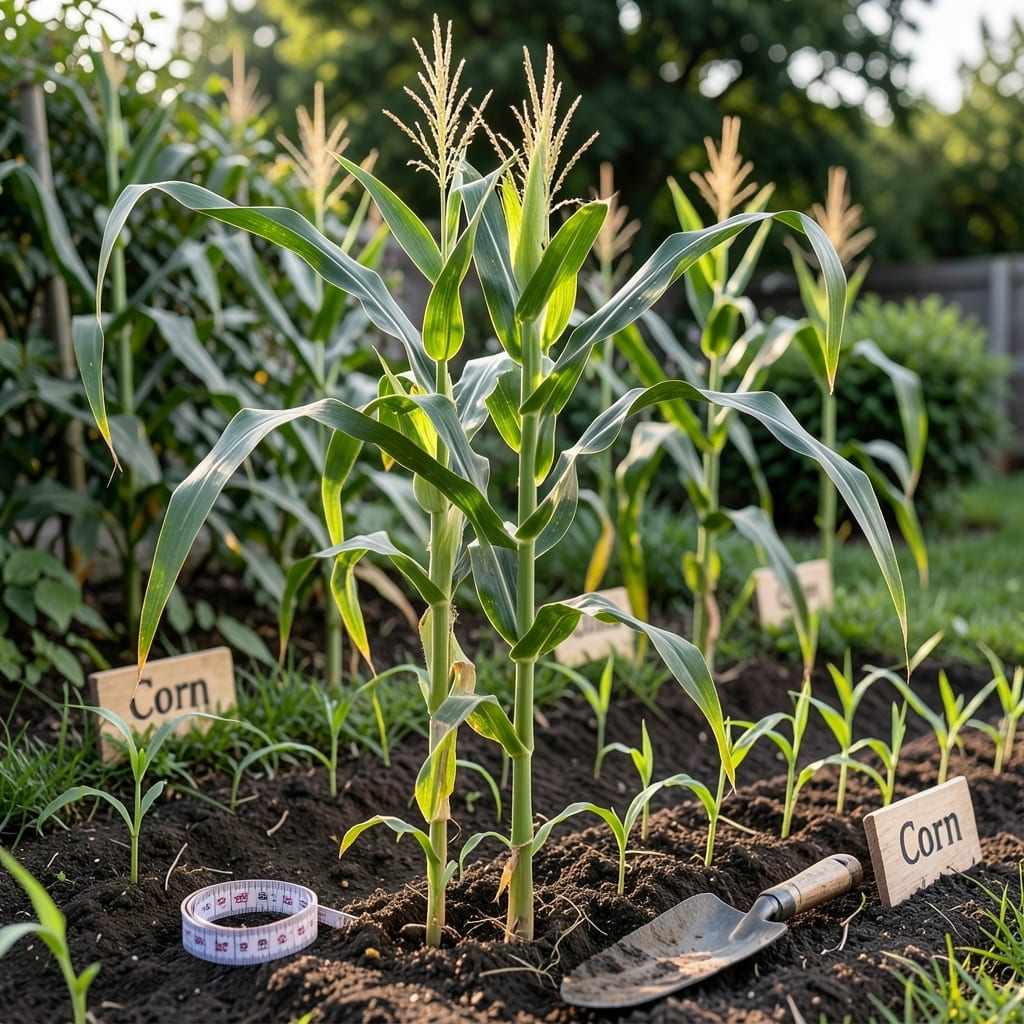
Proper spacing can make or break your 🌽 corn harvest, yet it’s often the most overlooked detail. Whether you’re growing sweet, field, or popcorn, the right distances between plants and rows are the key to healthy growth.
Crowding leads to competition for nutrients and poor pollination, while too much space wastes valuable garden real estate. Getting it just right means more efficient use of your plot and a bigger yield.
Discover how to optimize your corn planting layout for maximum results, no matter your garden size or variety. Let me show you the perfect approach.


Getting your corn plant spacing right is crucial for a healthy harvest. Different varieties and planting methods require unique approaches. I’ve found that sweet corn thrives with closer spacing than field corn.
For raised beds or block planting, you can often reduce distances slightly. But remember, proper spacing ensures good air circulation and pollination. Let me break it down for you. 🌱
| Variety | Plant Spacing | Row Spacing | Depth |
|---|---|---|---|
| Sweet Corn | 10-12 inches | 30-36 inches | 1-1.5 inches |
| Field Corn | 12-18 inches | 36-42 inches | 1.5-2 inches |
| Popcorn | 12-15 inches | 36 inches | 1.5 inches |
| Raised Beds | 8-10 inches | 24-30 inches | 1 inch |
In my experience, sweet corn does best with 10-12 inches between plants. This gives each stalk enough room to develop strong roots without competing too much for nutrients.
Field corn needs more space, about 12-18 inches apart. It’s taller and needs more room for proper air flow to prevent diseases. I always mark my rows clearly to maintain these distances.
For popcorn varieties, I recommend 12-15 inches between plants. They’re similar to field corn but can tolerate slightly closer spacing. The row spacing remains important at about 36 inches.
If you’re using raised beds, you can plant a bit denser. I’ve had success with 8-10 inches between plants and 24-30 inches between rows. The improved drainage lets you maximize space safely.
Remember that planting depth is just as important as spacing. For most corn, 1-1.5 inches deep is ideal. Any deeper and the seeds might struggle to emerge. I always check my soil temperature too.
Proper spacing affects pollination significantly. Corn is wind-pollinated, so plants need to be close enough for pollen to travel between them. That’s why block planting often works better than single rows.
In my garden, I’ve noticed that well-spaced corn produces larger ears with more kernels. The plants look healthier too, with stronger stalks and better leaf development. It’s worth taking the time to measure. 🌿
I’ve learned that proper corn spacing isn’t just about organization—it’s essential for plant health. When plants are too close, they compete for nutrients and sunlight, leading to stunted growth. 🌱
Poor spacing also reduces air circulation, which can invite fungal diseases like corn smut. I’ve seen firsthand how crowded plants struggle with weak stalks and smaller ears at harvest time.
Planting too close reduces yield by 30-50% and increases disease risk. Always follow variety-specific guidelines for best results.
Wind pollination is another critical factor. Corn is pollinated by wind, so plants need space for pollen transfer. If they’re too far apart, pollination fails, leading to poor kernel development.
In my garden, I’ve noticed that well-spaced corn has stronger root systems and better water uptake. This means the plants can withstand drought better during dry spells. It’s a game-changer for consistency.
Row orientation matters too. I plant my rows north to south for even sun exposure. This helps prevent shading and ensures all plants get equal light throughout the day.
Remember that soil type can affect spacing needs. In rich, loamy soil, you might get away with slightly closer spacing. But in poor or clay soil, give plants extra room to access nutrients. 🌿