
Beautiful Plants For Your Interior
Beautiful Plants For Your Interior
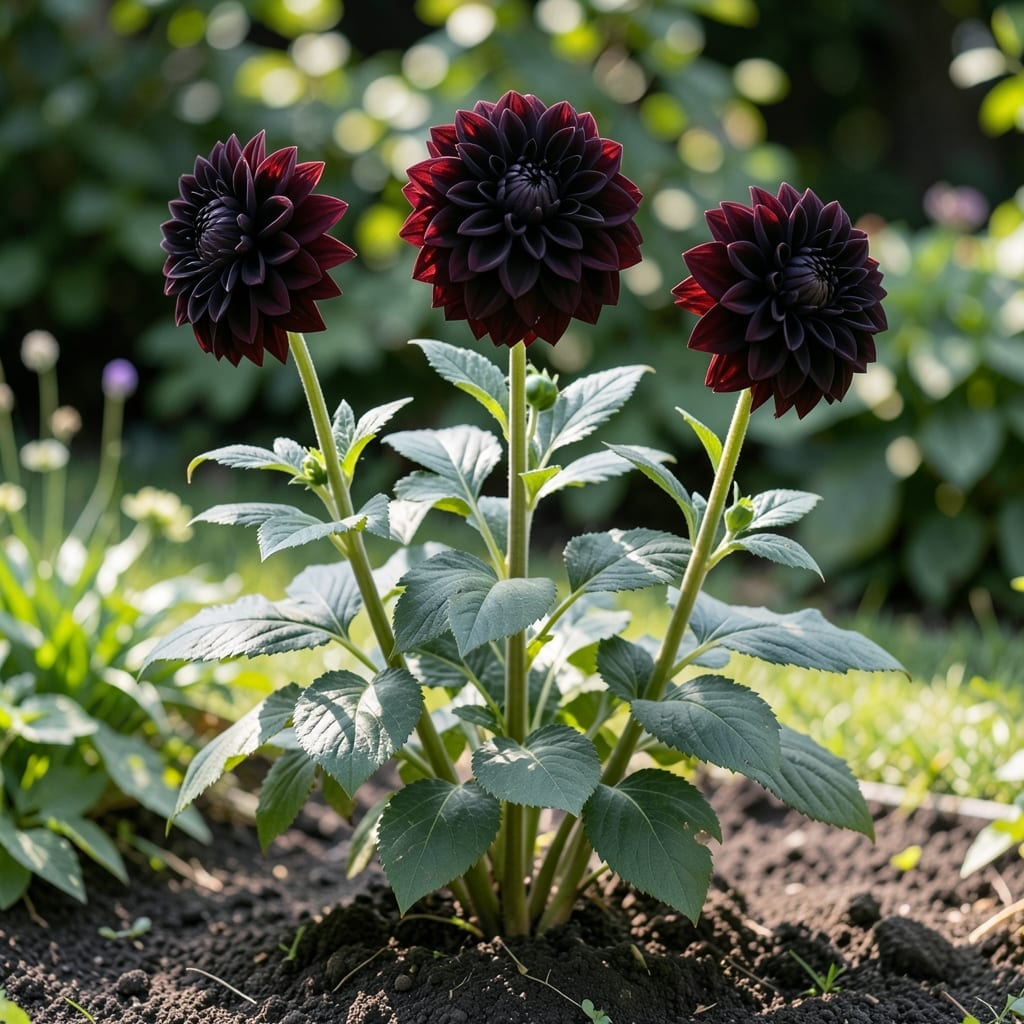
Dark dahlias stop garden visitors in their tracks. I planted my first black variety three seasons ago, and the deep, velvety blooms still draw more compliments than anything else in my beds.
They thrive in full sun with well-draining soil and consistent moisture. The secret is deadheading spent flowers to keep new ones coming all summer. You’ll get dramatic color with minimal fuss.
📚 In This Guide
Here’s the method I use to cultivate those dramatic, near-black blooms every gardener admires.
Choose a location with full sun—black dahlias need at least 6-8 hours of direct sunlight daily to develop their deep color. The soil should be well-draining and rich in organic matter. I till in a 2-3 inch layer of compost before planting to improve fertility and structure.
Test the drainage by digging a 1-foot hole and filling it with water. If it drains completely within 1 hour, you’re good to go. Poor drainage leads to tuber rot, which will kill your plants before they even bloom. Avoid low-lying spots where water pools after rain.
Plant dahlia tubers in spring after the last frost when soil temperatures reach 60°F. Dig a hole about 6-8 inches deep and place the tuber horizontally with the eye (the small bud) facing up. This orientation ensures the sprout emerges properly without twisting.
Space tubers 18-24 inches apart to allow for air circulation and prevent disease. Cover with soil and water lightly to settle the dirt. I mark each planting spot with a small stake so I don’t accidentally dig in the wrong place while waiting for sprouts to appear.
Install stakes or cages at planting time—black dahlia varieties often grow tall and need support. I use 5-6 foot bamboo stakes for each plant, positioning them 4-6 inches from the tuber to avoid damaging it later. Tie the main stem to the stake with soft twine as it grows.
Water deeply once a week until the plant is established, then reduce to 2-3 times weekly depending on rainfall. You’ll know it’s time to water when the top inch of soil feels dry. Overwatering causes tubers to rot, while underwatering stunts growth and reduces bloom quality.
Feed your dahlias with a low-nitrogen, high-phosphorus fertilizer (like 5-10-10) every 3-4 weeks to promote strong roots and abundant flowers. I switch to a bloom booster (higher in phosphorus) once buds start forming to enhance the deep color of black varieties.
Deadhead spent blooms regularly by cutting them back to the next set of leaves. This prevents the plant from wasting energy on seed production and encourages more flowers. For black dahlias, removing spent blooms also helps maintain the intensity of the dark color in new blooms.
After the first frost, cut back the foliage to 4-6 inches above the ground. Dig up the tubers carefully, brushing off excess soil. Let them dry in a well-ventilated area for 2-3 days before storing them in a cool, dark place at 40-50°F.
Store tubers in a box filled with slightly damp peat moss or vermiculite. Check them monthly and discard any that show signs of rot or shrinking. Replant the following spring for another season of stunning, dark blooms.
These practical insights will help you avoid pitfalls and achieve those stunning dark blooms.
Sunlight is Non-Negotiable: The 6-8 hours of daily direct sunlight mentioned in Step 1 is critical for developing that deep, near-black color. I learned this the hard way after planting some in partial shade—they produced pale, lackluster blooms. Confession: I skipped this step for years and wondered why my dahlias never lived up to their potential.
Drainage Test Matters: That 1-hour drainage test in Step 1 isn’t just a suggestion. If your hole doesn’t drain completely within that hour, you risk tuber rot. I’ve lost entire plantings to this—now I always test multiple spots before deciding where to plant.
Planting Depth and Spacing: In Step 2, stick to the 6-8 inches deep and 18-24 inches apart measurements. Planting too shallow exposes tubers to temperature swings, while crowding them leads to disease. The eye facing up is also crucial—getting this wrong means twisted, weak sprouts.
Overwintering Temperature Control: For Step 5, storing tubers at exactly 40-50°F is key. Too warm and they’ll sprout prematurely; too cold and they’ll freeze. I check my storage area with a thermometer—don’t trust your basement to stay in that range without verifying.
Pale blooms often result from insufficient sunlight or poor soil nutrients. Ensure your Dahlia gets 6-8 hours of direct sunlight daily and use a balanced fertilizer rich in phosphorus to deepen the color.
Plant Black Dahlia tubers in spring after the last frost, when soil temperatures reach at least 60°F (15°C). This gives them a full growing season to establish deep, vibrant blooms before fall.
Yes! Use a large pot (at least 12 inches deep) with well-draining soil. Container-grown Dahlias may need more frequent watering and fertilizer to maintain their dark, dramatic color.
Brown or crispy edges often indicate underwatering or excessive heat. Keep the soil consistently moist (not soggy) and mulch around the base to retain moisture and regulate temperature.