
Beautiful Plants For Your Interior
Beautiful Plants For Your Interior
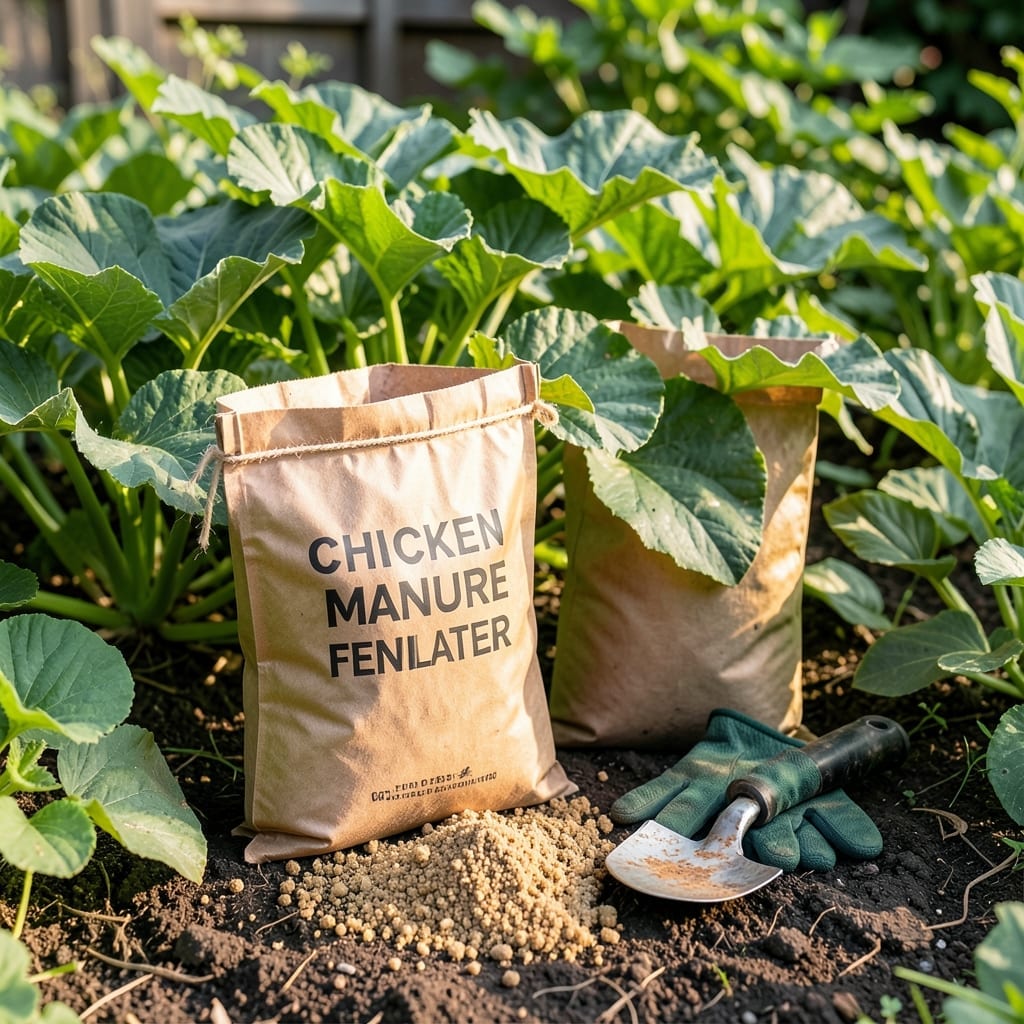
I used to think all organic fertilizers were created equal—until I saw how Chicken Manure 🐔 transformed my garden. This natural powerhouse packs a serious nutrient punch, but its effectiveness hinges on understanding its unique properties.
What makes it stand out is its ability to boost soil health while delivering essential nutrients. Yet, there’s a right way and a wrong way to use it to avoid overwhelming your plants.
Discover how to harness its full potential without the common pitfalls. Your garden will thank you for this game-changing knowledge.
I’ve found that chicken manure fertilizer is one of the most nutrient-dense organic amendments for gardens. Its NPK ratio typically ranges from 1.8-3-1.5 to 3-2-1.5, making it a high-nitrogen powerhouse. This is ideal for leafy greens and fast-growing plants that crave nitrogen. 🌱
The nitrogen (N) promotes lush foliage, while phosphorus (P) supports root development and flowering. The potassium (K) boosts disease resistance and fruit production. However, fresh manure can be too strong, so composting is essential to mellow its potency.
| Nutrient | Typical NPK Range | Primary Benefit |
|---|---|---|
| Nitrogen (N) | 1.8-3.0 | Leaf and stem growth |
| Phosphorus (P) | 1.5-2.0 | Root and flower development |
| Potassium (K) | 1.5-2.0 | Fruit quality and disease resistance |
What many gardeners overlook is that composted chicken manure has a more balanced NPK of around 3-2-2. This makes it safer and more effective for a wider range of plants. I always recommend aging manure for at least 6 months to reduce ammonia levels and pathogens.
The composting process also improves nutrient availability. Raw manure can burn plant roots due to its high ammonia content, but composting transforms it into a gentler, more usable form. I’ve seen tomato plants thrive with composted chicken manure, producing bigger, healthier fruit. 🌿
Compared to other organic fertilizers, chicken manure has a higher nitrogen content than cow or horse manure. This makes it perfect for heavy feeders like corn, squash, and broccoli. However, it’s important to balance it with other amendments to avoid nutrient imbalances.
I’ve learned that testing soil before and after application helps fine-tune my approach. If your soil is already high in nitrogen, you might need to mix chicken manure with other compost to avoid overloading your plants. This is especially true for flowering plants that need more phosphorus. 🌼
Another key point is that liquid chicken manure tea can be made by steeping composted manure in water. This provides a quick nutrient boost for plants, but it should be diluted to avoid burning. I use a 1:10 ratio of manure to water for my container gardens.
For best results, I apply composted chicken manure in early spring or fall. This gives it time to break down and release nutrients when plants need them most. Avoid using it during peak summer heat, as this can stress plants and waste nutrients through leaching.
Remember, less is more with chicken manure. Over-application can lead to nutrient runoff, which harms the environment and your garden. Stick to 2-3 lbs per 100 sqft or 1/4 cup per plant for optimal results. Your soil—and your plants—will thank you. 🌻
I’ve discovered that chicken manure fertilizer works wonders for vegetables, but the application method varies by plant type. For leafy greens like spinach and lettuce, its high nitrogen content promotes rapid growth. 🌱
For root crops like carrots and beets, I mix composted manure into the soil before planting. This ensures steady nutrient release without overwhelming the developing roots.
For flowering plants, I focus on balanced NPK. Since chicken manure is nitrogen-heavy, I often blend it with bone meal or wood ash to boost phosphorus and potassium.
When making liquid chicken manure tea, I steep 1 part composted manure in 10 parts water for 24-48 hours. This creates a nutrient-rich foliar spray that gives plants an immediate boost. ✂️
For fruit trees and berries, I apply composted manure in early spring and late fall. This timing ensures nutrients are available during critical growth phases without risking fruit burn.
Always