
Beautiful Plants For Your Interior
Beautiful Plants For Your Interior
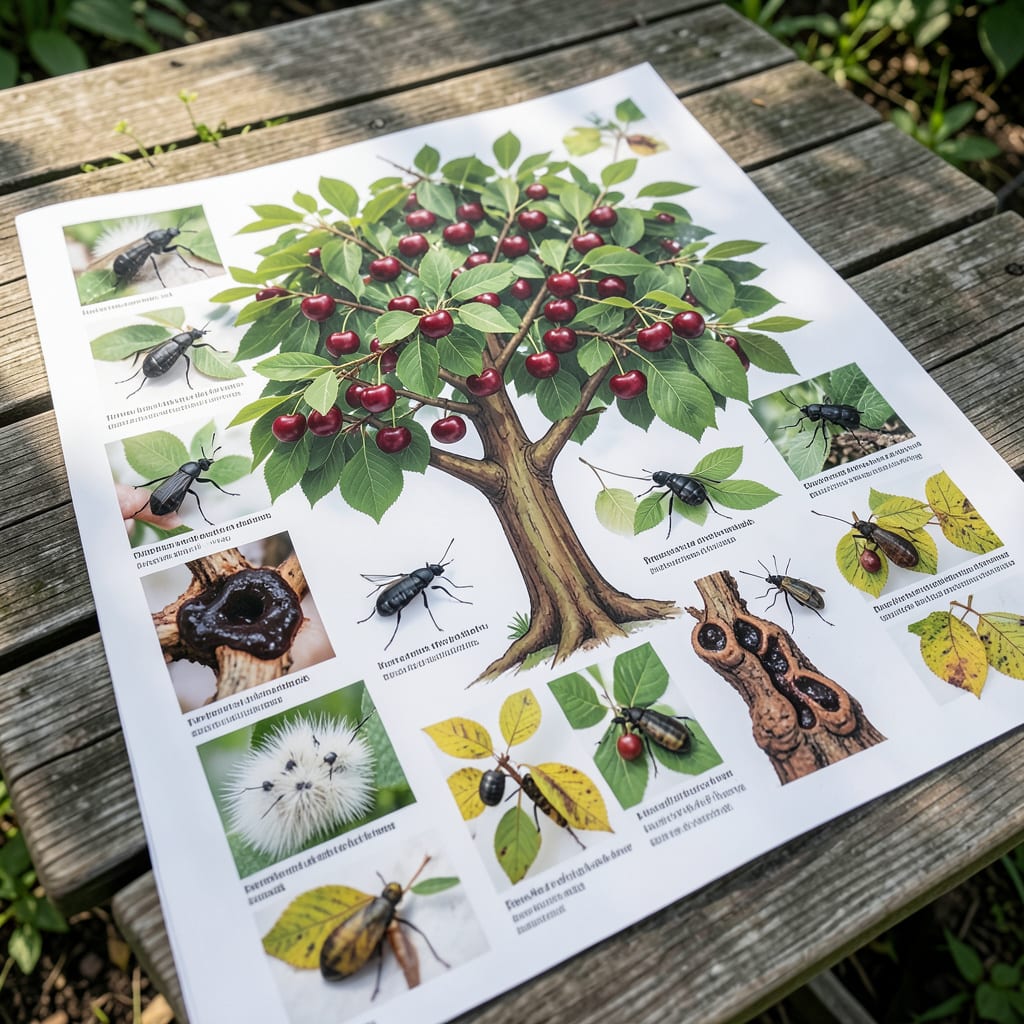
Nothing ruins a cherry harvest faster than unseen problems. I’ve watched healthy trees decline overnight from issues that started as subtle spots or curled leaves.
The key is catching problems early—yellowing leaves, sticky residue, or tiny holes all tell a story. Most pests and diseases leave distinct visual clues that point directly to the solution.
With the right approach, you can stop damage before it spreads. I’ve saved multiple trees using targeted treatments that work without harming the fruit or local pollinators.
Prevention beats cure every time. Simple habits like cleaning fallen debris and inspecting trees weekly keep most issues from ever taking hold.
Cherry trees, like all plants, are vulnerable to a range of pests and diseases due to biological, environmental, and cultural factors. Understanding these root causes helps prevent and manage issues effectively.
Improper planting, pruning, or watering creates stress, making trees more susceptible. Overcrowding reduces airflow, fostering fungal growth like brown rot or leaf spot. Over- or under-watering weakens roots, inviting pests such as root-knot nematodes.
Insects like aphids, cherry fruit flies, and scale insects directly damage trees by feeding on sap, leaves, or fruit. These pests also spread viral diseases (e.g., cherry leaf roll virus) or create entry points for bacterial infections.
Wet, humid conditions encourage fungal spores (e.g., powdery mildew, silver leaf disease) to thrive. Bacteria like Pseudomonas syringae cause cankers and dieback, often entering through wounds from pruning or frost damage.
Extreme weather—drought, frost, or heatwaves—weakens trees, reducing their natural defenses. Poor soil nutrition (e.g., nitrogen deficiency) also lowers resilience, making them prime targets for opportunistic pests and pathogens.
Dealing with cherry tree pests and diseases doesn’t have to be overwhelming. Here’s how to tackle the most common problems with practical, step-by-step solutions and prevention tips.
Spray infested branches with a strong stream of water to knock aphids off. For severe cases, apply insecticidal soap or neem oil, following label instructions. Prevention tip: 💡 Encourage natural predators like ladybugs by planting companion flowers such as marigolds or yarrow nearby.
Hang yellow sticky traps in the tree to catch adult flies. Remove and destroy fallen fruit immediately to break their life cycle. Prevention tip: ✨ Use fine-mesh netting over the tree to block flies from laying eggs in the fruit.
Prune and remove all infected branches and fruit (dispose of them far from the tree). Apply a copper-based fungicide at bud break and again after petal fall. Prevention tip: 🎯 Thin out branches to improve air circulation and reduce humidity.
Rinse leaves with water to dislodge mites. If they persist, use horticultural oil or miticides, applying in the early morning or late evening. Prevention tip: 🌡️ Keep the tree well-watered, as mites thrive in dry, dusty conditions.
Rake and remove fallen leaves to eliminate fungal spores. Apply fungicide in early spring and after heavy rains. Prevention tip: 💡 Water at the base of the tree to keep leaves dry and reduce infection risk.
Regular inspection and quick action are key to keeping your cherry tree healthy and productive! 🌳
Look for curled leaves, sticky residue (honeydew), or clusters of tiny green/black insects on new growth. Aphids often gather on the undersides of leaves and tender shoots.
Preventative applications work best at bud break and after petal fall. For active infections, treat immediately at first signs and repeat every 7-14 days as needed.
Yes! Yellow sticky traps and fine-mesh netting are highly effective. Remove fallen fruit daily to break their breeding cycle.
This often signals stress from overwatering, nutrient deficiency, or early-stage fungal disease. Check soil moisture and inspect for spots or lesions on leaves.
