
Beautiful Plants For Your Interior
Beautiful Plants For Your Interior
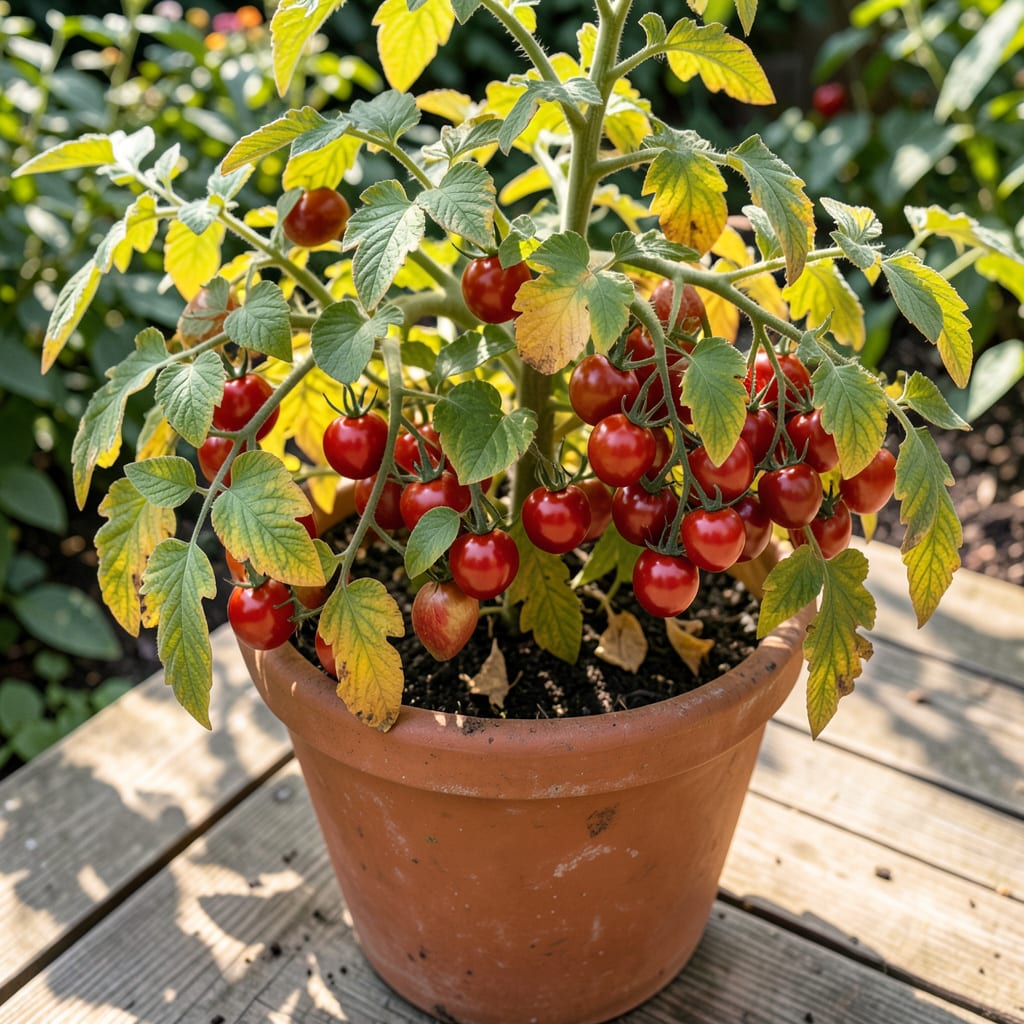
Yellow leaves on cherry tomatoes aren’t just unsightly—they’re your plants crying for help. I’ve seen this happen mid-season when everything seemed fine, then suddenly, the lower leaves start fading to pale yellow.
The usual suspects are nutrient imbalances, overwatering, or soil that’s too acidic or alkaline. Most gardeners jump to conclusions about pests, but often, it’s simpler: your plant isn’t getting what it needs from the soil or your watering routine.
Fixing it starts with checking moisture levels and testing your soil’s pH. A 6.0-6.8 range keeps nutrients available. You’ll often see improvement within a week of adjusting your approach.
Prevention is easier than cure—consistent care beats crisis management every time.
Cherry tomato leaves turn yellow due to several underlying issues, often tied to nutritional imbalances or environmental stressors. Below are the most common causes, explained scientifically for clear action.
Nitrogen is vital for chlorophyll production. When soil lacks this nutrient, older leaves (lower on the plant) turn pale yellow first, as the plant redistributes nitrogen to newer growth. Test soil with a kit—levels below 40-60 ppm confirm deficiency. Fix with a balanced fertilizer (e.g., 10-10-10) or organic amendments like compost.
Excess water suffocates roots, reducing oxygen uptake and nutrient absorption. This triggers chlorosis (yellowing) and wilting. Check soil moisture 2 inches deep—if soggy, improve drainage with perlite or sand. Ensure pots have drainage holes to prevent root rot.
Magnesium (central to chlorophyll) deficiency causes interveinal chlorosis—yellowing between leaf veins, often in older leaves. Iron deficiency does the same but affects young leaves first. Test soil pH: magnesium is less available in sandy or acidic soils (pH <6.0). Add Epsom salt (magnesium sulfate) or chelated iron for quick correction.
Aphids, whiteflies, or Fusarium wilt disrupt nutrient flow, causing yellow spots or mottling. Inspect leaf undersides for pests or black streaks on stems (fungal signs). Treat with neem oil (pests) or copper fungicides (diseases), and remove infected foliage promptly.
Here’s how to tackle each common cause of yellowing leaves and bring your cherry tomato plants back to health.
Fix: Test your soil with a kit to confirm deficiencies. For nitrogen, add a balanced fertilizer (10-10-10) or compost. For magnesium, use Epsom salt (1 tablespoon per gallon of water) as a foliar spray. Iron shortages? Apply chelated iron to the soil.
Prevent: Feed plants with a slow-release fertilizer at planting and mid-season. Rotate crops yearly to avoid nutrient depletion. 💡
Fix: Let the soil dry slightly between waterings. If roots are waterlogged, improve drainage by mixing in perlite or sand. Trim any black, mushy roots to prevent rot.
Prevent: Use well-draining soil and containers with drainage holes. Water deeply but less frequently—early morning is best. 🌡️
Fix: Spray leaves with neem oil or insecticidal soap to combat aphids and whiteflies. For severe cases, introduce beneficial insects like ladybugs.
Prevent: Inspect plants weekly for pests. Keep the garden clean of debris where bugs hide. ✨
Fix: Remove infected leaves immediately and avoid overhead watering. Treat with a copper fungicide for fungal infections like early blight.
Prevent: Space plants for airflow, and water at the base. Sterilize pruning tools between uses. 🎯
Fix: Shield plants from extreme heat with shade cloth. If cold is the issue, use row covers or move potted plants indoors.
Prevent: Harden off seedlings before transplanting. Monitor weather forecasts to protect plants proactively. 🌞
Yes, prune yellow leaves to redirect energy to healthy growth. Use clean scissors and remove leaves at the stem base. Never remove more than 1/3 of foliage at once to avoid shocking the plant.
Water deeply 2-3 times weekly in hot weather, less in cooler months. Check soil 2 inches deep—if dry, it’s time to water. Always water at the base, not the leaves.
Over-fertilizing leads to salt buildup, which damages roots and blocks nutrient uptake. Use a balanced fertilizer and follow package instructions carefully.
Aim for 6.0-6.8 pH for optimal nutrient absorption. Test with a soil kit and amend with lime (to raise pH) or sulfur (to lower pH) as needed.
