
Beautiful Plants For Your Interior
Beautiful Plants For Your Interior
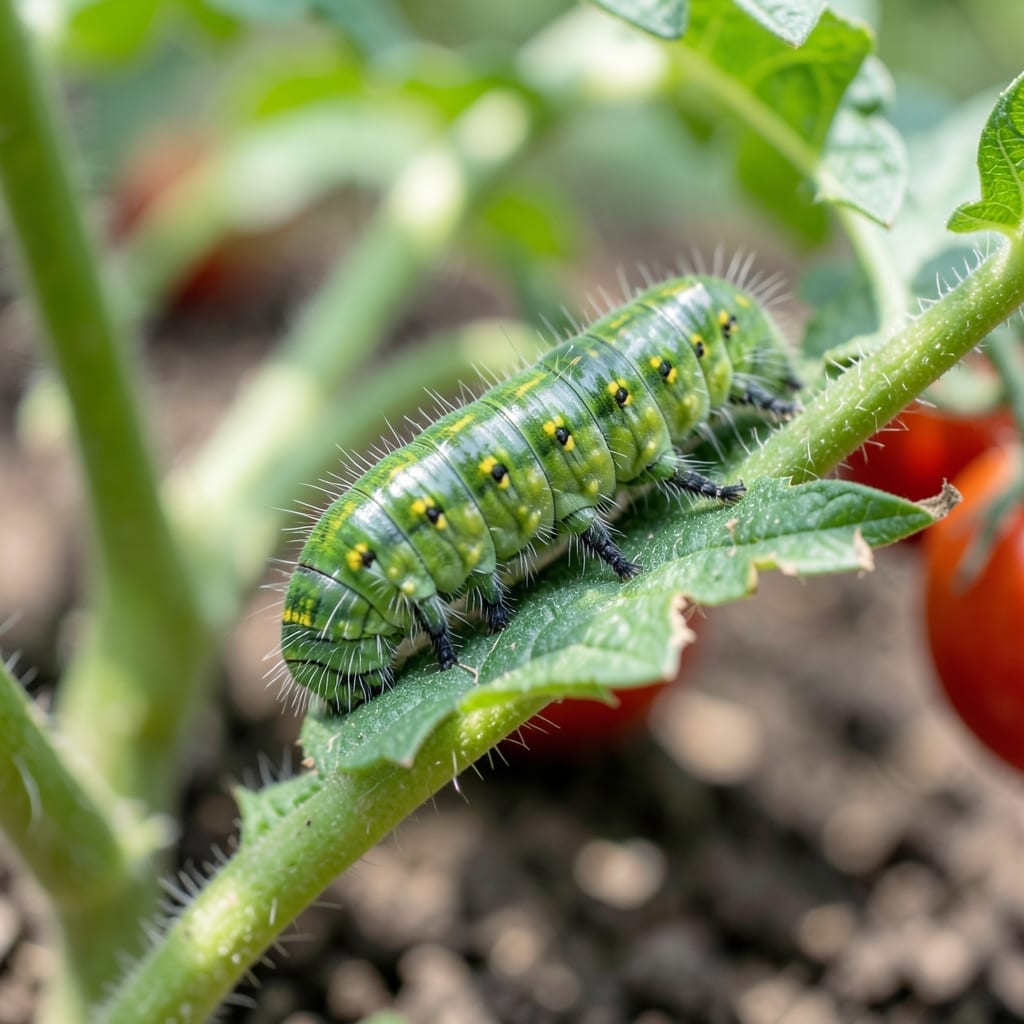
Tomato hornworms can strip your plants bare overnight. I’ve lost entire crops to these green monsters, but I’ve learned to spot them early—look for dark droppings and missing leaves.
Hand-picking is the most effective method. Grab a bucket of soapy water and check the undersides of leaves at dawn or dusk. It’s gross but 100% organic.
Barriers work too. Row covers prevent adult moths from laying eggs, and collars around stems stop caterpillars from crawling up. Simple, cheap, and no chemicals.
Encourage natural predators like parasitic wasps and birds. They’ll do the work for you if you let them. This battle is winnable.
Tomato plants often fall victim to caterpillars due to a few key biological and environmental factors. Understanding these causes can help you take targeted action to protect your garden. Here’s why it happens:
Tomato leaves are packed with nitrogen, proteins, and moisture, making them an irresistible food source for caterpillars like the tomato hornworm (Manduca quinquemaculata). These nutrients support rapid growth, which is critical for caterpillars as they prepare to pupate. The softer foliage of young tomato plants is especially vulnerable to heavy feeding.
Tomato plants emit volatile organic compounds (VOCs) that caterpillars and their adult moths can detect from a distance. The sweet, slightly pungent aroma of tomato foliage acts as a beacon, guiding female moths to lay eggs directly on or near the plants. This ensures their offspring have immediate access to food upon hatching.
In many gardens, natural predators like parasitic wasps, birds, or ground beetles are absent or insufficient to control caterpillar populations. Without these checks, caterpillars thrive and multiply quickly. Monoculture plantings (e.g., large patches of only tomatoes) can exacerbate the problem, as they provide an abundant, undisturbed food supply.
Warm, humid weather accelerates caterpillar activity. Tomato plants grown in temperatures between 75–85°F (24–29°C) create perfect conditions for egg-laying and larval development. Drought-stressed plants may also emit stronger scent signals, further attracting moths to lay eggs.
When caterpillars start munching on your tomato plants, acting fast is key. Below are targeted solutions to address the most common causes, along with prevention tips to keep your garden thriving.
If you spot caterpillars on your plants, the simplest and most effective method is to remove them by hand. Check the leaves, stems, and fruit daily, especially under the foliage where they hide. Drop them into a bucket of soapy water to ensure they don’t return. Prevention tip: 💡 Wear gloves for protection and inspect plants in the early morning or late evening when caterpillars are most active.
Protect your tomato plants with floating row covers or fine mesh netting to block adult moths from laying eggs. Secure the edges with soil or weights to prevent pests from sneaking in. For smaller gardens, collars made of cardboard or plastic around the base of plants can deter crawling caterpillars. Prevention tip: ✨ Rotate your row covers with other pest management strategies to avoid over-reliance on one method.
Attract birds, ladybugs, and parasitic wasps—natural enemies of caterpillars—by planting companion flowers like marigolds, dill, or alyssum. Install a bird feeder or bath nearby to draw in feathered allies. Prevention tip: 🎯 Avoid broad-spectrum pesticides, which can harm these beneficial insects and disrupt your garden’s ecosystem.
For a non-toxic approach, spray your plants with Bacillus thuringiensis (Bt), a natural bacteria that targets caterpillars without harming other insects or plants. Reapply after rain or watering. Prevention tip: 🌡️ Test the spray on a small section of the plant first to ensure no adverse reactions occur.
Tomato hornworms are the primary culprits. These large, green caterpillars with white stripes can grow up to 4 inches long and devour leaves rapidly.
Inspect daily, especially under leaves at dawn or dusk when they’re most active. Early detection prevents major damage.
Avoid broad-spectrum pesticides—they harm beneficial insects. Instead, use targeted organic options like Bt for safe, effective control.
Parasitic wasps, birds, and ladybugs are excellent allies. Plant companion flowers like marigolds to attract them naturally.