
Beautiful Plants For Your Interior
Beautiful Plants For Your Interior
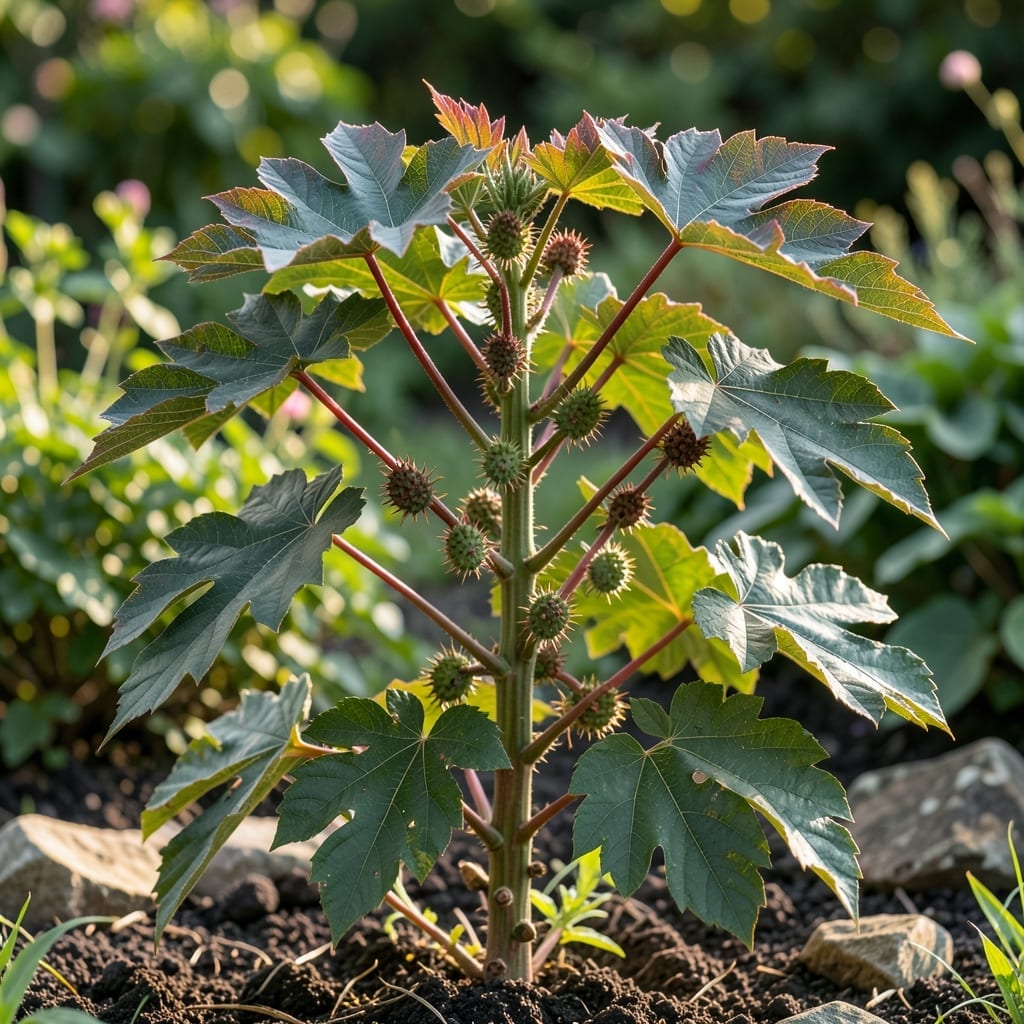
Castor beans grow fast, reaching 6-10 feet in a single season with minimal care. I planted my first one as an experiment and was shocked by how quickly it transformed a bare corner of my garden.
These tropical-looking plants thrive in full sun and well-draining soil. The key is regular watering without soggy roots, and you’ll be rewarded with striking foliage and unique seed pods. Just remember to handle them with care.
📚 In This Guide
Here’s the method I use to recognize this plant and keep myself protected at every step.
Castor bean plants grow as tall, tropical-looking specimens with large, deep green, palmate leaves that can reach 1-3 feet across. The most distinguishing feature is the spiky seed pods, which appear after the small, greenish-white flowers fade. These pods are round, covered in soft spines, and turn from green to brown as they mature.
I always look for the pods first—they’re the clearest indicator. Each pod contains 3-4 seeds that are mottled brown with a glossy, marbled appearance. The plant itself can grow 6-10 feet tall in a single season, often with a reddish stem. If you see these characteristics, you’re likely dealing with castor bean.
Check the seed pods more closely. They’ll be about 1 inch in diameter and have a slightly spongy texture when fresh. The seeds inside are the most toxic part of the plant, containing ricin, a deadly protein. I never touch the pods without gloves, as even handling them can release dust from the seeds.
Another sign is the plant’s growth habit. Castor bean grows rapidly and often has a somewhat weedy appearance, with thick, hollow stems. The leaves have a strong, somewhat unpleasant odor when crushed. If the plant is growing in disturbed soils, roadsides, or garden edges, that’s another clue—it thrives in these conditions.
Before approaching the plant, I put on long sleeves, long pants, and disposable gloves. Ricin can be absorbed through the skin, so covering up is essential. I also wear safety glasses if I’m going to be cutting or removing the plant, as the dust from the seeds can be hazardous if it gets in your eyes.
If you’re working in an area with multiple plants, consider wearing a mask to avoid inhaling any dust. I always have a plastic bag ready to immediately contain any pods or plant material I remove. Never burn castor bean plants—the smoke can carry ricin particles, which are dangerous to inhale.
To remove the plant, I use a shovel or trowel to dig it up from the roots, being careful not to break the stems or pods. Place the entire plant, roots and all, into a sturdy plastic bag. Seal it tightly and label it clearly as “Toxic: Castor Bean – Do Not Open.”
Dispose of the bag through your local hazardous waste program. Never compost castor bean plants or add them to your regular trash. If you’re unsure about disposal, contact your local agricultural extension office for guidance. They can provide specific instructions for your area.
After handling the plant, I remove my gloves carefully, turning them inside out as I take them off to avoid touching the contaminated exterior. I dispose of the gloves in the same hazardous waste bag as the plant material. Then, I wash my hands thoroughly with soap and warm water for at least 20 seconds.
I also clean any tools I used with a mixture of bleach and water (1 part bleach to 10 parts water) to ensure no residue remains. Let the tools air dry completely before storing them. Finally, I wash my clothing separately from other laundry to prevent any potential contamination.
Learning to spot this plant and handle it safely takes practice and vigilance.
Visual Clues: In Step 1, focus on the combination of large palmate leaves (1-3 feet across) and spiky seed pods. I learned the hard way that relying on just one feature can lead to misidentification—the pods with their soft spines and 1-inch diameter are the most reliable indicator. The plant’s rapid growth to 6-10 feet tall is another strong clue.
Safety First: Step 3’s protective gear isn’t optional. Ricin exposure can happen through skin absorption, inhalation, or eye contact. I always double-check my gloves for tears before handling and keep safety glasses on if there’s any risk of dust. That mask in Step 3 might seem excessive until you’re in a patch with multiple plants.
Disposal Precision: Step 4’s instructions about hazardous waste disposal exist for a reason. I once assumed regular trash would suffice, but local waste programs have specific protocols for ricin-containing materials. Call your agricultural extension office if you’re unsure—they’ll have the right guidance for your area.
Cleanup Discipline: The 20-second handwashing in Step 5 is your minimum. I actually scrub for 30 seconds and use a nail brush to get under my fingernails. For tools, that 1:10 bleach-to-water ratio is critical—any less and you risk leaving residue behind.
Yes, castor bean pods contain ricin, a highly toxic compound. Even minimal contact can cause skin irritation, so always wear gloves when handling them. Avoid touching your face or eyes afterward, and wash hands thoroughly with soap and water.
Wear protective gloves and place pods in a sealed plastic bag. Check local regulations—some areas require hazardous waste disposal. Never compost or burn them, as ricin can remain active and pose health risks.
Symptoms include nausea, vomiting, diarrhea, abdominal pain, and dehydration. Severe cases may lead to seizures or organ failure. Seek immediate medical attention if ingestion or exposure is suspected.
While castor beans are popular for their striking appearance, they’re not recommended for homes with children or pets. If grown, place them in isolated areas, wear gloves during maintenance, and remove seed pods promptly to prevent accidental exposure.