
Beautiful Plants For Your Interior
Beautiful Plants For Your Interior
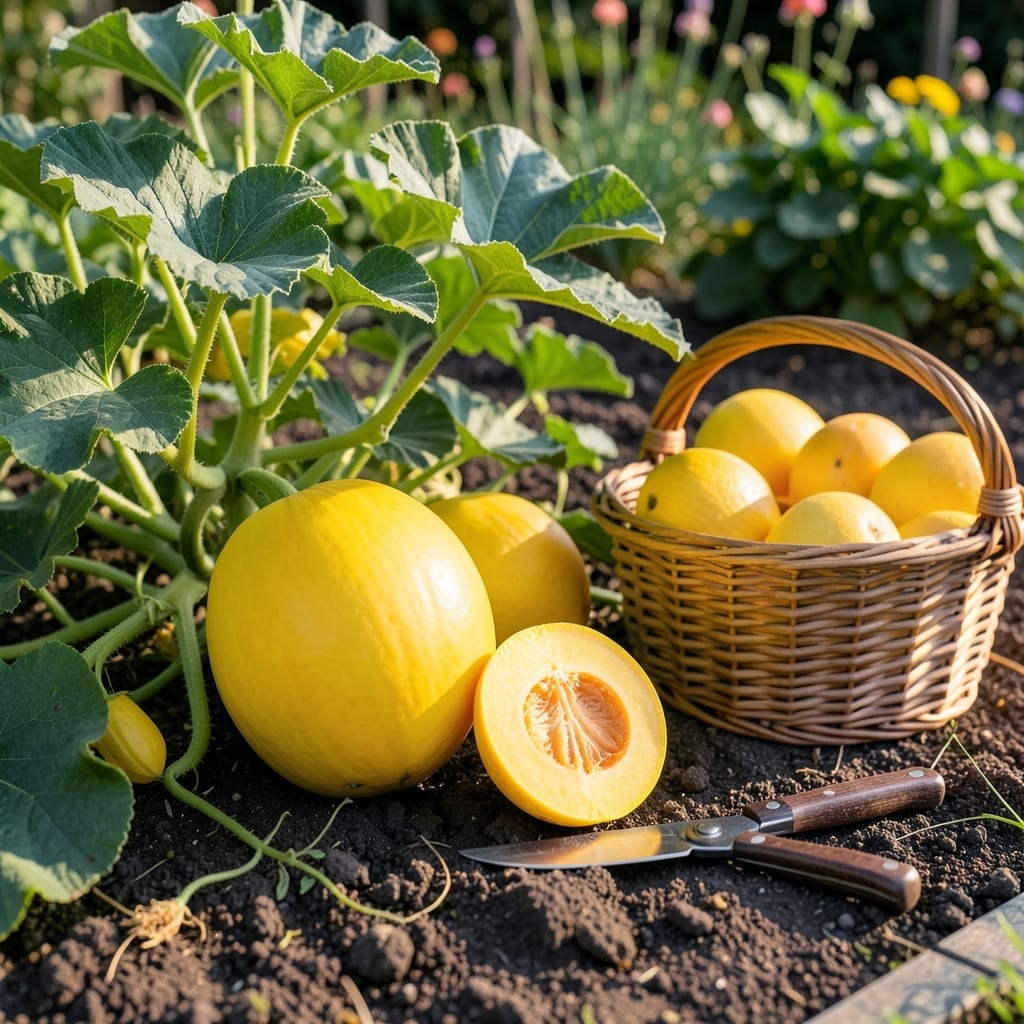
I’ve found that canary melons reveal their ripeness through visual cues that are easy to miss if you’re not looking closely. The first sign I check is the rind color, which shifts from pale green to a vibrant, bright yellow when ready.
Another reliable indicator is the stem slip test. When the melon is ripe, the stem will detach easily from the vine with just a gentle tug. If it resists, I know it needs more time to develop its sweet flavor.
| Ripeness Sign | What to Look For |
|---|---|
| Rind Color | Bright yellow, not pale or green |
| Stem Slip | Stem detaches with gentle pressure |
| Blossom End | Slightly soft when pressed |
| Rind Texture | Net-like webbing becomes pronounced |
| Aroma | Sweet, strong scent at stem end |
The blossom end of the melon, opposite the stem, should also feel slightly soft when pressed with your thumb. This is a great way to confirm the sugar content is at its peak. I always double-check this before harvesting.
I also pay attention to the rind texture. As the melon matures, the net-like webbing on its surface becomes more defined. This isn’t just for looks—it’s a sign the fruit is fully developed and ready to pick.
Don’t overlook the aroma test. A ripe canary melon will emit a sweet, strong scent at the stem end. If I don’t smell anything, I leave it on the vine a little longer to let the flavor develop.
It’s important to check these signs in the morning or late afternoon, when the sun isn’t at its strongest. Direct sunlight can sometimes mask the true color or make the fruit feel warmer than it actually is.
I’ve learned that patience is key. Rushing to harvest can lead to a less sweet melon. The vine knows best, so I let it guide me with these clear, natural signals.
Finally, I always use a sharp knife or pruners to harvest. This prevents damage to the vine and ensures the melon stays intact for storage or immediate enjoyment.
With these tips, you’ll never miss the perfect moment to pick your canary melons again. 🌱
Once you’ve picked your canary melon, the real test begins. I always start by giving it a gentle weight check—a ripe one feels heavier than it looks due to high sugar content. This is a simple but effective first step.
Next, I bring it close to my nose for the smell test. A perfectly ripe canary melon emits a sweet, floral aroma at the stem end. If it smells bland or green, it needs more time.
The pressure test is subtle but telling. Apply gentle pressure to the blossom end (opposite the stem). A ripe melon will yield slightly, like a ripe avocado. Be careful not to bruise it.
I’ve found that room temperature helps the melon reach its peak. If it’s not quite there, leave it on your counter for 1-2 days. This often brings out the full sweetness and aroma.☀️
Avoid refrigerating until fully ripe. Cold stops the ripening process and can dull the flavors. Once it passes all tests, then it’s safe to chill for a refreshing treat.
Remember, these tests work best when combined. A heavy melon with a sweet smell and slight blossom-end give is your golden ticket to the best flavor.🌱