
Beautiful Plants For Your Interior
Beautiful Plants For Your Interior
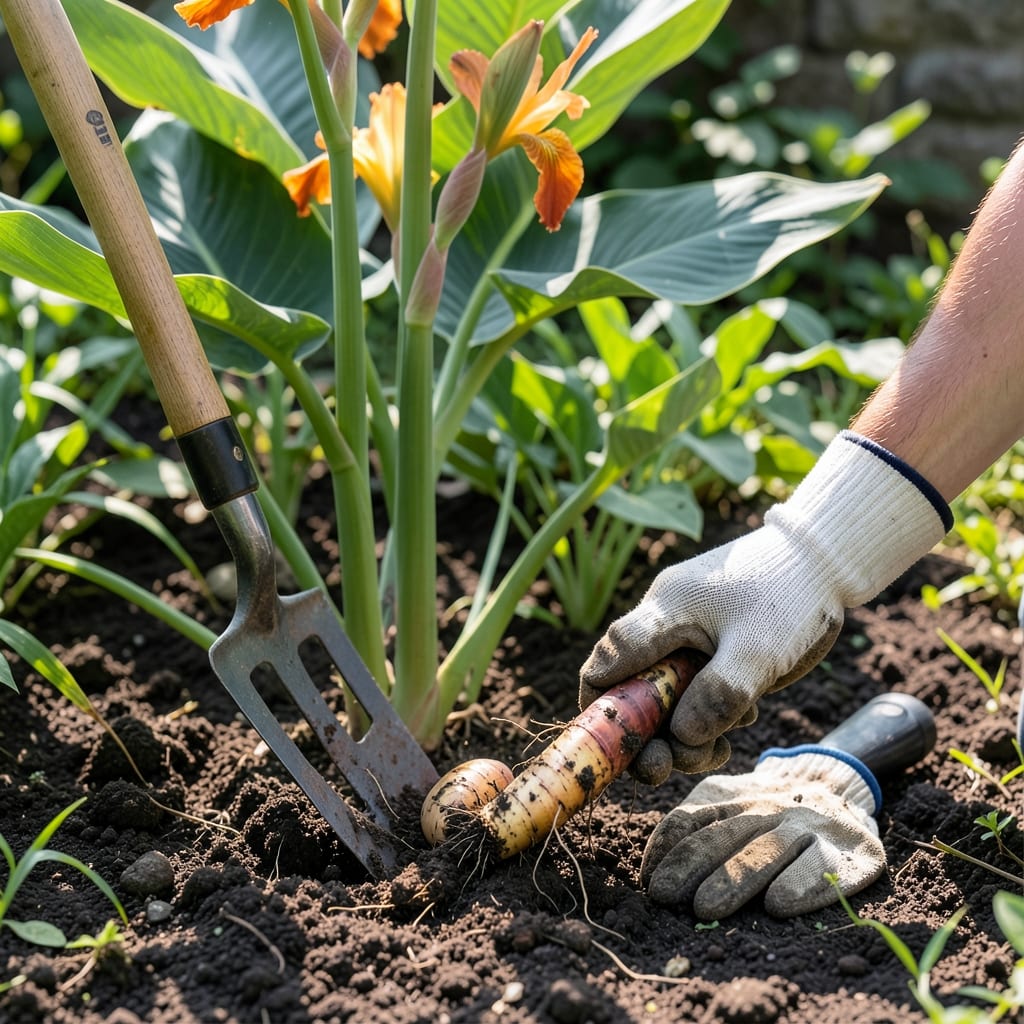
Yes, you can dig up canna bulbs before the first frost to prevent cold damage. Wait until foliage yellows, then carefully lift the rhizomes and store them in a cool, dry place for winter.
I always dig mine up before temperatures drop below 50°F at night, as cannas are tropical plants that can’t survive freezing conditions. 🌟 The yellowing foliage signals the plant is entering dormancy, making it the perfect time for safe removal. This method ensures your bulbs stay healthy and ready for next year’s vibrant blooms.
💡 In This Article
Canna rhizomes are tropical natives that store energy for next year’s growth. When temperatures drop below 50°F, their metabolic processes slow dramatically. Below 32°F, ice crystals form inside the rhizomes, rupturing cell walls and causing irreversible damage. This cellular destruction is why frost is so deadly to these plants.
The timing of digging affects survival rates significantly. Waiting until foliage yellows ensures the plant has completed its energy transfer from leaves to rhizomes. This natural dormancy process typically begins when night temperatures consistently stay below 55°F. Digging too early interrupts this energy storage, while waiting too long risks frost exposure.
What most gardeners don’t realize is that soil temperature matters more than air temperature. Even if air temps dip to 40°F, soil at 6-8 inches deep may remain warmer. However, once soil temps drop below 45°F, the rhizomes begin suffering cold stress.
This is why monitoring both air and soil temperatures gives the most accurate timing.
The science behind this involves the plant’s water content. Canna rhizomes contain about 70-80% water when actively growing. As temperatures drop, this water doesn’t drain away—it freezes. The expansion of freezing water is what physically damages the plant tissue. Proper drying before storage removes much of this moisture, preventing rot during winter storage. 🔥
In my experience, the most successful overwintering happens when rhizomes are dug after 2-3 light frosts but before any hard freeze. This timing allows the plant to naturally harden off while avoiding the cellular damage that comes with deeper cold. The yellowing foliage is nature’s clear signal that the plant is ready for dormancy.
Frost will damage the rhizomes as ice crystals form inside. Below 32°F, cell walls rupture, causing irreversible damage. In colder climates, this usually means losing the plant entirely.
Watch for yellowing foliage—this signals dormancy and completed energy transfer to the rhizomes. Dig after 2-3 light frosts but before a hard freeze for best results.
Avoid unheated garages where temps may drop below 40°F. Choose a basement or cellar instead. Ensure the space stays between 40-50°F with good air circulation.
Spread rhizomes in a single layer in a shaded, ventilated area. Allow 1-2 weeks at 60-70°F for proper curing. This prevents rot during winter storage.