
Beautiful Plants For Your Interior
Beautiful Plants For Your Interior
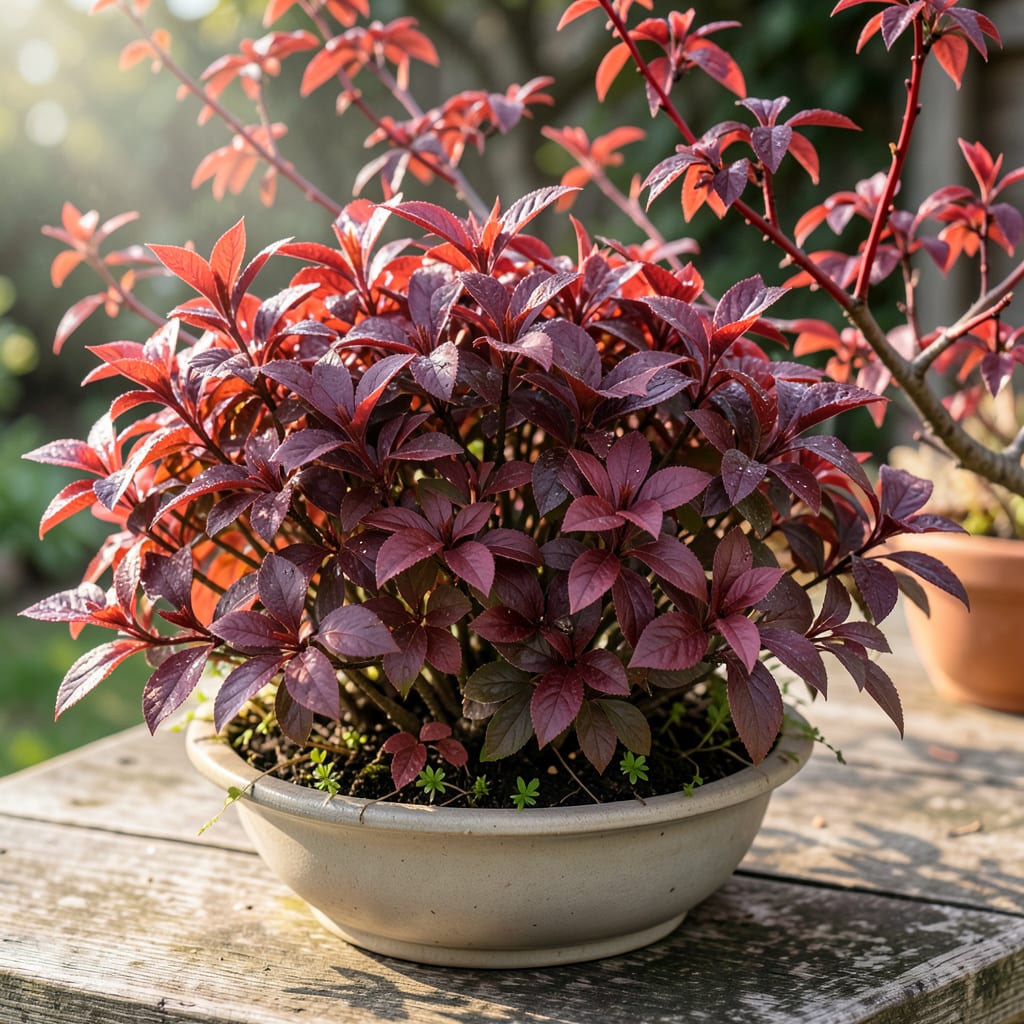
Nothing beats that first pop of crimson in spring. I plant red-leaf shrubs for the drama—they wake up the garden when everything else is still sleeping.
Most need morning sun and well-drained soil. With minimal care, you get months of bold color that fades to deep burgundy as summer hits.
📚 In This Guide
Transform your landscape with these vibrant plants using my time-tested approach for maximum seasonal impact.
Choose shrubs known for their spring crimson display like Japanese barberry, red-twig dogwood, or purple leaf sand cherry. Each offers different textures and growth habits. Japanese barberry gives you thorny 1-3 foot mounds perfect for edging, while dogwood can reach 6-9 feet with its famous winter stem color.
Consider your hardiness zone—most red-leaf shrubs thrive in zones 4-8. I always check the tag for mature size before buying. Smaller spaces call for dwarf varieties like ‘Crimson Pygmy’ barberry, which stays under 2 feet tall and wide.
Most red-leaf shrubs prefer full sun to partial shade. Morning sun with afternoon shade works well in hotter climates to prevent leaf scorch. Dig a hole exactly as deep as the root ball but twice as wide—this encourages outward root growth.
Amend the native soil with 20-30% compost for better drainage and fertility. Set the plant so the top of the root ball sits 1 inch above the surrounding soil level to prevent settling. Water thoroughly after planting to eliminate air pockets around the roots.
Water deeply once weekly during the first growing season unless rainfall provides 1-2 inches per week. After establishment, most red-leaf shrubs become quite drought-tolerant. I water mine at the base in the morning to keep foliage dry and prevent disease.
Apply a 2-3 inch layer of organic mulch around the base, keeping it 3 inches away from the trunk to prevent rot. This maintains soil moisture and temperature while suppressing weeds that compete for nutrients.
Prune red-twig dogwood in late winter before new growth starts, cutting back one-third of the oldest stems to the ground. This stimulates the brightest red stem color for spring. For Japanese barberry, prune in early spring just as new growth begins, shaping as needed.
Always use clean, sharp pruners and make cuts at a 45-degree angle just above a bud. Remove any dead, diseased, or crossing branches first. I disinfect my tools between plants with rubbing alcohol to prevent disease spread.
Apply a balanced 10-10-10 fertilizer in early spring before new growth emerges, following package instructions. For more intense red color, some gardeners use a fertilizer slightly higher in phosphorus. I prefer organic options like fish emulsion applied monthly during the growing season.
Test your soil every 2-3 years to check pH and nutrient levels. Most red-leaf shrubs prefer slightly acidic soil with a pH between 6.0-6.5. Adjust with sulfur or lime as needed based on your test results.
These insights will help you avoid common pitfalls when growing bushes with vibrant red spring foliage.
Selection Strategy: In Step 1, when choosing varieties, consider your space constraints carefully. Japanese barberry’s 1-3 foot spread works for borders, while red-twig dogwood’s 6-9 foot height suits background plantings. Confession: I once planted a full-size dogwood in a small garden bed—it outgrew the space within two years.
Planting Precision: For Step 2, that detail about setting the root ball 1 inch above soil level is crucial. I learned this the hard way after several plants settled too deep and developed root rot. Also, the twice-as-wide hole isn’t just advice—it’s the difference between a plant that struggles and one that thrives.
Pruning Timing: Step 4’s timing is everything. Pruning red-twig dogwood in late winter before new growth starts ensures you get that brilliant red stem color. Do it later, and you’ll cut off the new red growth you’re trying to showcase. For Japanese barberry, that early spring pruning timing maintains both shape and color intensity.
Red spring foliage is often due to anthocyanins, pigments that protect new leaves from harsh sunlight and cold snaps. Many shrubs like Redleaf Japanese Maple or Smoke Bush naturally produce these vibrant colors.
Most red-leaf shrubs keep their color through spring and summer, but some (like Red Chokeberry) may fade to green as leaves mature. Check the specific variety for seasonal changes.
Yes! Dwarf Ninebark and Red Twig Dogwood are hardy, disease-resistant, and need minimal pruning. They thrive in various soils and sunlight conditions.
Brown leaves often signal underwatering, frost damage, or fungal issues. Ensure consistent moisture, protect from late frosts, and prune affected areas to encourage healthy growth.
Many red-leaf shrubs (e.g., Redleaf Japanese Barberry) tolerate partial shade, but full sun intensifies their color. For best results, aim for at least 4–6 hours of sunlight daily.
