
Beautiful Plants For Your Interior
Beautiful Plants For Your Interior
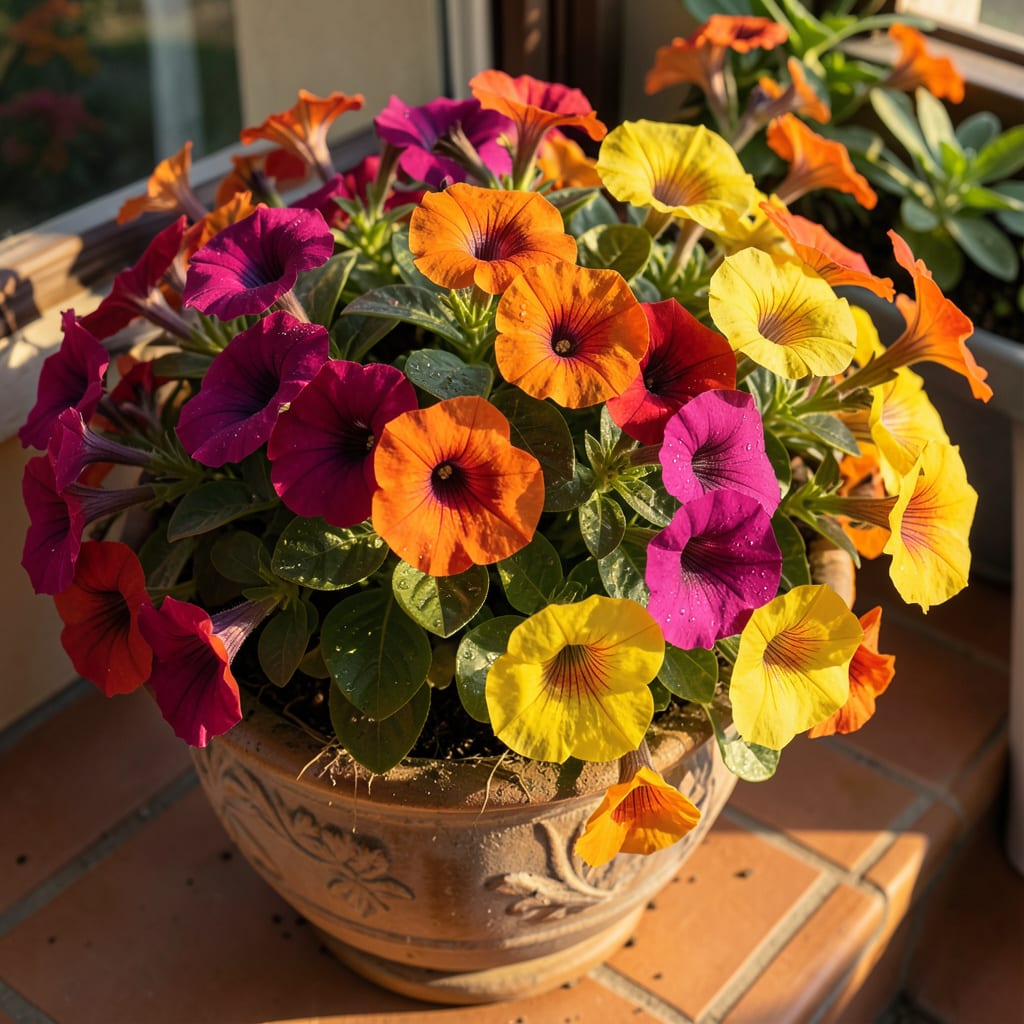
Heat-resistant petunias turned my scorching summer patio into a color explosion. These tough bloomers laugh at temperatures that wilt lesser flowers.
I’ve grown varieties that keep pumping out flowers through 90°F+ days with minimal fuss. The right selection and simple care make all the difference between sad wilting and nonstop color.
📚 In This Guide
Here’s the method I use to keep petunias blooming vibrantly even in the most intense summer heat.
Not all petunias handle heat equally. I focus on wave petunias or spread petunias, which are bred for resilience. Varieties like ‘Tidal Wave’ or ‘Supertunia’ thrive in full sun and recover quickly after wilting. Check the plant tag for heat-tolerant labels.
Grandifloras often struggle in extreme heat, so I avoid them for summer plantings. Multifloras offer a middle ground—smaller blooms but better heat endurance. You’ll see the difference within a week of high temperatures.
Petunias need 6-8 hours of direct sunlight daily to flourish. I place mine in the sunniest spot possible, typically a south-facing location. Without enough light, they grow leggy and produce fewer flowers, even if they’re heat-tolerant.
If your area gets afternoon shade, prioritize morning sun—it’s less intense but still effective. Watch for leaf scorching in extreme heat; this usually means they need a brief midday break, not less sun overall.
In high heat, petunias dry out fast. I water deeply at the base every 1-2 days, ensuring the soil stays moist but not soggy. A good rule: water when the top inch of soil feels dry to the touch.
Avoid overhead watering to prevent fungal issues. I use a drip irrigation system or a watering can with a narrow spout. Mulching with 1-2 inches of organic material helps retain moisture and keeps roots cool.
Heat stresses plants, so I fertilize weekly with a balanced, water-soluble fertilizer (10-10-10 or 20-20-20). This keeps petunias fueled for nonstop blooming. Liquid fertilizers work faster than granular in hot weather.
If blooms slow down, it’s often a sign they need more nutrients. I also deadhead spent flowers regularly to redirect energy into new growth. You’ll notice a surge in blooms within 5-7 days of consistent feeding.
Leggy stems are common in heat, so I trim back overgrown petunias by one-third every 3-4 weeks. This encourages bushier growth and more flowers. Use clean, sharp shears to avoid tearing the stems.
After pruning, water deeply to help the plant recover. I also remove any yellowed or crispy leaves, which can stress the plant further. This keeps the plant looking fresh and thriving despite the heat.
These insights will help you get the most out of your petunias during the hottest months.
The Variety Factor: In Step 1, choosing wave or spread petunias like ‘Tidal Wave’ or ‘Supertunia’ isn’t just a suggestion—it’s the foundation. Grandifloras may look impressive, but they’ll wilt under pressure. I learned this the hard way after losing an entire bed to heat stress.
Sunlight Precision: Those 6-8 hours of direct sunlight in Step 2 are non-negotiable. If your garden only gets morning sun, prioritize east-facing spots. I’ve found that petunias in partial shade grow tall and sparse, while those in full sun stay compact and flower profusely.
Watering Discipline: The 1-2 day watering schedule in Step 3 works best when you check the top inch of soil—your finger is the most reliable tool here. Overwatering is just as harmful as drought, so let the soil guide you rather than sticking rigidly to a calendar.
Pruning Timing: Trimming back by one-third every 3-4 weeks in Step 5 keeps plants from becoming leggy. I do this first thing in the morning when plants are hydrated, and always follow with a deep watering to reduce shock.
Yes! Heat-tolerant petunia varieties like ‘Wave’ or ‘Superbells’ thrive in full sun and high temperatures. Ensure consistent watering and well-draining soil to help them beat the heat.
Plant after the last frost, when soil temps reach 60°F (15°C) or higher. In hot climates, early spring or late summer planting helps avoid extreme midday heat stress.
Try heat-loving flowers like lantana, zinnias, or portulaca. These bloom vibrantly in scorching conditions and require minimal maintenance, just like resilient petunias.
Wilting often signals underwatering or poor drainage. Check soil moisture—water deeply when the top inch feels dry. Mulching can also help retain moisture in extreme heat.
