
Beautiful Plants For Your Interior
Beautiful Plants For Your Interior
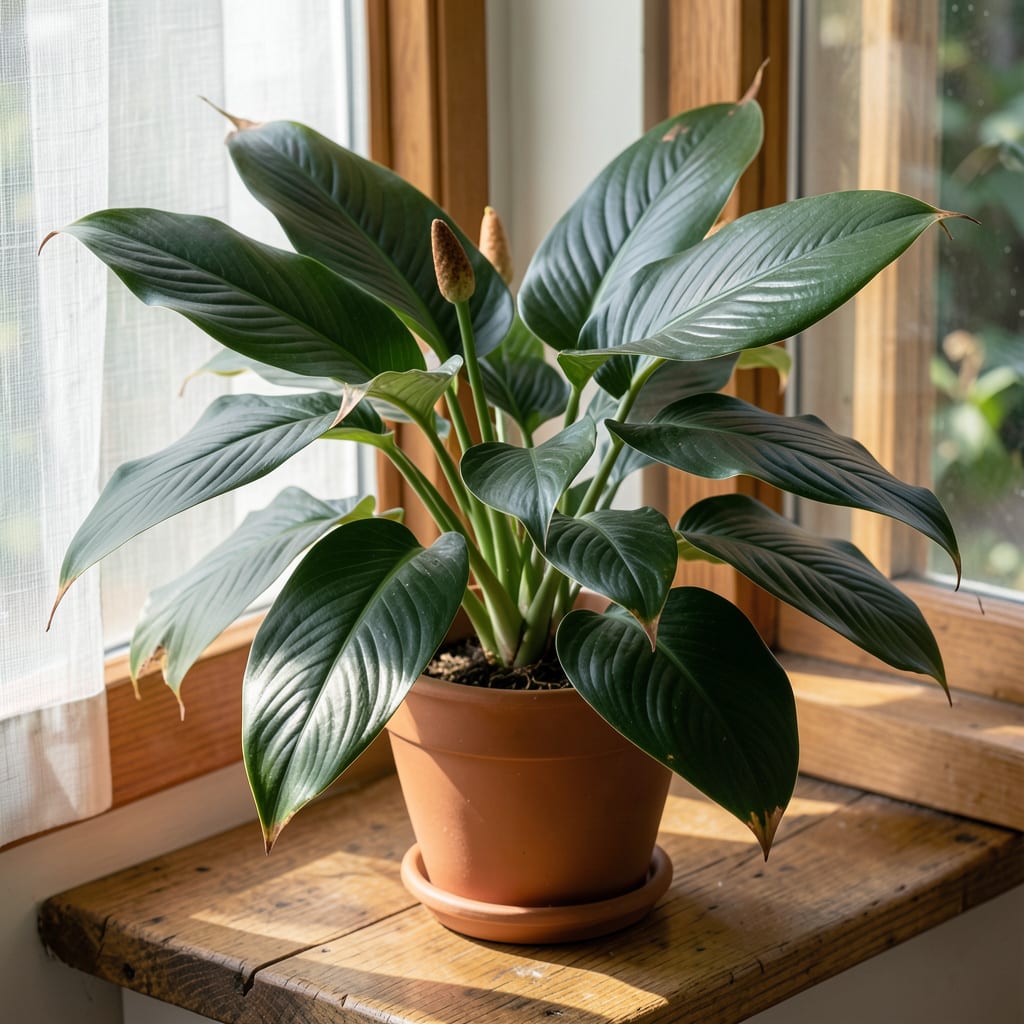
Brown tips on your peace lily are usually a cry for help. 🌿 I’ve seen this happen most often when the air gets too dry or the watering routine is off—either too much, too little, or the wrong kind.
The fix is simpler than you think. Start by checking your tap water—many plants react badly to the fluoride and chlorine in it. Switching to filtered or distilled water often stops the browning in its tracks.
Boosting humidity helps too. A pebble tray with water or a humidifier nearby can make a world of difference. You’ll see new growth coming in green and healthy within a few weeks.
Prevention is all about consistency. Keep the soil lightly moist, not soggy, and maintain steady humidity. Your peace lily will reward you with lush, vibrant leaves.
Several factors contribute to brown tips on peace lily leaves, often tied to environmental stress or care missteps. Here’s a breakdown of the most common culprits:
Peace lilies thrive in consistently moist but not soggy soil. Overwatering suffocates roots, blocking oxygen uptake and causing tip burn. Conversely, underwatering leads to dehydration, where leaf tips dry out first. Spathiphyllum roots rot in waterlogged soil, while drought stress triggers cellular damage in leaf margins.
Native to tropical rainforests, peace lilies require 40–60% humidity. Dry air (common indoors in winter) pulls moisture from leaves faster than roots can replace it, resulting in crispy brown tips. This is a classic sign of transpirational stress, where the plant loses water through stomata but can’t compensate.
Tap water often contains chlorine, fluoride, or excess salts, which accumulate in the soil over time. These minerals interfere with nutrient uptake, causing tip burn—a condition called salt toxicity. Peace lilies are especially sensitive to fluoride, which disrupts cellular function in leaf edges.
Too much fertilizer, especially high-salt formulations, leads to root burn and subsequent leaf tip necrosis. Excess nitrogen or potassium can also unbalance soil pH, making it harder for the plant to absorb water and nutrients. Always dilute fertilizer to half-strength for peace lilies.
While peace lilies tolerate low light, intense direct sunlight scalds their delicate leaves. The high heat and UV radiation cause photooxidative damage, where leaf tips—often the most exposed—turn brown and crisp. This is a survival response to prevent further water loss.
Once you’ve identified the cause, these targeted fixes will help your peace lily bounce back with lush, green leaves. Address each issue promptly to prevent further damage.
Fix: Let the soil dry out slightly between waterings. Check the top inch of soil—if it’s moist, hold off on watering. Ensure your pot has drainage holes, and use a well-draining potting mix. If root rot is suspected, trim affected roots and repot in fresh soil.
Prevention: Use a pot with drainage holes and a saucer to catch excess water. Water only when the topsoil feels dry to the touch.
Fix: Water your peace lily thoroughly when the top inch of soil is dry. Increase humidity by misting the leaves daily or placing a tray of water with pebbles near the plant. A humidifier also works wonders.
Prevention: Maintain consistent moisture levels and group plants together to create a humid microclimate.
Fix: Move your plant to a spot with bright, indirect light, such as near a north- or east-facing window. If the leaves are severely scorched, trim the brown tips with clean scissors to encourage new growth.
Prevention: Avoid placing your peace lily in direct sunlight, especially during peak afternoon hours.
Fix: Flush the soil with water to remove excess salts and chemicals. Reduce fertilizer use and switch to a diluted, balanced houseplant fertilizer. If tap water is the issue, use filtered or distilled water.
Prevention: Fertilize sparingly—once every 6-8 weeks during the growing season—and always follow the recommended dosage.
Fix: Relocate your plant away from cold drafts, heating vents, or air conditioners. Keep it in a stable environment with temperatures between 65-80°F (18-27°C).
Prevention: Avoid placing your peace lily near doors, windows, or vents where temperature fluctuations are common.
With these adjustments, your peace lily should start recovering in no time. Consistency is key—monitor your plant’s response and tweak your care routine as needed!
Yes, trim them with clean scissors for a neater look and better growth. Follow the leaf’s natural shape to avoid sharp edges. This won’t harm the plant and helps redirect energy to healthy parts.
Water when the top 1 inch of soil feels dry, usually every 1-2 weeks. Always check moisture first—overwatering is a common mistake. Use room-temperature water to avoid shocking the roots.
No, once tips brown, they won’t revert. Focus on improving care to prevent new browning. Healthy new growth will replace damaged leaves over time.
Filter or distill it first. Tap water’s fluoride and chlorine often cause tip burn. If you must use tap, let it sit out overnight to reduce chemical content.
