
Beautiful Plants For Your Interior
Beautiful Plants For Your Interior
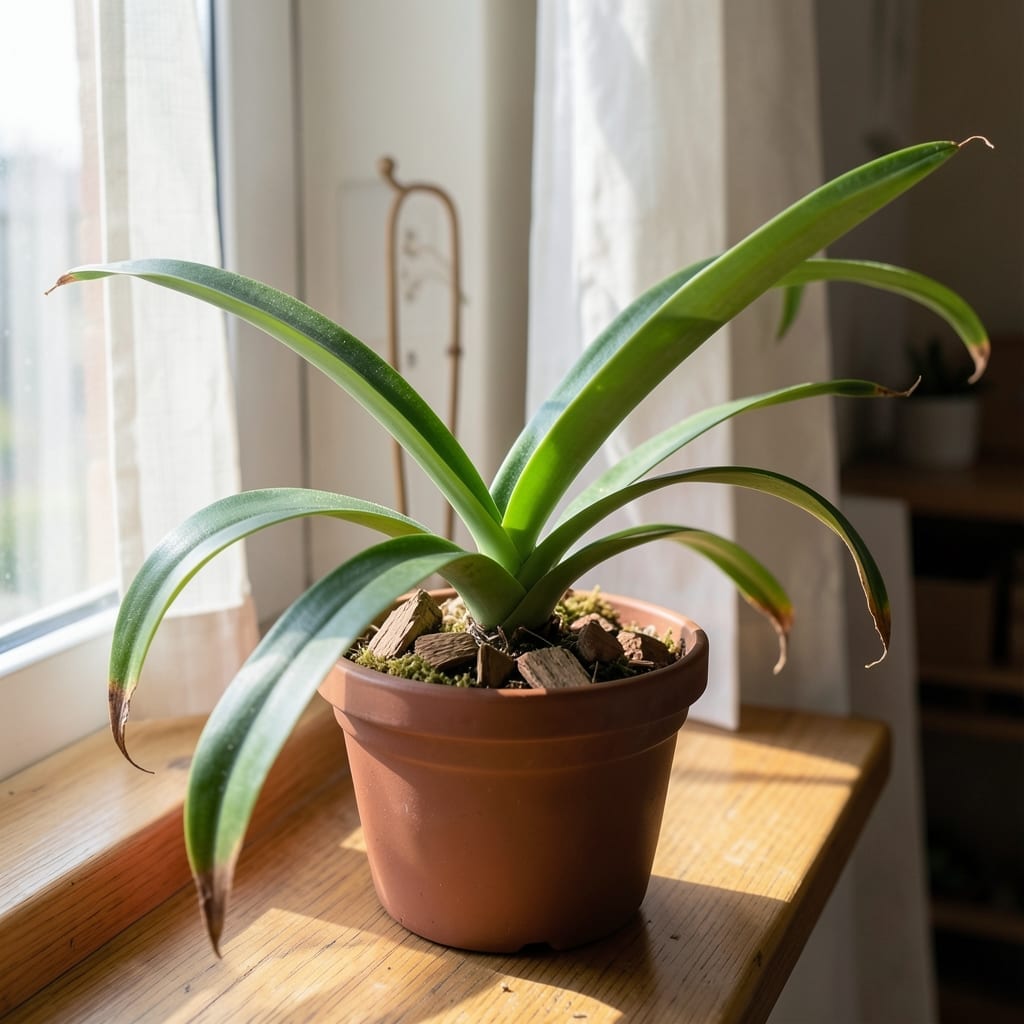
Brown tips on cymbidium leaves always mean the plant is trying to tell you something. I’ve seen this happen when the air gets too dry or the watering schedule is just slightly off.
Most people blame themselves, but it’s usually a simple fix. These orchids need consistent moisture without soggy roots and humidity levels that mimic their native cloud forests.
You’ll notice new growth stays vibrant green once you adjust the routine. The transformation happens within 2-3 weeks of better care.
Works for any cymbidium variety, whether you’re growing them indoors or in a greenhouse. Here’s how to read the signs correctly.
Brown tips on Cymbidium leaves are a common issue, often signaling underlying care or environmental problems. Below are the most frequent causes, explained with actionable insights to help you restore your orchid’s health.
Cymbidiums thrive in humidity levels of 40-70%. When air is too dry, moisture evaporates from the leaf tips faster than the plant can replenish it, leading to desiccation and browning. This is especially common in indoor settings with heating or air conditioning. Use a hygrometer to monitor humidity and consider a humidifier or pebble tray to maintain optimal levels.
Incorrect watering disrupts the plant’s ability to absorb nutrients. Over-watering suffocates roots, preventing oxygen uptake and causing tip burn due to root rot. Under-watering, on the other hand, leads to dehydration and nutrient deficiencies. Water only when the top 1-2 inches of soil are dry, and ensure pots have drainage holes to avoid waterlogging.
Tap water or excessive fertilization can cause salt accumulation in the soil, which draws moisture out of the roots (a process called reverse osmosis). This results in burnt, brown leaf tips. Flush the soil with distilled or rainwater every 2-3 months to leach out excess salts. Use a balanced, orchid-specific fertilizer at half-strength to prevent buildup.
While Cymbidiums enjoy bright, indirect light, direct sunlight (especially intense afternoon rays) can scorch leaf tips, turning them brown and crispy. Move your plant to a location with filtered light or use a sheer curtain to diffuse harsh sunlight. Aim for 1,500–3,000 foot-candles of light for optimal growth.
Compacted or poorly draining soil restricts airflow to the roots, leading to stress and tip browning. Cymbidiums require a chunky, well-aerated mix (e.g., bark, perlite, and sphagnum moss) to thrive. Repot every 1-2 years or when the medium breaks down to ensure proper drainage and root health.
Here’s how to tackle the most common causes of brown tips on your cymbidium orchid leaves, with simple, actionable fixes and prevention tips to keep them lush and healthy.
Fix: Check the roots—soggy roots mean overwatering, while shriveled or dry roots signal thirst. Water only when the top inch of the bark mix feels dry. Use room-temperature water and ensure the pot has drainage holes. For overwatered plants, repot in fresh mix and trim any black, mushy roots.
Prevent: Stick to a consistent schedule (usually every 7–10 days) and use a moisture meter if you’re unsure. 💡Pro tip: Lift the pot—if it feels light, it’s time to water.
Fix: Move your cymbidium away from direct heat sources (like radiators) or cold drafts. Group plants together or use a humidity tray filled with pebbles and water to boost moisture. Aim for 40–60% humidity.
Prevent: Avoid placing orchids near vents or in sunbaked windows. A small humidifier nearby works wonders in dry climates.
Fix: Flush the potting mix with distilled or rainwater to leach out excess salts. Pour water slowly through the pot for 1–2 minutes, letting it drain completely. Repeat every 3–4 months if you use tap water.
Prevent: Use rainwater, distilled, or reverse-osmosis water for watering. If tap water is your only option, let it sit out overnight to allow chlorine to evaporate.
Fix: Switch to a balanced, orchid-specific fertilizer (20-20-20) and dilute it to half strength. If tips are already brown, stop fertilizing for 2–3 weeks and flush the mix as above.
Prevent: Fertilize lightly every 2–4 weeks during active growth (spring–fall) and skip it entirely in winter. ✨Pro tip: “Weakly, weekly” works better than strong doses!
Fix: Inspect leaves for tiny pests like spider mites or scale. Wipe leaves with a damp cloth and neem oil solution (1 tsp oil + 1 liter water + a drop of soap). For fungal issues, improve airflow and apply a fungicide labeled for orchids.
Prevent: Isolate new plants for 2–3 weeks before introducing them to your collection. Keep leaves dry and ensure good air circulation.
Water when the top 1-2 inches of soil feel dry, typically every 7-10 days. Always use pots with drainage holes to prevent root rot.
Yes, tap water can cause salt buildup. Use distilled or rainwater, or let tap water sit overnight to reduce chlorine. Flush the soil every 2-3 months.
Aim for 40-60% humidity. Use a humidifier or pebble tray to maintain levels, especially in dry indoor environments.
Move your plant to filtered light immediately. Trim severely damaged tips with clean scissors to encourage new growth.