
Beautiful Plants For Your Interior
Beautiful Plants For Your Interior
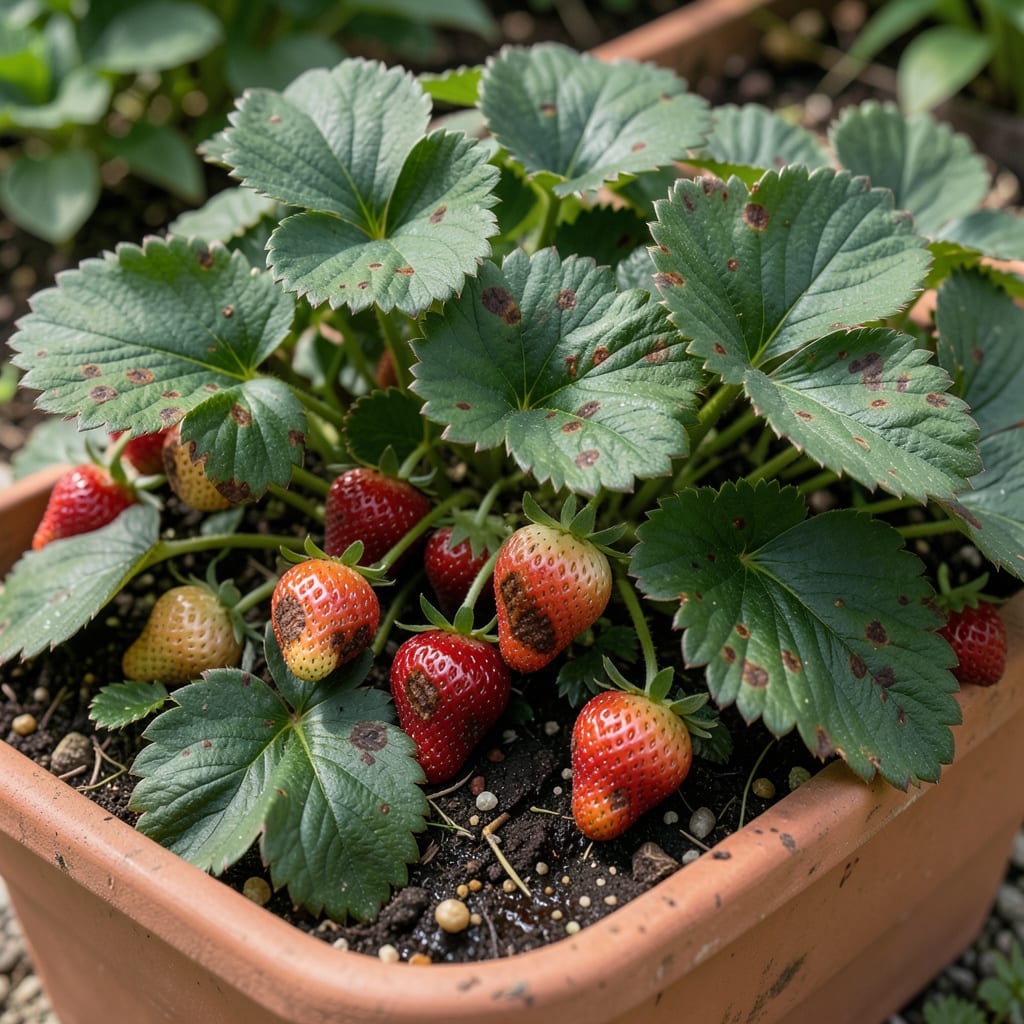
Those brown spots on your strawberry plants aren’t just ugly—they’re a warning. I’ve seen entire patches wiped out by ignoring this early sign, but catching it now means saving your harvest.
The culprit could be fungus, pests, or even something as simple as water stress. Most gardeners jump to chemicals first, but the real fix often starts with better airflow, proper watering, or removing infected leaves.
You’ll notice the difference within 7-10 days of taking action. Leaves regain their deep green color, new growth comes in healthy, and your plants start producing those sweet berries again.
Works for container plants, raised beds, or in-ground patches. Here’s how to diagnose and treat it right.
Brown spots on strawberry plants often stem from a mix of fungal infections and environmental stressors. Understanding the root cause helps you target the right solution.
Leaf Spot (Mycosphaerella fragariae): This fungus thrives in wet, humid conditions, creating small, dark brown spots with gray centers on leaves. It spreads via spores in water splashes or wind.
Anthracnose (Colletotrichum spp.): This aggressive fungus causes sunken, irregular brown lesions on fruit, stems, and leaves. It loves warm, rainy weather and can overwinter in plant debris.
Heat or Sunburn: Intense sunlight or high temperatures can scorch leaves, leading to dry, crispy brown patches. Shade cloth can prevent this in hot climates.
Water Stress: Both overwatering and drought cause leaf discoloration. Overwatering suffocates roots and promotes fungal growth, while drought leads to nutrient deficiencies.
Potassium or Magnesium Deficiency: Yellowing edges with brown spots often signal a lack of potassium. Magnesium deficiency causes interveinal chlorosis (yellowing between veins) with brown speckles.
Calcium Deficiency: Results in distorted new growth with brown, necrotic spots, especially in sandy or acidic soils.
Tackle brown spots on your strawberry plants with these targeted solutions for each common cause:
If the spots are spreading quickly or have a water-soaked look, act fast:
Prevention tip: 💡 Water at the base of the plant (not overhead) and avoid working with wet foliage to limit pathogen spread.
Crispy, dry brown spots on exposed leaves or fruit often mean too much sun:
Prevention tip: 🌡️ Plant strawberries in areas with dappled sunlight or where they get morning sun and afternoon shade.
Small, irregular brown spots may signal pests like spider mites or sap-sucking insects:
Prevention tip: ✨ Keep the garden free of debris and weeds where pests can hide.
Yellowing leaves with brown spots may indicate a lack of potassium or magnesium:
Prevention tip: 🎯 Feed strawberries with a slow-release fertilizer formulated for berries in early spring and after harvest.
Fungal spots often have a water-soaked look with defined edges, sometimes with gray centers. Leaf Spot creates small, dark brown circles, while Anthracnose causes sunken lesions. Check for spreading patterns to confirm.
Yes! Overwatering suffocates roots and creates perfect conditions for fungal growth. Look for soggy soil and wilting alongside the brown spots. Let soil dry slightly between waterings.
Use clean shears to remove affected leaves and dispose far from the garden. This prevents pathogens from spreading. Always sanitize tools between cuts.
Yes, especially during heatwaves. 30-50% shade cloth protects leaves from scorching. Morning sun with afternoon shade is ideal for most strawberry varieties.
