
Beautiful Plants For Your Interior
Beautiful Plants For Your Interior
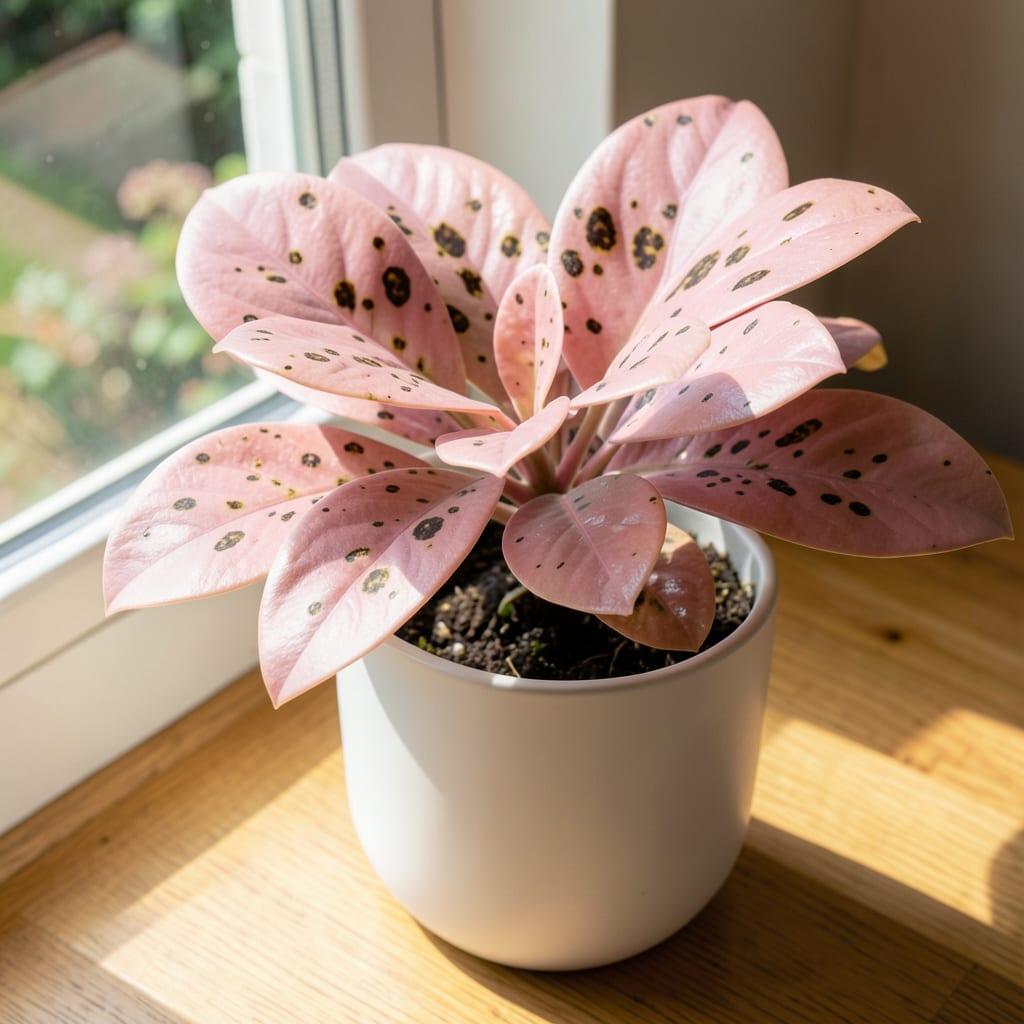
Those brown spots on your pink rubber plant aren’t just ugly—they’re a cry for help. I’ve saved more than a few by catching the signs early and acting fast.
Usually, it’s one of three culprits: too much water, not enough light, or a sneaky pest setting up camp. Each leaves a different pattern, so the first step is playing detective with your plant’s leaves.
Once you know what you’re dealing with, the fix is straightforward. Adjust your care routine, isolate the plant if needed, and you’ll see new growth returning in 2-3 weeks.
Prevention is simpler than cure. A consistent watering schedule and regular leaf inspections keep most problems from ever starting.
Brown spots on your Pink Rubber Plant (Ficus elastica ‘Robusta’ or ‘Tineke’) usually signal stress from environmental, cultural, or pathological factors. Below are the most common causes, explained with actionable insights.
Excess moisture suffocates the roots, leading to root rot (often caused by Phytophthora or Pythium fungi). As roots die, they can’t supply water and nutrients, causing leaf tissue necrosis—those unsightly brown patches. Water only when the top 1–2 inches of soil are dry, and ensure pots have drainage holes.
Pink Rubber Plants thrive in bright, indirect light. Intense sunlight (especially afternoon rays) can bleach and burn the leaves, creating crispy brown spots. The plant’s thin cuticle—adapted for dappled light in its native Southeast Asian understory—can’t handle UV overload. Move it 3–5 feet away from south- or west-facing windows.
Indoor humidity below 40% triggers transpirational stress. The plant loses water faster than it can absorb, leading to tip burn and marginal browning. Group plants together, use a humidifier, or place the pot on a pebble tray to maintain 50–60% humidity.
Sap-sucking pests like spider mites (Tetranychus urticae) and thrips (Frankliniella occidentalis) pierce leaf cells, causing localized necrosis. Check leaf undersides for webbing (mites) or tiny black specks (thrips frass). Isolate the plant and treat with neem oil or insecticidal soap.
Over-fertilizing (especially with high-salt synthetic blends) leads to fertilizer burn, manifesting as brown leaf edges. Conversely, magnesium or potassium deficiencies cause interveinal browning. Use a balanced, diluted liquid fertilizer (e.g., 10-10-10) every 4–6 weeks during the growing season.
Addressing brown spots on your pink rubber plant starts with identifying the root cause. Below are targeted solutions for the most common issues, paired with prevention tips to keep your plant thriving.
If soggy soil is the culprit, stop watering immediately and let the top 1-2 inches of soil dry out. Repot the plant in fresh, well-draining soil if root rot is present. Use a pot with drainage holes to prevent waterlogging.
Prevention tip 💡: Water only when the soil feels dry to the touch, and always empty the saucer after watering.
Move your plant away from direct, harsh sunlight. A bright, indirect light spot (like near an east-facing window) is ideal. Trim severely damaged leaves to redirect energy to healthy growth.
Prevention tip 🎯: Rotate your plant occasionally for even light exposure, and use a sheer curtain to diffuse intense rays.
For spider mites or mealybugs, wipe leaves with a damp cloth and neem oil solution (1 tsp neem oil + 1 liter water + a few drops of dish soap). Repeat every 5-7 days until pests are gone.
Prevention tip ✨: Inspect new plants before bringing them home, and keep humidity levels between 40-50% to deter pests.
Boost humidity by misting the leaves daily or placing the pot on a pebble tray filled with water. A humidifier nearby also works well.
Prevention tip 🌡️: Group plants together to create a microclimate, and avoid placing them near drafts or heaters.
If over-fertilizing is the issue, flush the soil with water to remove excess salts. Switch to a balanced, diluted liquid fertilizer (half-strength) and fertilize only during the growing season (spring and summer).
Prevention tip 💪: Fertilize every 4-6 weeks, and always follow the package instructions for dilution rates.
Yes, if caused by pests or fungal issues. Isolate the plant and treat immediately to prevent further damage.
Inspect leaves weekly for early signs of stress. Catching problems early makes treatment much easier.
No, but new healthy growth will replace them. Trim severely affected leaves to redirect energy.
Misting helps temporarily, but a pebble tray or humidifier provides more consistent moisture. Grouping plants also boosts humidity.
