
Beautiful Plants For Your Interior
Beautiful Plants For Your Interior
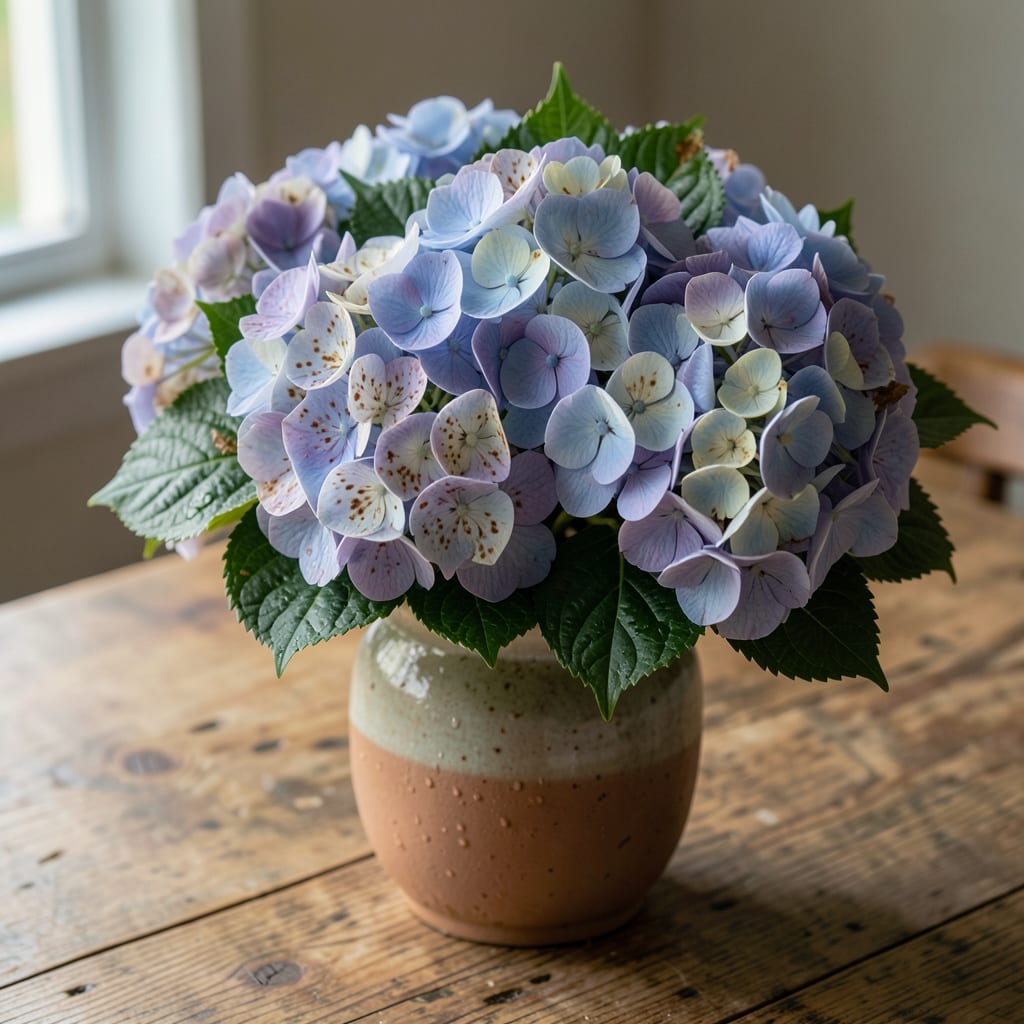
Nothing ruins a hydrangea bloom faster than those ugly brown spots. 🌸 I’ve lost count of how many perfect flower heads turned to crispy messes before I figured out the real culprits.
Turns out it’s usually one of three things: too much water on the leaves, not enough air moving around, or the wrong kind of soil. Fix the conditions and your plants bounce back faster than you’d expect.
With a few simple adjustments to your watering routine and plant spacing, you’ll see fresh, spot-free blooms within 2-3 weeks. The key is catching it early before the damage spreads.
Works for all hydrangea varieties, from bigleaf to panicle. Here’s exactly what to look for and how to stop it in its tracks.
Brown spots on hydrangea blossoms rarely appear without a reason. Below are the most common triggers, each with a clear scientific explanation and actionable insight.
Species like Cercospora and Alternaria thrive in warm, humid conditions. Their spores land on petals, germinate, and produce enzymes that break down cell walls, creating circular or irregular brown lesions. Overhead watering or dense plantings accelerate this process.
Both overwatering and underwatering can cause cellular damage. Excess moisture suffocates roots, reducing nutrient uptake and leading to necrosis in petals. Conversely, drought stress causes tissues to collapse, turning edges brown and crisp.
Intense sunlight, especially in hot climates, can overwhelm the plant’s ability to cool itself. Chlorophyll degrades, and cell membranes rupture, resulting in dry, papery brown spots—often on the most exposed blooms.
Low potassium weakens cell integrity, making petals more susceptible to browning. On the flip side, excessive nitrogen promotes lush foliage at the expense of flower health, leading to poor resistance and discoloration.
Insects like aphids and spider mites pierce plant tissues to feed, introducing pathogens and causing localized cell death. Their feeding sites often turn brown as the plant responds to the injury.
Brown spots on your hydrangeas can be frustrating, but most causes are fixable with a little care. Below are targeted solutions for the most common issues, along with prevention tips to keep your blooms vibrant. 🌿
Fix: Remove and destroy affected leaves and flowers immediately to prevent spread. Apply a copper-based fungicide or neem oil spray, following label instructions. For severe cases, use a systemic fungicide. Water at the base of the plant to keep foliage dry.
Prevention: Improve air circulation by spacing plants properly. Avoid overhead watering, and water in the morning so leaves dry quickly. Clean up fallen debris around the plant.
Fix: Check soil moisture 1–2 inches deep. If soggy, reduce watering and ensure the soil drains well (amend with compost or perlite if needed). If dry, water deeply until the top 6 inches of soil are moist. Mulch around the base to retain moisture.
Prevention: Use a moisture meter or the finger test (stick your finger in the soil) to gauge water needs. Hydrangeas prefer consistently moist but not waterlogged soil.
Fix: Move potted hydrangeas to a shadier spot or provide afternoon shade with a shade cloth. For in-ground plants, mulch heavily to cool roots. Trim damaged leaves to redirect energy to healthy growth.
Prevention: Plant hydrangeas where they get morning sun and afternoon shade. In hot climates, choose heat-tolerant varieties like Hydrangea paniculata.
Fix: Blast pests off with a strong stream of water. Apply insecticidal soap or horticultural oil, targeting the undersides of leaves. For severe infestations, use a systemic insecticide.
Prevention: Encourage beneficial insects (like ladybugs) by planting companion flowers. Inspect leaves regularly for early signs of pests.
Fix: Test your soil’s pH (hydrangeas prefer 5.2–6.2). Amend with lime to raise pH or sulfur to lower it. Apply a balanced, slow-release fertilizer (10-10-10) or one formulated for acid-loving plants if needed.
Prevention: Feed hydrangeas in early spring and mid-summer with a fertilizer rich in phosphorus (for blooms) and potassium (for disease resistance). Avoid over-fertilizing with nitrogen.
💡 Pro tip: Always sterilize pruning tools with rubbing alcohol between cuts to avoid spreading pathogens!
Yes, soggy soil suffocates roots and reduces nutrient uptake, leading to brown, crispy spots on flowers. Ensure your hydrangeas have well-draining soil and water only when the top 1-2 inches are dry.
Remove spotted flowers immediately to prevent fungal spread. Sterilize pruning tools with rubbing alcohol between cuts to avoid contaminating healthy parts.
A mixture of 1 teaspoon baking soda and 1 quart water with a drop of dish soap can help mild fungal cases. For severe infections, use a copper-based fungicide.
Most varieties are susceptible, but some like Hydrangea paniculata tolerate heat and humidity better. Choose resistant varieties if your climate is prone to fungal issues.
