
Beautiful Plants For Your Interior
Beautiful Plants For Your Interior
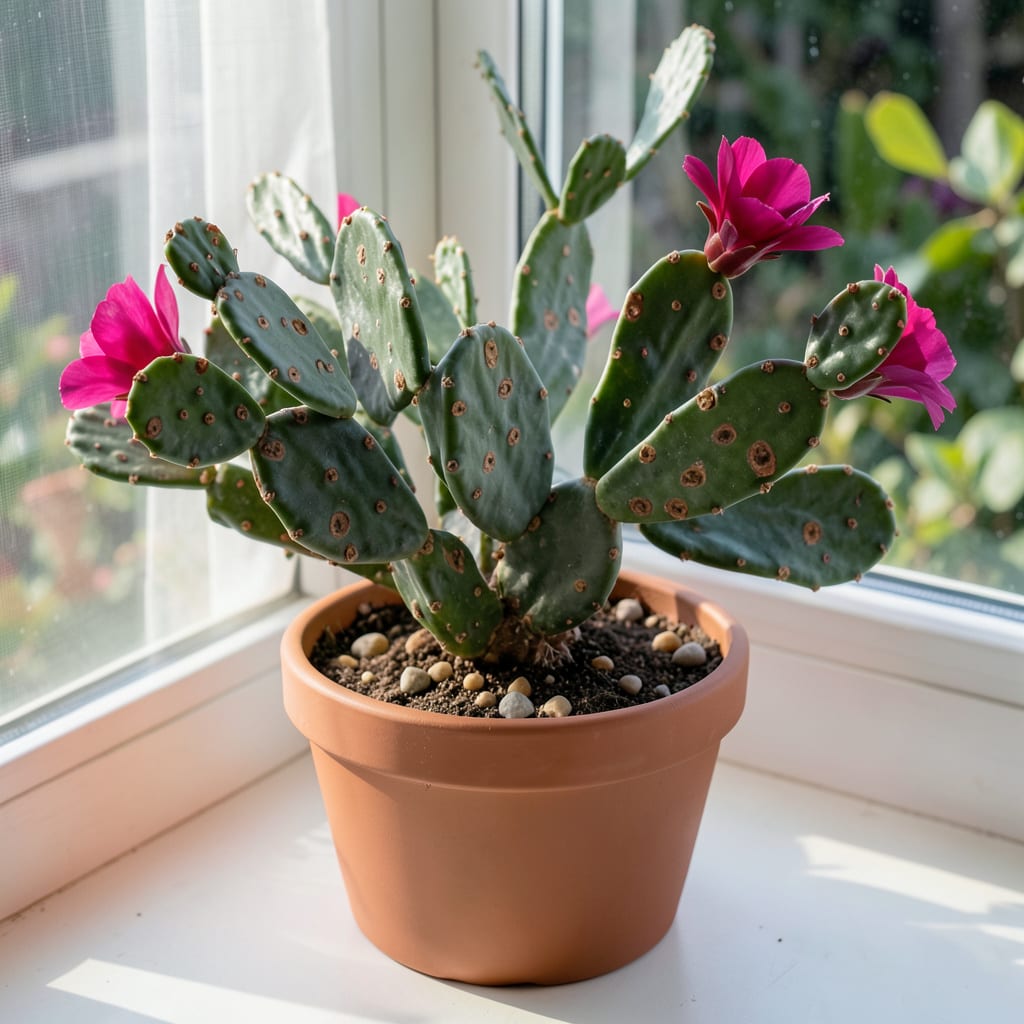
Brown spots on a Christmas cactus always feel like a gut punch. I’ve lost count of how many times I’ve stared at my plant, wondering if I’d done something wrong—again.
Turns out, most cases come down to overwatering, too much sun, or a sneaky fungal issue. The good news? Once you pinpoint the cause, fixing it is simpler than you’d think.
With the right adjustments, your cactus can bounce back, often within 2-3 weeks. New growth will emerge healthy, and those ugly spots will fade into memory.
No fancy tools or chemicals needed—just a little observation and a few organic tweaks. Here’s how to figure it out.
Brown spots on your Christmas cactus usually signal stress or disease. Here are the most common causes, explained simply:
Excess moisture is a leading culprit. When roots sit in soggy soil, they suffocate and rot, leading to fungal infections like Phytophthora or Pythium. These pathogens travel upward, causing dark, mushy brown spots on stems and leaves. Action: Water only when the top 1-2 inches of soil are dry, and ensure pots have drainage holes.
Sudden temperature swings, drafts, or low humidity can shock your plant. Christmas cacti thrive in 60–70°F (15–21°C) with moderate humidity. Exposure to cold drafts (below 50°F/10°C) or hot, dry air (e.g., near heaters) causes cell damage, appearing as crispy brown patches. Action: Keep your plant in stable conditions, away from vents or AC units.
Spots with yellow halos often indicate bacterial leaf spot (Xanthomonas), while concentric rings suggest fungal issues like Alternaria. These spread via water splashes or contaminated tools. Action: Remove affected segments immediately, sterilize pruners with rubbing alcohol, and improve air circulation.
Sap-sucking pests like spider mites or mealybugs pierce plant tissues, creating entry points for pathogens. Their feeding also causes stippling or brown scars. Action: Wipe leaves with neem oil or insecticidal soap weekly until pests are gone.
Too much direct sunlight breaks down chlorophyll, leading to bleached or brown patches, especially on south-facing windowsills. Action: Provide bright, indirect light (e.g., east-facing windows) and use sheer curtains to diffuse harsh rays.
Here’s how to tackle brown spots on your Christmas cactus, broken down by cause and solution:
Fix: Let the soil dry out completely between waterings. Repot the plant in well-draining soil and a pot with drainage holes. Trim any soft, mushy roots to prevent rot.
Prevention: Water only when the top inch of soil feels dry. Use a pot with drainage holes and avoid letting the plant sit in saucers of water.
Fix: Move your cactus to a spot with bright, indirect light. If the leaves feel hot or crispy, trim the damaged sections to encourage new growth.
Prevention: Keep it near an east- or north-facing window, or use a sheer curtain to filter harsh sunlight.
Fix: Wipe leaves with a damp cloth to remove pests like spider mites or mealybugs. Apply neem oil or insecticidal soap weekly until the infestation clears.
Prevention: Inspect new plants before bringing them home. Keep humidity levels moderate, as dry air attracts pests.
Fix: Flush the soil with water to remove excess salts. Reduce fertilizer use and switch to a balanced, diluted houseplant formula.
Prevention: Fertilize lightly every 4–6 weeks during growing season (spring and summer) and avoid feeding in fall and winter.
💡 Pro tip: Always use room-temperature water to avoid shocking the roots, and rotate your plant occasionally for even growth!
They typically signal stress from overwatering, sunburn, or pests. Each cause creates slightly different spot patterns—mushy spots suggest rot, while dry edges point to environmental issues.
Yes, especially if caused by fungal infections or pests. Remove affected sections immediately with sterilized tools to prevent further damage.
With proper care, new healthy growth usually appears in 2-3 weeks. The existing spots won’t disappear but will stop spreading as the plant recovers.
