
Beautiful Plants For Your Interior
Beautiful Plants For Your Interior
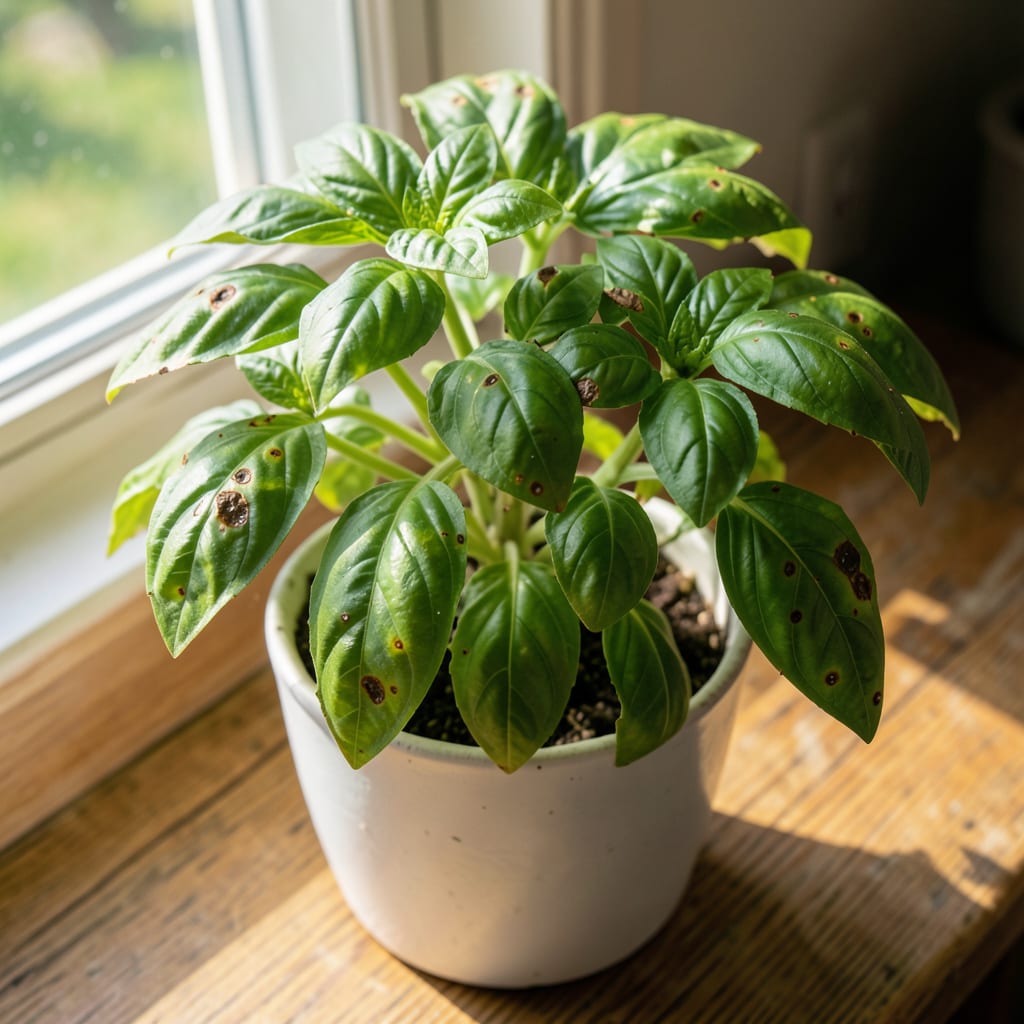
Those brown spots on your basil leaves had me worried too at first. Truth is, most cases are harmless, but knowing the difference between safe and dangerous is key to enjoying your harvest.
I’ve seen everything from fungal spots to pest damage on my plants. The good news? Many issues are treatable, and the leaves are often still safe to eat if you catch it early. The trick is identifying the cause first.
With a few simple checks, you can tell whether those spots are just cosmetic or a sign of something more serious. Most of the time, it’s an easy fix with better air flow or watering habits.
This guide will help you spot the red flags and keep your basil thriving—and your meals worry-free.
Brown spots on basil leaves can stem from several underlying issues, each with distinct triggers. Here’s a breakdown of the most common causes:
Fungal pathogens like Pseudoperonospora belbahrii (downy mildew) or Colletotrichum species thrive in humid, poorly ventilated environments. These fungi infect basil leaves, disrupting cell structures and causing brown, yellow, or black spots. Overhead watering and crowded plantings exacerbate the problem by creating a damp canopy ideal for spore germination.
Extreme temperatures, excessive sunlight, or inconsistent watering can stress basil plants, leading to leaf discoloration. Heat scorch (from temps above 90°F) or cold damage (below 50°F) may cause dry, crispy brown patches. Similarly, underwatering results in edge browning, while overwatering suffocates roots, reducing nutrient uptake and triggering leaf spots.
Pests like aphids, spider mites, or Japanese beetles feed on basil foliage, piercing cells and introducing toxins or pathogens. Their feeding sites often turn brown or yellow as tissue dies. Check the undersides of leaves for webbing, tiny insects, or chewed edges—clear signs of an infestation.
A lack of essential nutrients—particularly magnesium, potassium, or calcium—can manifest as brown spots. For example, magnesium deficiency causes interveinal chlorosis (yellowing between veins) that progresses to necrosis (brown dead tissue). Poor soil quality or imbalanced fertilizers often trigger these deficiencies.
If your basil leaves have developed brown spots, don’t panic—most cases are treatable, and the plant can recover with the right care. Below are practical fixes for the most common causes, along with prevention tips to keep your basil thriving.
If the spots are wet, mushy, or spreading quickly, it’s likely a fungal or bacterial issue. Start by removing affected leaves with clean scissors to prevent further spread. Dispose of them in the trash (not compost) to avoid contamination. Next, spray the plant with a copper fungicide or a DIY solution of 1 teaspoon baking soda mixed with 1 quart of water and a few drops of dish soap. Apply weekly until the issue resolves.
Prevention: Improve air circulation around plants, avoid overhead watering, and water in the morning so leaves dry quickly.
Brown spots with yellow halos often signal root rot or water stress. Check the soil—if it’s soggy, stop watering immediately and let it dry out. Repot the basil in fresh, well-draining soil if the roots are mushy. Use pots with drainage holes and a saucer to catch excess water.
Prevention: Water only when the top inch of soil feels dry. Basil prefers moist but not waterlogged conditions.
Crispy, dry brown spots on leaves exposed to direct sunlight may be sunburn. Move potted basil to a spot with bright, indirect light or use shade cloth for outdoor plants. If growing indoors, keep it near a south- or east-facing window but out of harsh midday rays.
Prevention: Acclimate basil gradually to outdoor light and avoid placing it in scorching locations like windowsills with intense afternoon sun.
Tiny brown spots or holes may indicate pests like aphids, spider mites, or thrips. Wipe leaves with a damp cloth to remove visible pests, then spray with neem oil or insecticidal soap (follow package instructions). For severe infestations, isolate the plant to prevent spreading.
Prevention: Inspect leaves regularly, especially the undersides, and introduce beneficial insects like ladybugs to your garden.
If brown spots appear between leaf veins, your basil may lack magnesium or potassium. Use a balanced, water-soluble fertilizer (10-10-10 or 5-5-5) every 4–6 weeks during the growing season. Avoid over-fertilizing, as this can cause leaf burn.
Prevention: Test your soil annually and amend it with compost for a nutrient boost.
💡 Pro Tip: Always sterilize pruning tools with rubbing alcohol between cuts to avoid spreading disease!
Common causes include fungal infections, pest damage, environmental stress like heat scorch, or nutrient deficiencies. Overwatering and poor air circulation can also trigger the issue.
Check the undersides of leaves for tiny insects, webbing, or chewed edges. Pests like aphids or spider mites often leave behind small, irregular brown spots where they feed.
Yes, removing spotted leaves with clean scissors prevents further spread. Always dispose of them in the trash, not compost, to avoid contaminating other plants.
If the issue is environmental or early-stage fungal, the leaves are often still safe after washing. Avoid using leaves with mushy or spreading spots, as these may indicate bacterial infection.
