
Beautiful Plants For Your Interior
Beautiful Plants For Your Interior
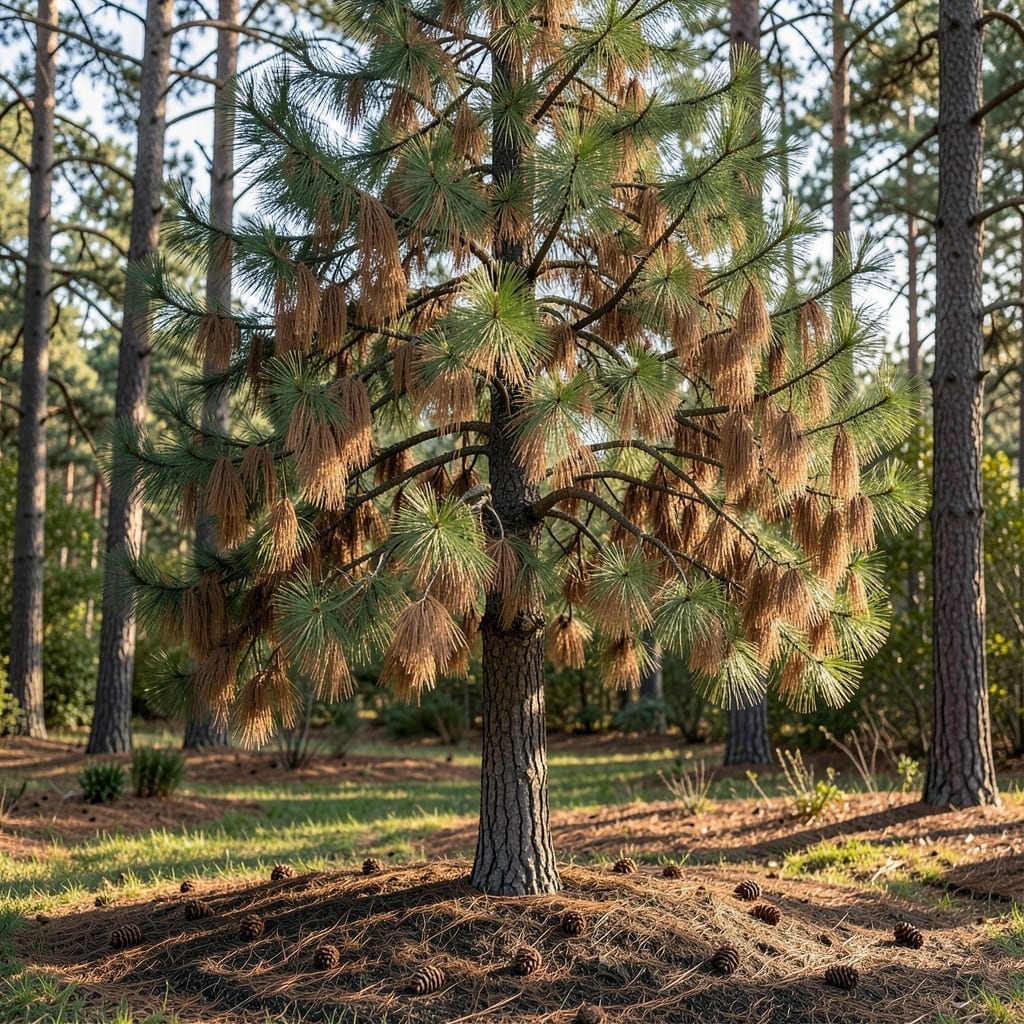
That sickly brown pine in your yard isn’t necessarily dead. I’ve revived more than a few by catching the problem early—whether it’s drought stress, pests, or a sneaky fungal infection.
The first sign is usually yellowing at the tips, then whole needles turning crisp. Many people assume it’s a lost cause, but most pines bounce back with the right care. The key is figuring out which issue you’re dealing with before it spreads.
You’ll often see improvement within 2-3 weeks of treating the root cause. Needles regain their deep green color, and new growth starts pushing out from the ends. The tree looks healthier and more resilient against future stress.
Works for young and mature pines alike. Here’s how to diagnose and fix it.
Understanding why a pine tree’s needles turn brown starts with identifying the underlying stressors. Here are the most common causes, broken down by category:
Extreme temperatures, drought, or sudden frost can shock a pine tree, leading to needle discoloration. Pines are resilient but have limits—prolonged exposure to temperatures below -20°F (-29°C) or heatwaves above 100°F (38°C) without adequate water can trigger browning. Drought stress is especially common in young or newly transplanted trees with underdeveloped root systems.
Fungi like Dothistroma (red band needle blight) or Rhizosphaera thrive in wet, humid conditions. These pathogens infect needles, causing brown or purple spots that spread until the needle dies. Poor air circulation and overhead watering exacerbate the problem. Left untreated, fungal spores can spread to healthy branches.
Insects such as pine bark beetles, sawfly larvae, or spider mites feed on pine needles or sap, disrupting nutrient flow. Beetles often target stressed trees, while mites thrive in hot, dry conditions. Look for tiny holes in bark or webbing on needles as telltale signs.
A lack of essential nutrients—particularly magnesium, iron, or nitrogen—can cause needles to yellow or brown. Alkaline soils (pH > 7) often lock out iron, leading to chlorosis. Meanwhile, nitrogen deficiency typically starts with older needles turning uniformly brown before dropping.
Compaction, construction trauma, or girdling roots restrict water and nutrient uptake. Even minor root injury (e.g., from lawnmowers or shallow planting) can manifest as browning needles months later. Waterlogged soil from poor drainage also suffocates roots, mimicking drought stress.
Bringing a browning pine back to life starts with pinpointing the stressor and acting fast. Below are targeted fixes for the most common causes, plus prevention tips to keep your tree lush and green.
Fix: Give the tree a deep watering—soak the soil slowly until moisture reaches 8–12 inches down. Use a drip hose or soaker to avoid runoff. For severe drought, water twice a week in early morning.
Prevent: 💡 Spread a 3–4 inch layer of organic mulch (wood chips or pine straw) around the base to retain moisture. Keep mulch 6 inches away from the trunk to prevent rot.
Fix: Stop watering immediately and check soil moisture with a screwdriver test—if it slides in easily, the soil is saturated. Improve drainage by aerating the soil with a garden fork or creating small trenches to redirect water.
Prevent: 💡 Plant pines in well-draining soil and avoid heavy clay. Use raised beds if drainage is a recurring issue.
Fix: For bark beetles or pine weevils, remove heavily infested branches and burn or dispose of them. Apply horticultural oil or insecticidal soap to affected areas. For scale insects, scrape them off with a soft brush and treat with neem oil.
Prevent: 💡 Inspect your tree regularly for early signs (sawdust-like frass, sticky residue). Keep the tree healthy—stressed trees attract pests more easily.
Fix: Prune infected branches 6 inches below the discolored area, sterilizing tools with rubbing alcohol between cuts. Apply a copper-based fungicide to the tree and surrounding soil. Remove and destroy fallen needles to prevent reinfection.
Prevent: 💡 Improve air circulation by thinning dense branches. Avoid overhead watering to keep foliage dry.
Fix: Shield young pines from harsh winds with a burlap screen or temporary fencing. For winter burn, wrap the tree in burlap or apply an anti-desiccant spray in late fall.
Prevent: 💡 Choose native pine species suited to your climate. Transplant trees in early spring to give roots time to establish before extreme weather.
Deep water once a week, soaking soil 8–12 inches down. In extreme drought, increase to twice weekly in early morning. Always check soil moisture first with a screwdriver test.
No, once needles brown they won’t recover. Focus on reviving the tree by addressing the root cause, and new green growth will emerge from healthy branches.
A copper-based fungicide works well for most fungal issues. Apply to the tree and surrounding soil, and remove all fallen needles to prevent reinfection.
Look for tiny holes in bark, webbing on needles, or sawdust-like frass. Spider mites thrive in hot, dry conditions, while beetles target stressed trees.