
Beautiful Plants For Your Interior
Beautiful Plants For Your Interior
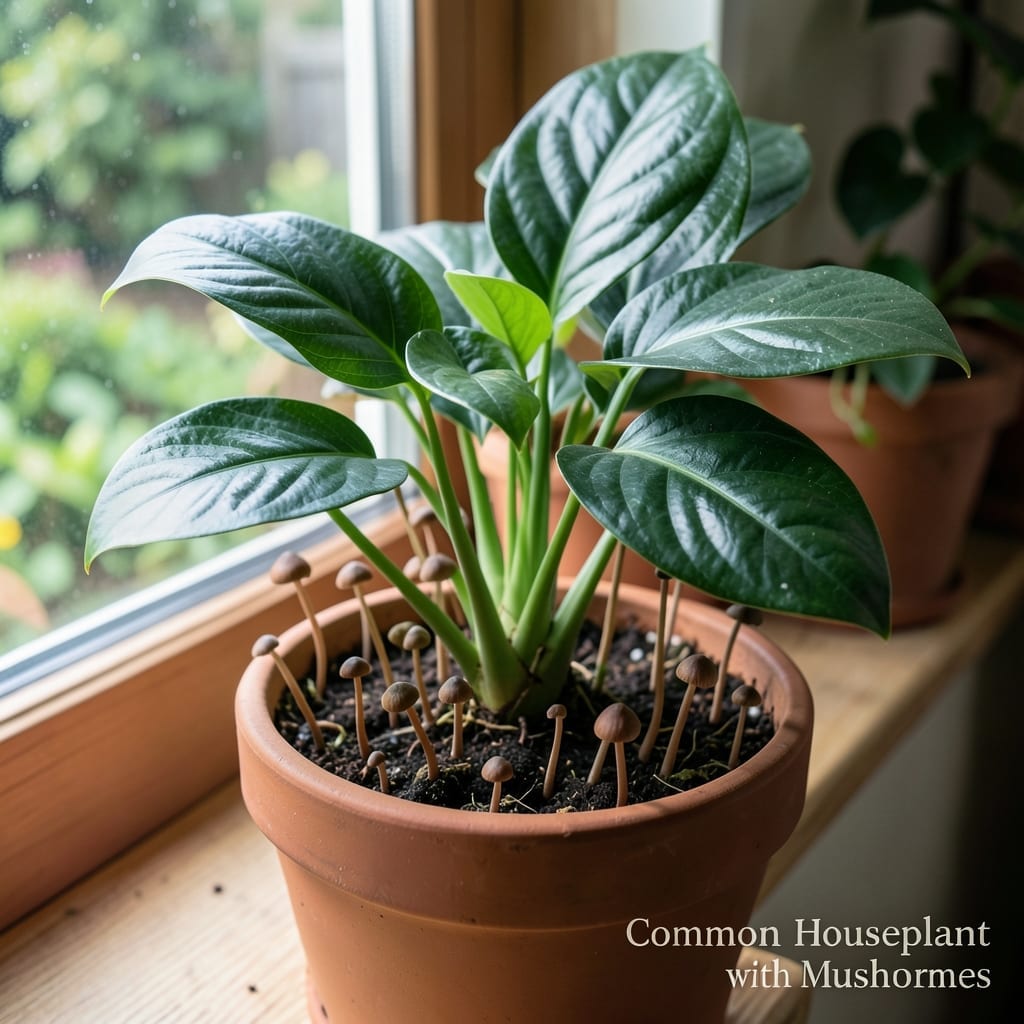
I first noticed them after a rainy week—tiny brown caps pushing through the soil. 🌱 They’re not hurting your plants, but those mushrooms are a sign something’s off balance in your potting mix.
Here’s the thing—mushrooms thrive in moist, organic-rich conditions. That means your soil might be staying too wet or packed with undecomposed material. The good news? Fixing it is simpler than you’d think.
You’ll need to adjust watering, improve drainage, and maybe repot with fresh mix. Within 2-3 weeks, you should see the mushrooms disappear and your plants looking healthier than ever.
No fancy tools required—just a little observation and the right approach. Let’s get your potted plants back on track.
Brown mushrooms thriving in your potted plants are often a sign of underlying conditions. Here’s why they appear:
Mushrooms feed on decomposing organic material like dead roots, old leaves, or compost-rich soil. If your potting mix contains high amounts of unfinished compost, wood chips, or peat moss, it creates a fertile breeding ground for fungal spores.
Consistently soggy soil lacks oxygen, promoting fungal growth. Potted plants with no drainage holes or compacted soil trap moisture, encouraging mushrooms to sprout. Fungi thrive in damp, dark environments, making overwatered pots a prime target.
Shady, humid spots slow evaporation, keeping soil moist longer. If your plant sits in a dark corner with little airflow, spores germinate more easily. Greenhouses or bathrooms with poor ventilation often see this issue.
Spores are naturally present in most soils. If your potting mix wasn’t sterilized or came from an outdoor source, dormant spores can activate when conditions (moisture, organic matter) are right.
Dealing with brown mushrooms in your potted plants? Here’s how to tackle each cause and restore your soil’s health.
If excess moisture is the culprit, stop watering immediately and let the soil dry out. Check the top inch—if it’s damp, hold off. Repot the plant in fresh, well-draining soil if the problem persists. Prevention tip: 💡 Use pots with drainage holes and a moisture meter to avoid guesswork.
Remove visible mushrooms and clear decaying leaves or wood from the soil surface. Replace the top layer with fresh potting mix. Prevention tip: ✨ Regularly clean fallen debris and avoid using unpasteurized compost.
Switch to a pot with drainage holes and add a layer of perlite or sand to the soil mix. Elevate the pot to prevent water pooling. Prevention tip: 🎯 Always use a saucer to catch excess water but empty it after each watering.
If the soil is teeming with spores, repot the plant entirely using sterile potting mix. Discard the old soil to prevent reinfection. Prevention tip: 🌡️ Bake homemade soil mixes at 200°F for 30 minutes to kill spores before use.
With these steps, your potted plants will thrive—mushroom-free! 🌱
No, they typically don’t damage living plants directly. They’re just feeding on decaying organic matter in the soil. However, their presence may indicate overwatering or poor drainage, which can harm plant roots over time.
Gently pull them out by hand or scoop them with a spoon. Remove the top 1-2 inches of soil if many are present. Avoid chemical fungicides—fresh soil and better drainage work best.
They might if conditions remain the same. To prevent recurrence, reduce watering, improve airflow, and use sterilized potting mix. Consistency is key to keeping them away.
Avoid vinegar or salt—they can harm your plants and soil quality. Instead, focus on adjusting moisture levels and improving soil composition. Natural solutions always work better.