
Beautiful Plants For Your Interior
Beautiful Plants For Your Interior
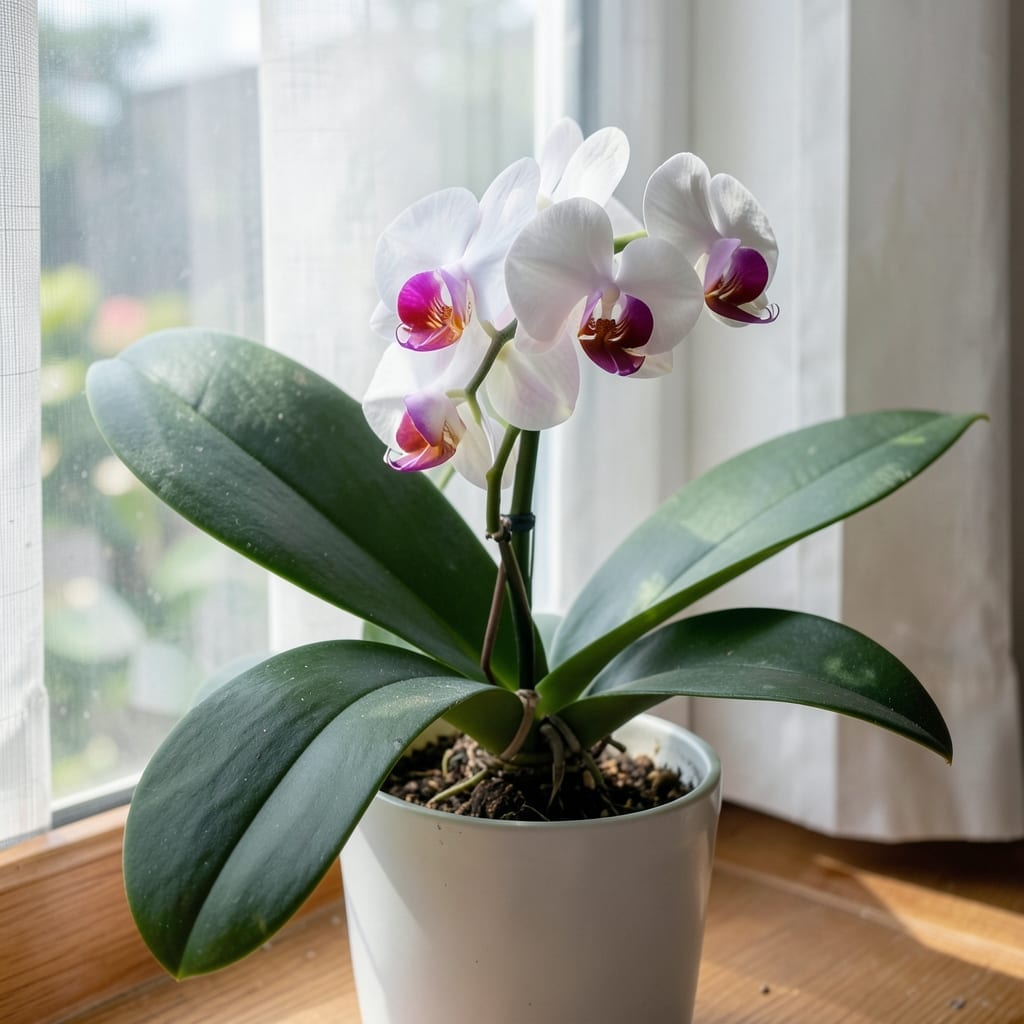
That sickening snap of an orchid stem isn’t the end. I’ve rescued more broken stems than I can count, and most bounce back stronger than before.
The fix is simple: act fast with clean tools and the right support. A broken stem can still bloom if you stabilize it properly, and sometimes you’ll even get new growth from the damage point.
Within 2-3 weeks, you’ll see fresh signs of life if the repair worked. The key is keeping the orchid in stable conditions while it recovers from the shock.
Works for phalaenopsis, cattleya, and other common varieties. Here’s exactly how to handle it.
Orchid stems are delicate, and even small mistakes can lead to snapped or broken stems. Understanding the root causes helps prevent future damage. Below are the most common reasons—and how to avoid them.
Orchids thrive in stable environments. Sudden temperature drops (below 50°F) or extreme heat (above 85°F) weaken stem tissues, making them brittle. Cold drafts from windows or direct heat sources (like vents) are prime culprits. Action: Keep orchids in a consistent 65–80°F range, away from drafts.
Accidental bumps, rough handling, or overcrowded growing spaces can snap stems. Orchids with heavy flower spikes are especially vulnerable. Action: Repot if the plant is top-heavy, and use stakes or clips to support spikes as they grow.
Inconsistent watering weakens the stem’s structural integrity. Overwatering leads to root rot, reducing nutrient uptake, while underwatering causes dehydration, making stems dry and fragile. Action: Water only when the top inch of bark mix is dry, and ensure pots have drainage holes.
Infestations (like scale insects or mealybugs) or fungal infections (e.g., botrytis) can compromise stem health. Pests bore into tissue, while diseases rot the stem from within. Action: Inspect leaves and stems weekly; treat with neem oil or fungicide at first signs of trouble.
A lack of calcium or potassium weakens cell walls, increasing susceptibility to breaks. Orchids fed a balanced 20-20-20 fertilizer (diluted to half-strength) are less prone to structural failure. Action: Fertilize every 2–4 weeks during active growth, and flush the medium monthly to prevent salt buildup.
Don’t panic if your orchid stem snaps—many broken stems can recover with the right care. Here’s how to tackle the most common issues and prevent future mishaps.
If the break is near the base, the plant may not regrow from that point, but you can still save the orchid. Use sterile scissors to trim the stem just above the break at a 45-degree angle. This encourages new growth from a healthy node. Apply a dab of cinnamon (a natural antifungal) to the cut to prevent infection.
Prevention tip: 💡 Stake tall stems early with soft ties to support their weight as buds develop.
For a break in the middle of the stem, you can attempt to splice it. Insert a toothpick or small wooden stake into the hollow stem at the break point to act as an internal support. Secure the stem with floral tape or a soft tie. Keep the orchid in stable conditions (no direct sun or drafts) while it heals.
Prevention tip: ✨ Avoid moving orchids once buds appear—sudden shifts can cause stress and snaps.
If the stem wilts post-break, it may be struggling to uptake water. Cut the stem back to just above a healthy node (the small bumps where roots or new stems grow). Soak the orchid in room-temperature water for 10–15 minutes to rehydrate, then let it drain completely. Place it in a spot with bright, indirect light to reduce stress.
Prevention tip: 🌡️ Maintain consistent watering—orchids hate soggy roots but also suffer if left too dry.
If the stem doesn’t regrow, focus on the plant’s overall health. Ensure it’s getting enough light (east-facing windows are ideal) and feed it with a balanced orchid fertilizer (diluted to half-strength) every 2–4 weeks. Sometimes, the orchid redirects energy to new stems or keikis (baby orchids).
Prevention tip: 🎯 Repot orchids every 1–2 years in fresh, well-draining mix to prevent root rot, which weakens stems.
Yes, if the break is clean and you act quickly. Stabilize it with a stake and floral tape, then keep the plant in stable, indirect light. New buds may still open above the break within 2-3 weeks.
Trim the stem just above the break at a 45-degree angle using sterile scissors. This prevents further splitting and encourages healthy regrowth from a node. Apply cinnamon to the cut to ward off infection.
Visible recovery, like new growth or firmness, typically appears in 2-4 weeks. Full healing may take longer, so avoid moving the plant during this critical period.