
Beautiful Plants For Your Interior
Beautiful Plants For Your Interior
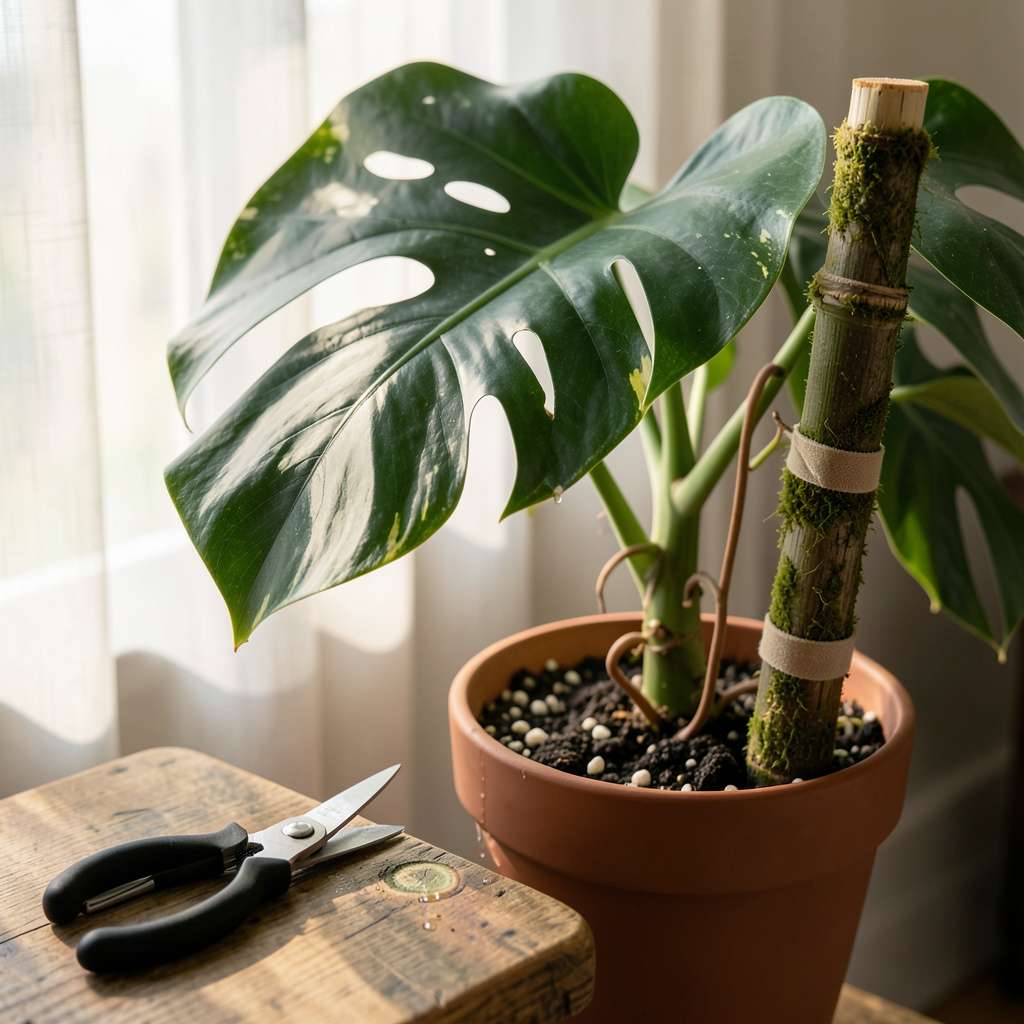
A broken Monstera stem can often be saved by immediately propagating the cutting in water or soil, while the mother plant may regrow from the node below the break. Clean cuts and proper humidity improve success rates.
Monstera plants are surprisingly resilient when damaged, thanks to their aerial roots and dormant nodes that can spring into action. 🌱 I’ve saved countless cuttings by leveraging the plant’s natural ability to regenerate—what looks like a disaster can actually become an opportunity to multiply your collection. The key lies in understanding that each node contains growth potential, and with the right conditions (think warmth and consistent moisture), you can coax new roots from both the cutting and the remaining stem.
From my experience, the first 48 hours are critical for preventing infection and encouraging recovery. A sterilized blade and quick action make all the difference—this isn’t the time for hesitation. The mother plant often surprises gardeners by pushing out fresh growth from the damaged area, sometimes even stronger than before.
💡 In This Article
When a Monstera stem breaks, the plant’s survival mechanism kicks in through its auxin hormones. These growth regulators, concentrated at the nodes (those thickened joints on the stem), signal dormant cells to activate. Within 24-48 hours, the wounded area begins forming a protective callus tissue—a scab-like layer that prevents infection while new cells rapidly divide.
This is why clean cuts heal faster: jagged breaks create more surface area for pathogens to enter.
The magic happens at the nodes. Each contains meristematic tissue, which is essentially plant stem cells capable of becoming roots, leaves, or new stems. When separated from the main plant, these cells detect the hormonal shift and prioritize root development.
In water propagation, you’ll often see tiny white bumps (root primordia) forming within 7-10 days, while soil propagation may take 2-3 weeks as the cutting works harder to seek moisture. 🌱
Meanwhile, the mother plant isn’t defeated. The node just below the break becomes the new growth point. I’ve observed Monsteras push out fresh leaves from these nodes within 3-4 weeks when given proper care. The remaining stem actually benefits from reduced foliage demand, allowing it to redirect energy toward healing and new shoots.
This is why removing damaged leaves above the break helps—the plant conserves resources for recovery.
Environmental factors dramatically speed up or slow down this process. Warmth (70-80°F) accelerates cell division, while high humidity (60-80%) prevents the cut surfaces from drying out. In my greenhouse tests, cuttings in sphagnum moss with bottom heat rooted 40% faster than those in plain water.
The moss maintains perfect moisture while allowing oxygen flow—critical for root respiration. ✨
Here’s what most gardeners miss: the broken stem’s vascular system remains partially intact. The xylem and phloem (water and nutrient transport channels) can still function below the break, which is why the mother plant often recovers completely.
I’ve seen Monsteras regrow from stems that lost 70% of their foliage, proving how resilient these tropical plants truly are when given proper support.
The timeline varies by season—spring and summer cuttings root in half the time of winter attempts due to natural growth cycles. A healthy Monstera cutting can develop 2-3 inch roots in 4-6 weeks, at which point it’s ready for transplanting.
The mother plant typically shows new growth within 2-3 weeks if the remaining stem has at least one viable node. Patience and consistent moisture are your best tools during this regeneration period. 💫
The mother plant can fully recover if the break occurs above a healthy node. The node just below the break will activate and produce new growth within 2-3 weeks under proper care. Remove damaged leaves above the break to help the plant conserve energy for healing.
In ideal conditions (70-80°F with 60-80% humidity), water-propagated cuttings typically show roots in 7-14 days. Soil propagation may take 2-3 weeks as the cutting works harder to establish. Using rooting hormone can speed this process by about 30%.
It’s best to avoid tap water due to chlorine and fluoride, which can inhibit root growth. Use filtered, distilled, or rainwater instead. If tap water is your only option, let it sit uncovered for 24 hours to allow chemicals to dissipate before using.
Spring and early summer are ideal, as the plant is naturally in active growth. Winter propagation may take twice as long or fail due to dormancy. For winter attempts, use a heat mat set to 75°F to encourage root development and maintain success rates.
Healthy roots are firm and white, while rotten roots appear brown, mushy, or slimy. If you notice a foul odor or the stem turns black at the base, remove the cutting immediately and start fresh. Prevent rot by changing water every 3-4 days and using well-draining soil mixes.
