
Beautiful Plants For Your Interior
Beautiful Plants For Your Interior
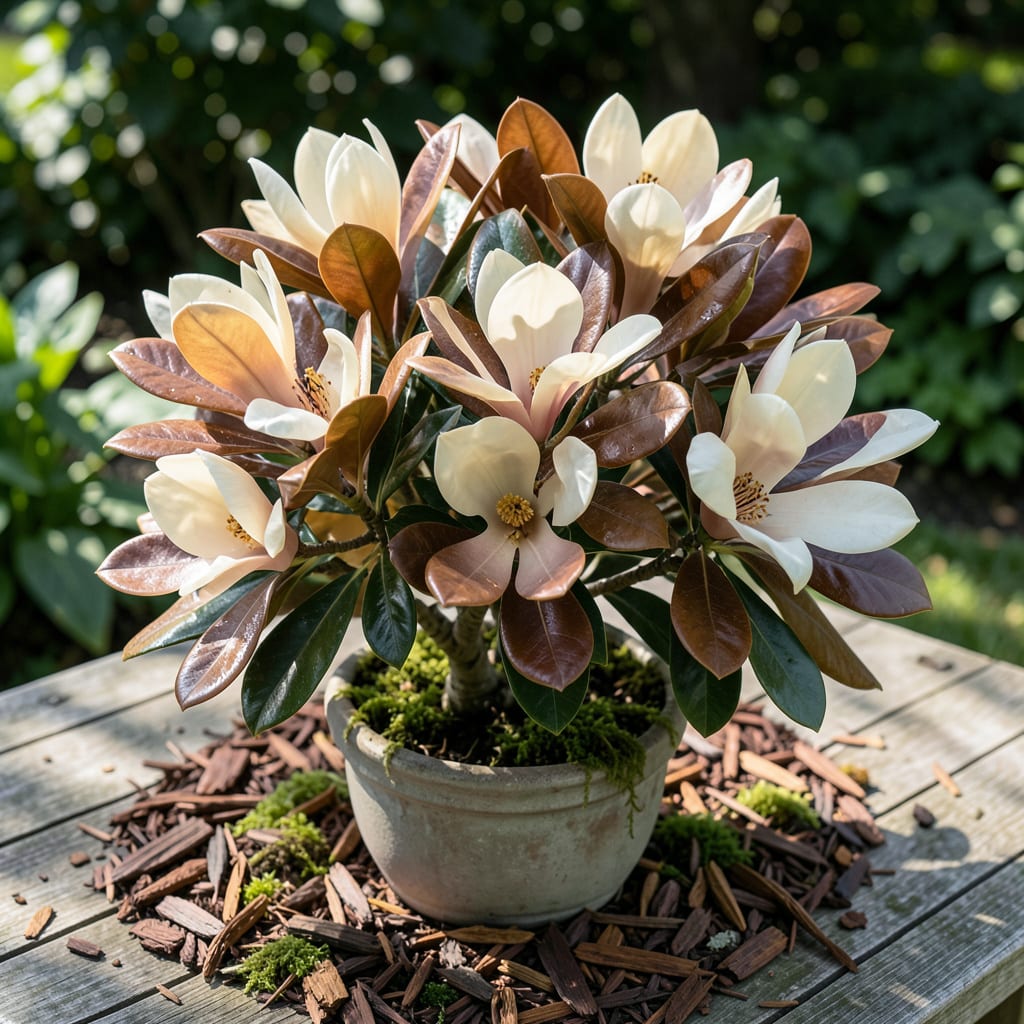
I planted my first Bracken’s Brown Beauty magnolia in a tough spot where nothing else thrived. Its rich, bronzed undersides and glossy green tops brought year-round drama to the landscape.
This evergreen handles heat, humidity, and even urban pollution better than most. With minimal care—well-draining soil, occasional watering, and strategic pruning—it rewards you with fragrant blooms and stunning foliage that never quits.
📚 In This Guide
This evergreen magnolia thrives with proper site selection and consistent care in its early years.
Select a site with full sun to partial shade, as this cultivar tolerates less light than many magnolias but produces the richest foliage color and most abundant blooms in 6+ hours of direct sunlight. Ensure the location has well-draining, slightly acidic soil with a pH between 5.5 and 6.5.
Avoid low-lying areas where cold air settles, as late frosts can damage the large, leathery leaves. I always test soil drainage by digging a 12-inch deep hole, filling it with water, and confirming it drains within 4 hours. This prevents root rot, which magnolias despise.
Dig a hole that is twice as wide as the root ball but no deeper. The extra width encourages rapid root expansion into the surrounding soil. I rough up the sides of the hole with my shovel to prevent glazing, which can restrict root penetration.
If your soil is heavy clay, amend the backfill with 30% organic matter like compost or aged bark fines. However, don’t over-amend—this can create a “pot effect” where roots circle instead of spreading. The goal is gradual transition between the planting hole and native soil.
Position the magnolia so the top of the root ball sits 1-2 inches above the surrounding soil level. This accounts for settling and ensures the trunk flare remains exposed, preventing stem girdling. Remove any burlap, wire baskets, or container material before planting.
Backfill with the amended soil, gently firming with your hands to eliminate air pockets. Water thoroughly after the hole is half-filled, then complete the backfilling. This technique helps settle the soil around the roots. Finally, create a 3-4 inch high watering ring around the perimeter to direct moisture toward the roots.
Apply a 3-4 inch layer of organic mulch such as wood chips or pine bark, keeping it 6 inches away from the trunk to prevent rot. Mulch conserves moisture, suppresses weeds, and insulates roots against temperature extremes.
Water deeply immediately after planting, providing 1.5 gallons per inch of trunk diameter. For the first 2-3 weeks, maintain consistently moist soil—not soggy—to help establish the root system. You’ll know it’s time to water again when the top 2-3 inches of soil feels dry to the touch.
Monitor for the first signs of stress, like wilting or yellowing leaves, which often indicate under or overwatering. This cultivar is drought-tolerant once established, but even moisture is critical during the first growing season.
Planting success often comes down to a few critical details that separate thriving trees from struggling ones.
Site Selection Insight: The requirement for 6+ hours of direct sunlight in Step 1 isn’t just a suggestion—this cultivar will survive with less but won’t produce its signature rich foliage color or abundant blooms without it. I’ve seen the difference firsthand when comparing trees in partial shade versus full sun positions.
Drainage Test Refinement: When performing the 4-hour soil drainage test mentioned in Step 1, use a timer rather than estimating. If water hasn’t drained completely within exactly 4 hours, consider amending the soil or choosing a different location. Magnolias are particularly sensitive to root rot, and this simple test can save years of heartache.
Planting Depth Caution: The 1-2 inches above soil level specification in Step 3 is crucial. I learned this the hard way after planting one slightly too deep—it led to trunk girdling and stunted growth. Use a ruler to measure rather than eyeballing it, especially in softer soils where settling is more pronounced.
Watering Precision: The 1.5 gallons per inch of trunk diameter guideline in Step 4 is your starting point, but monitor the top 2-3 inches of soil as instructed. In clay-heavy soils, you might need slightly less water, while sandy soils may require more frequent watering to maintain that consistent moisture.
This cultivar grows at a moderate rate, typically adding 12-24 inches per year under ideal conditions. With proper care, it can reach 20-30 feet tall and 10-15 feet wide at maturity.
Plant in early spring or fall to allow roots to establish before extreme heat or cold. Avoid planting in peak summer or during frost periods for best results.
It thrives in full sun to partial shade. While it tolerates shade, full sun (6+ hours daily) produces the best foliage density and most abundant, fragrant blooms.
Watch for leaf spot, scale insects, or root rot in poorly drained soil. Regular watering, mulching, and proper spacing help prevent most problems.
Yes! For compact spaces, consider ‘Little Gem’ or ‘Teddy Bear‘ Southern Magnolias. Both offer similar beauty but stay under 20 feet tall.
