
Beautiful Plants For Your Interior
Beautiful Plants For Your Interior
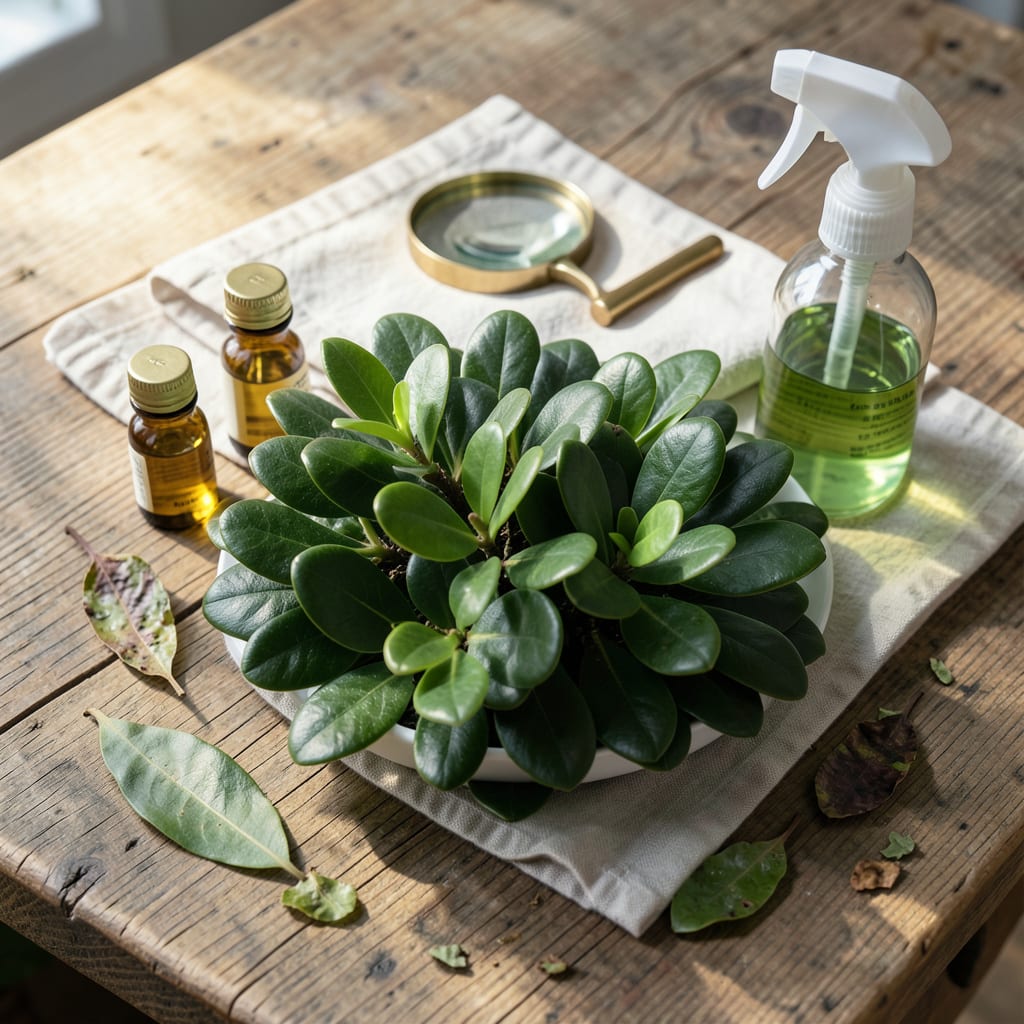
Those tiny holes in your boxwood leaves mean trouble. I’ve battled boxwood leaf miners—the larvae tunnel inside leaves, leaving pitted, yellowed foliage and stressed shrubs.
Here’s the thing—early treatment works. A foolproof organic spray and consistent monitoring can save your plants before damage spreads. We’ll break down how to spot the pests, treat them, and keep your shrubs healthy long-term.
📚 In This Guide
Follow this organic approach to restore your shrubs and prevent future infestations effectively.
Inspect the foliage closely for the telltale signs: blistered or discolored leaves, which indicate larval activity inside the leaf tissue. The most critical window for intervention is in early spring just as the new growth emerges, or during late fall after the first hard frost when adults lay eggs.
Use a hand lens to check for the orange-yellow larvae within the leaves or the small, ridged egg scars on the undersides. This confirms the presence of boxwood leaf miner (Monarthropalpus flavus) rather than other pests. Without accurate identification, your treatment efforts will be misdirected.
With sharp pruners, cut out and dispose of any branches showing severe blistering or yellowing. This immediately reduces the pest population and prevents further spread. I always place the removed material in a sealed bag—not the compost—to avoid reinfesting the garden.
Focus on the inner canopy where humidity and shade create ideal conditions for the miners. Thin out dense growth to improve air circulation, which makes the environment less favorable for future outbreaks. Sanitize your pruners with rubbing alcohol between cuts to prevent accidental transfer of eggs or larvae.
Mix horticultural oil with water according to the product label (typically 2-4 tablespoons per gallon) and apply it thoroughly to all leaf surfaces, especially the undersides where eggs and larvae hide. The oil suffocates the pests without harming beneficial insects when used correctly.
Spray in early morning or late evening to avoid leaf burn, and ensure the temperature is between 40-85°F. Reapply every 7-10 days for at least three applications to break the life cycle. I’ve found this timing disrupts both the larval and adult stages effectively.
Apply Steinernema carpocapsae nematodes to the soil around the base of the shrubs. These microscopic allies target and kill the pupae stage of the leaf miner as they drop to the ground to complete their life cycle. Water the soil before and after application to help the nematodes move through the medium.
Apply in early morning or dusk when soil temperatures are between 55-85°F and moisture levels are high. One application in spring and another in early fall provides season-long protection. Avoid applying in direct sunlight or to dry soil, as this reduces nematode efficacy.
After treatment, check the foliage weekly for new signs of damage or adult activity. Healthy, vigorously growing boxwoods are less susceptible to reinfestation. Maintain consistent moisture levels—neither waterlogged nor drought-stressed—as stressed plants attract more pests.
Fertilize lightly in early spring with a balanced, slow-release organic fertilizer to support recovery. Avoid high-nitrogen feeds, which promote soft, succulent growth that leaf miners prefer. With diligent care, your shrubs will regain their dense, lush appearance within one growing season.
Small details make the difference between temporary fixes and long-term shrub health.
Timing Precision: The early spring and late fall intervention windows are non-negotiable. In Step 1, missing the early spring timing by even a week allows larvae to burrow deeper into leaves. Similarly, late fall applications after the first hard frost target adult egg-laying when they’re most vulnerable.
Application Technique: For Step 3, spray horticultural oil until it drips slightly from leaf undersides—this ensures complete coverage where eggs hide. The 7-10 day reapplication interval is critical; stretching it to 14 days gives larvae time to mature and resist treatment.
Soil Condition Critical: In Step 4, nematodes require moist soil to move effectively. I water thoroughly before and after application, then maintain consistent moisture for 48 hours post-treatment. Dry soil kills nematodes before they can target pupae.
Look for blistered or discolored leaves, tiny exit holes, or stunted growth. Adult miners lay eggs inside leaves, and larvae feed between the leaf layers, causing visible damage by late spring or early summer.
Apply treatments in early spring (just as new growth appears) and again in late spring to target emerging larvae. A third application in early summer can help control overlapping generations.
Yes! Use neem oil or spinosad sprays, which disrupt the larvae’s life cycle. Beneficial nematodes (Steinernema carpocapsae) can also be applied to the soil to target pupating miners.
Timing is key—treat before larvae burrow into leaves. Ensure full coverage, especially the undersides of leaves. If infestations persist, remove and destroy heavily damaged foliage to reduce the population.
