
Beautiful Plants For Your Interior
Beautiful Plants For Your Interior
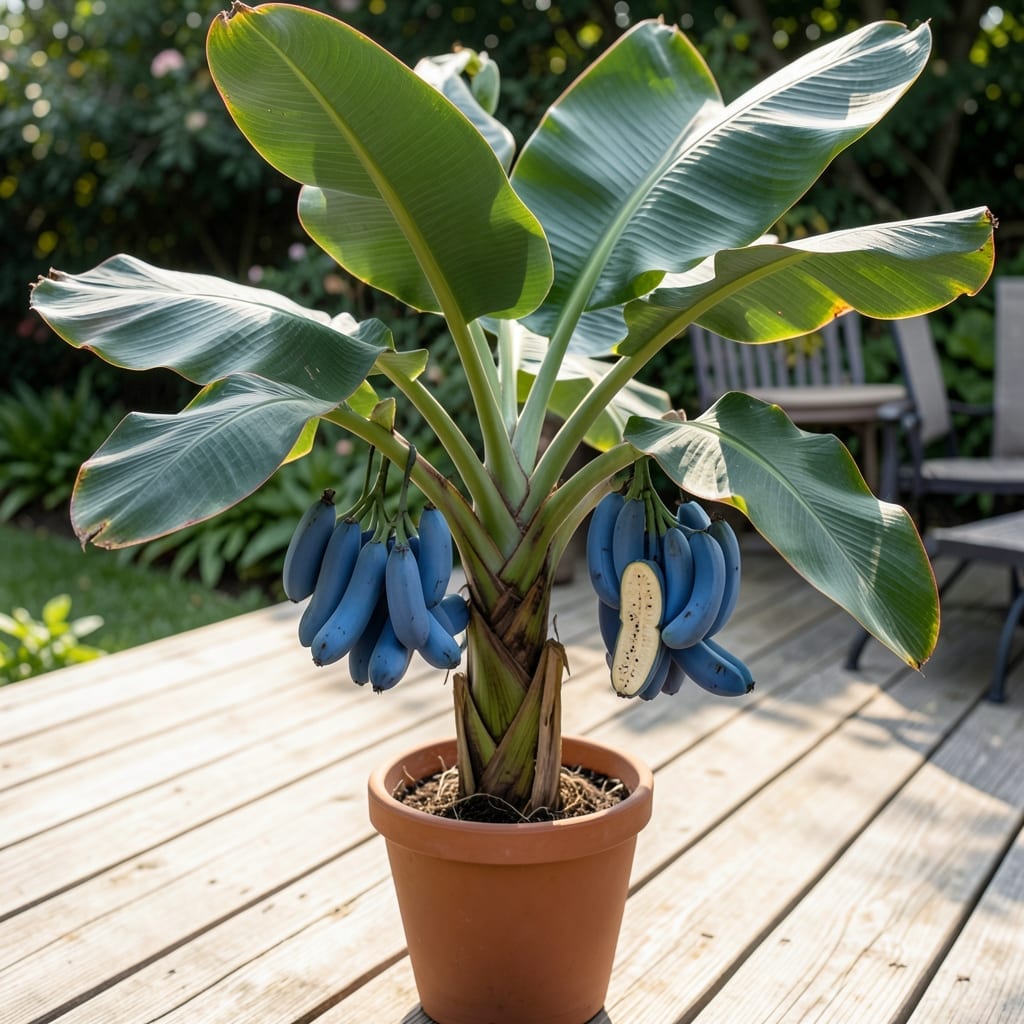
Cut open, a Blue Java banana reveals a creamy, custard-like texture with a pale yellow to off-white interior. Its flavor blends vanilla, honey, and a hint of blueberry, offering a sweet, smooth experience.
I love how this tropical fruit stands out from typical bananas with its rich, almost ice cream-like consistency. The subtle floral and fruity notes come from its unique genetic makeup and higher sugar content. It’s like nature’s dessert, perfect for eating fresh or adding to smoothies. ✨
What’s fascinating is how the texture develops—it’s all about the starch-to-sugar conversion as it ripens, giving it that melt-in-your-mouth quality. 💫
💡 In This Article
The custard-like texture comes from a higher amylose content in its starch. As the banana ripens, enzymes break down starches into simple sugars (18-22% Brix), creating that smooth, creamy mouthfeel. This process is slower than in Cavendish bananas, allowing for a more complex transformation.
The result is a flesh that feels almost like vanilla pudding when fully ripe. ✨
Genetically, Blue Javas are a hybrid of Musa acuminata and Musa balbisiana, giving them unique cellular structures. Their cells contain more pectin, which softens gradually, preventing the mushy breakdown common in other varieties. This structural integrity maintains the firm yet silky texture even when overripe.
The pale yellow hue comes from lower chlorophyll levels compared to green bananas. 💫
The flavor complexity develops from volatile compounds like ester and aldehyde derivatives. These create the vanilla and honey notes, while anthocyanins (the same pigments in blueberries) contribute the subtle berry undertone. The banana’s skin turns from green to a silvery-blue as it ripens, signaling peak sweetness inside.
This color change occurs due to light reflection off the waxy surface combined with anthocyanin production. ⚡
Cultivation plays a role too. Blue Javas thrive in tropical climates with consistent 75-85°F temperatures and high humidity. The soil composition, particularly potassium levels, directly affects sugar development. Growers often note that bananas from volcanic soil have an even more pronounced custard texture and sweeter taste profile. 🔥
What makes this variety special is its ability to maintain texture at room temperature. While most bananas become grainy when chilled, Blue Javas stay creamy even after refrigeration.
This makes them ideal for culinary uses where texture consistency matters, like in ice creams or baked goods where you want distinct banana pieces rather than a puree. 🌟
It has a pale yellow to off-white, custard-like interior that’s incredibly smooth. The texture resembles vanilla pudding or soft ice cream, unlike the firmer flesh of regular bananas. This unique consistency makes it perfect for eating fresh.
Look for a silvery-blue peel with white streaks. The fruit should yield slightly to gentle pressure, like a ripe avocado. Avoid green or overly brown skins, as these won’t have the ideal sweetness or texture.
Unlike other bananas, Blue Javas stay creamy even when chilled. Just ensure they’re fully ripe first—cold stops sugar development. Once ripe, they’ll keep well in the fridge for 5-7 days without turning mushy.
Volatile compounds like esters and aldehydes create those flavors. Anthocyanins, also found in blueberries, add a subtle berry note. The higher sugar content (18-22% Brix) enhances the overall sweetness.