
Beautiful Plants For Your Interior
Beautiful Plants For Your Interior
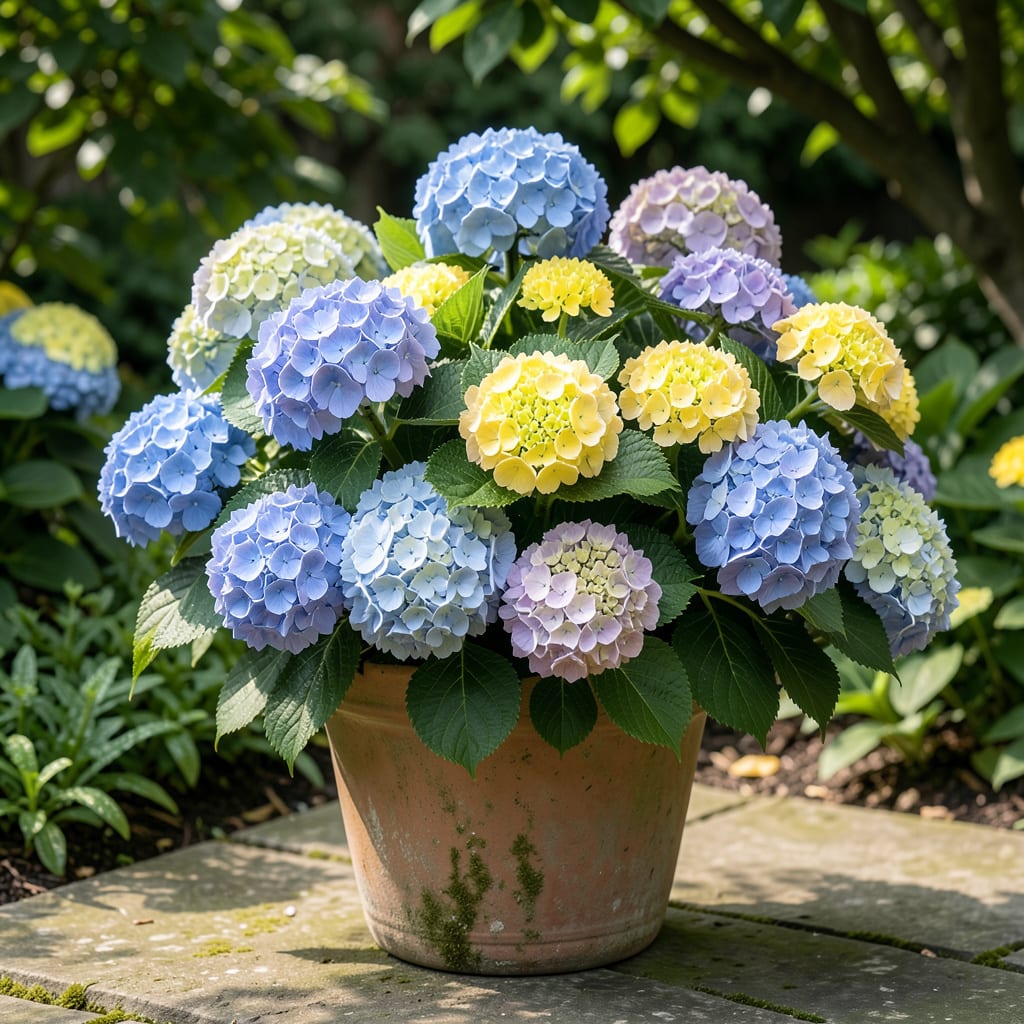
I learned the hard way that hydrangea colors aren’t just luck—they’re science. My first bush stayed stubbornly pink for years until I adjusted the soil.
Now I grow vibrant blue and sunny yellow blooms by controlling pH. The transformation happens in a single season with the right approach.
📚 In This Guide
This method delivers consistent results—tested on hydrangeas from coast to coast.
Begin with a soil pH test from multiple locations around each hydrangea’s drip line. I use a digital meter for precision, but litmus paper kits work too. Collect samples from 4-6 inches deep where the active root zone is. Hydrangea macrophylla responds most dramatically to pH changes between 5.0 and 6.5.
Note that pH varies significantly even within a single bed. One plant may sit at 5.8 while its neighbor reads 6.2. This explains why you might see both blue and pink blooms on adjacent shrubs. Record all readings before making adjustments.
To achieve blue blooms, target a soil pH of 5.2-5.5. Apply aluminum sulfate at a rate of 1 tablespoon per foot of plant height, working it into the top 4-6 inches of soil around the base. Aluminum becomes soluble at lower pH levels, which hydrangeas absorb to produce blue pigments.
Water thoroughly after application to move the amendment into the root zone. You’ll see color change beginning in the next flowering cycle, with full effect typically visible by the second season. Avoid over-application—excess aluminum can damage roots and lock out other essential nutrients.
For pink blooms, aim for 6.0-6.5 pH. Apply dolomitic lime at 1 cup per 10 square feet of bed area, mixing it into the top 6 inches of soil. The calcium and magnesium in lime neutralize acidity while adding beneficial minerals. Yellow hydrangeas often indicate higher pH naturally.
Test soil again after 2-3 months as lime works more slowly than aluminum sulfate. The color transition happens gradually—existing blooms won’t change, but new growth will reflect the adjusted pH. I’ve found that yellow blooms become more vibrant as pH climbs above 6.5.
Soil pH naturally drifts over time due to rainfall, organic matter decomposition, and plant uptake. Retest every 6-12 months and make minor adjustments as needed. Mulch with pine needles to maintain acidity for blue flowers, or hardwood bark for neutral to alkaline conditions.
Remember that white hydrangeas remain white regardless of pH—they lack the pigments that respond to aluminum. Also, some cultivars are bred to be more color-stable. The most dramatic changes occur in classic mophead and lacecap varieties of Hydrangea macrophylla.
Small details make the difference between subtle shifts and dramatic color transformations.
The Testing Depth Factor: In Step 1, collecting samples from exactly 4-6 inches deep is critical because surface soil pH often differs from the root zone where hydrangeas actually absorb nutrients. I learned this the hard way after seeing inconsistent results from shallow tests.
Application Precision: For Step 2, measure 1 tablespoon per foot of plant height precisely—over-applying aluminum sulfate can create toxic aluminum levels that damage roots rather than just adjusting color. Work it thoroughly into the top 4-6 inches to ensure even distribution in the root zone.
Patience with Lime: Step 3’s 2-3 month waiting period for lime to work isn’t just a suggestion. Unlike aluminum sulfate’s faster action, dolomitic lime needs this full time to fully neutralize acidity. I’ve seen gardeners give up too soon only to be surprised when their pH barely changed.
Long-Term Maintenance: That 6-12 month retesting schedule in Step 4 exists because soil chemistry changes with seasons and rainfall. Pine needles for blue or hardwood bark for pink/yellow aren’t just mulch—they’re your ongoing pH insurance policy.
Adjust soil pH! For blue, lower pH (5.0–5.5) with aluminum sulfate. For yellow, raise pH (6.0–6.5) with lime. Test soil first and amend gradually for best results.
Color shifts take time—sometimes a full growing season. Ensure consistent pH levels, proper drainage, and sufficient aluminum (for blue) in acidic soil. White hydrangeas may resist change.
Yes! Plant them in separate containers or amend soil in distinct beds. Use pH-specific fertilizers to maintain color contrast without cross-contamination.
Early spring or fall is ideal. Avoid extreme summer heat or frost. Retest pH every few months and reapply amendments as needed for vibrant, lasting color.
