
Beautiful Plants For Your Interior
Beautiful Plants For Your Interior
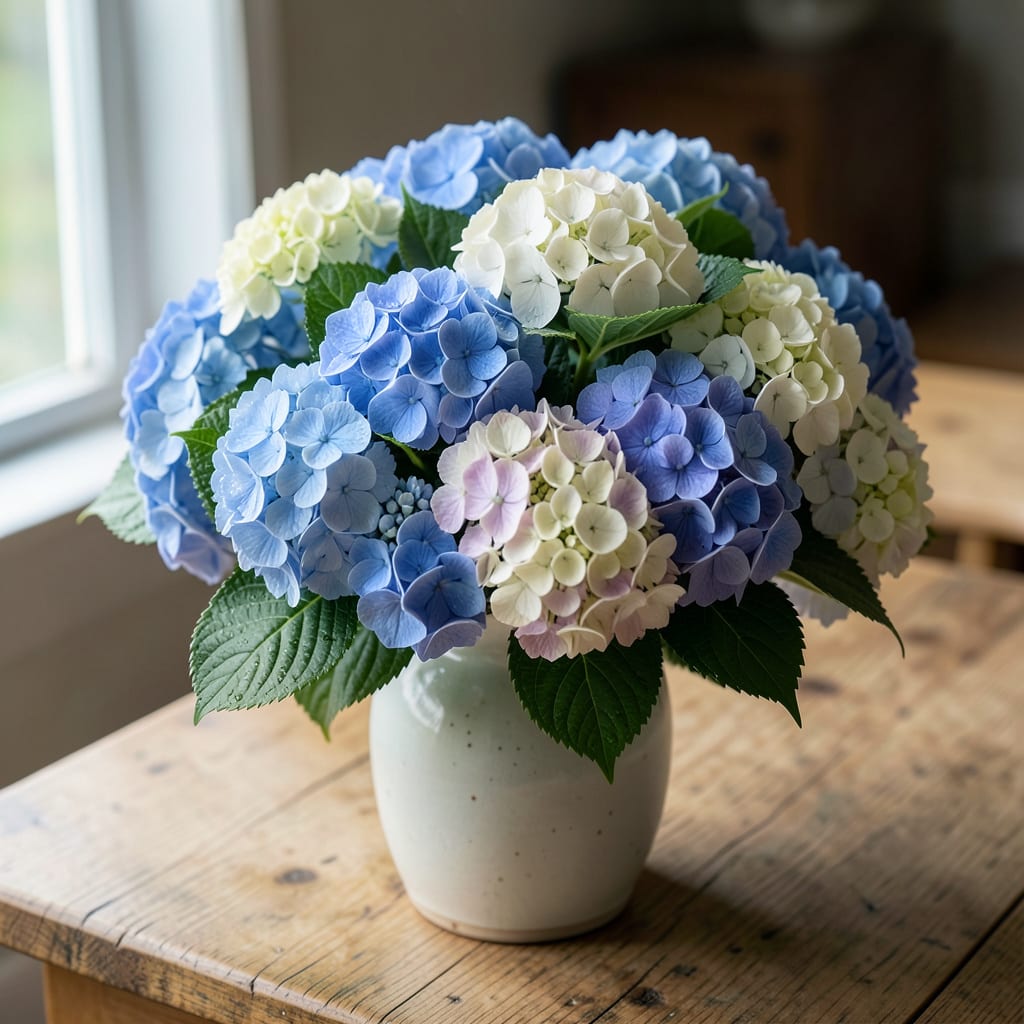
Blue and white hydrangeas add dramatic color that shifts with your soil. I first planted mine three seasons ago, and watching the blooms transform from deep blue to soft white became my favorite garden surprise.
These shrubs thrive in partial shade with consistent moisture. The real magic happens when you adjust soil pH—more acidic for blue, neutral for white. With minimal care, you’ll get abundant blooms from early summer through fall.
📚 In This Guide
These stunning shrubs transform with soil chemistry, and I’ll show you how to coax out both colors.
Select a bigleaf hydrangea (Hydrangea macrophylla) cultivar known for color-changing blooms like ‘Nikko Blue’ or ‘Endless Summer.’ These naturally produce blue or pink flowers based on soil pH, and white blooms often appear as the flowers age.
Plant in an area with partial shade (morning sun and afternoon shade) for best results. Too much direct sun can scorch leaves and fade flower colors, while deep shade reduces blooming. Well-draining soil is essential—hydrangeas will rot in waterlogged ground.
Use a soil test kit to check your pH. For blue flowers, aim for 5.0-5.5 pH by adding aluminum sulfate according to package instructions. For white blooms, maintain a neutral pH around 6.0-6.5 with lime if needed.
I’ve found that amending soil in early spring gives the best color change results by the time blooms appear. Work amendments into the top 6 inches of soil around the plant’s root zone. Remember that color changes take time—don’t expect immediate results.
Dig a hole twice as wide as the root ball but no deeper. Set the plant so the top of the root ball sits 1 inch above the surrounding soil level—hydrangeas often settle after planting and can suffocate if buried too deep.
Space plants 3-4 feet apart to allow for mature growth. Backfill with native soil mixed with compost, then water deeply to remove air pockets. Mulch with 2-3 inches of bark to retain moisture and keep roots cool, but keep mulch away from the stem.
Keep soil consistently moist but not soggy. Water deeply at the base 2-3 times per week during the first growing season, adjusting for rainfall. Hydrangeas wilt dramatically when thirsty but recover quickly once watered.
Apply a balanced 10-10-10 fertilizer in early spring and again after the first bloom cycle. Avoid high-nitrogen fertilizers late in the season as they promote leafy growth at the expense of flowers. I stop fertilizing by mid-summer to allow the plant to prepare for dormancy.
Prune bigleaf hydrangeas immediately after flowering, typically in mid to late summer. Remove dead or weak stems at the base and trim back one-third of the oldest stems to encourage new growth. This type blooms on old wood, so avoid fall or winter pruning.
Deadhead spent blooms to encourage additional flowers, but leave some on the plant through winter for visual interest. In late fall, protect plants in cold climates with a 4-6 inch layer of mulch around the base after the ground freezes.
Small adjustments in planting and care make a surprising difference with these color-changing shrubs.
Location Wisdom: That partial shade mentioned in Step 1 is non-negotiable. I learned the hard way that afternoon sun fades blue blooms to lavender and can scorch leaves. Morning sun with afternoon shade gives you the most vibrant colors and healthiest plants.
Soil pH Precision: When testing your soil in Step 2, remember that pH changes gradually. The 5.0-5.5 range for blue flowers and 6.0-6.5 for white isn’t just suggestion—it’s science. I’ve seen gardeners add too much aluminum sulfate at once, which can shock the plant. Work amendments into those top 6 inches of soil as directed, and retest after a month.
Planting Depth Secret: That 1 inch above soil level in Step 3 prevents a common problem. Hydrangeas settle after planting, and if the root ball sits at or below soil level, it can suffocate. I’ve lost plants this way before finally understanding why they looked healthy for weeks then suddenly declined.
Watering Insight: The 2-3 times per week in Step 4 is a starting point, not a rule. Check soil moisture by sticking your finger 1 inch down—if it feels dry, water deeply. Hydrangeas wilt dramatically when thirsty, but they bounce back quickly once watered, so don’t panic if you see drooping leaves on a hot afternoon.
Use aluminum sulfate to acidify soil (pH 5.0–5.5) for blue blooms. For white hydrangeas, maintain neutral to slightly alkaline soil (pH 6.0–7.0). Test soil pH and amend accordingly.
Plant in early spring or fall when temperatures are mild. This allows roots to establish before extreme heat or cold. Avoid planting in summer or winter.
Yes! Use a large container with well-draining soil. Potted hydrangeas need consistent moisture and may require more frequent pH adjustments to maintain color.
Check soil pH—color changes take time (often a full growing season). Ensure your hydrangea variety is color-changing (e.g., Hydrangea macrophylla). Nutrient imbalances or poor drainage can also affect results.
