
Beautiful Plants For Your Interior
Beautiful Plants For Your Interior
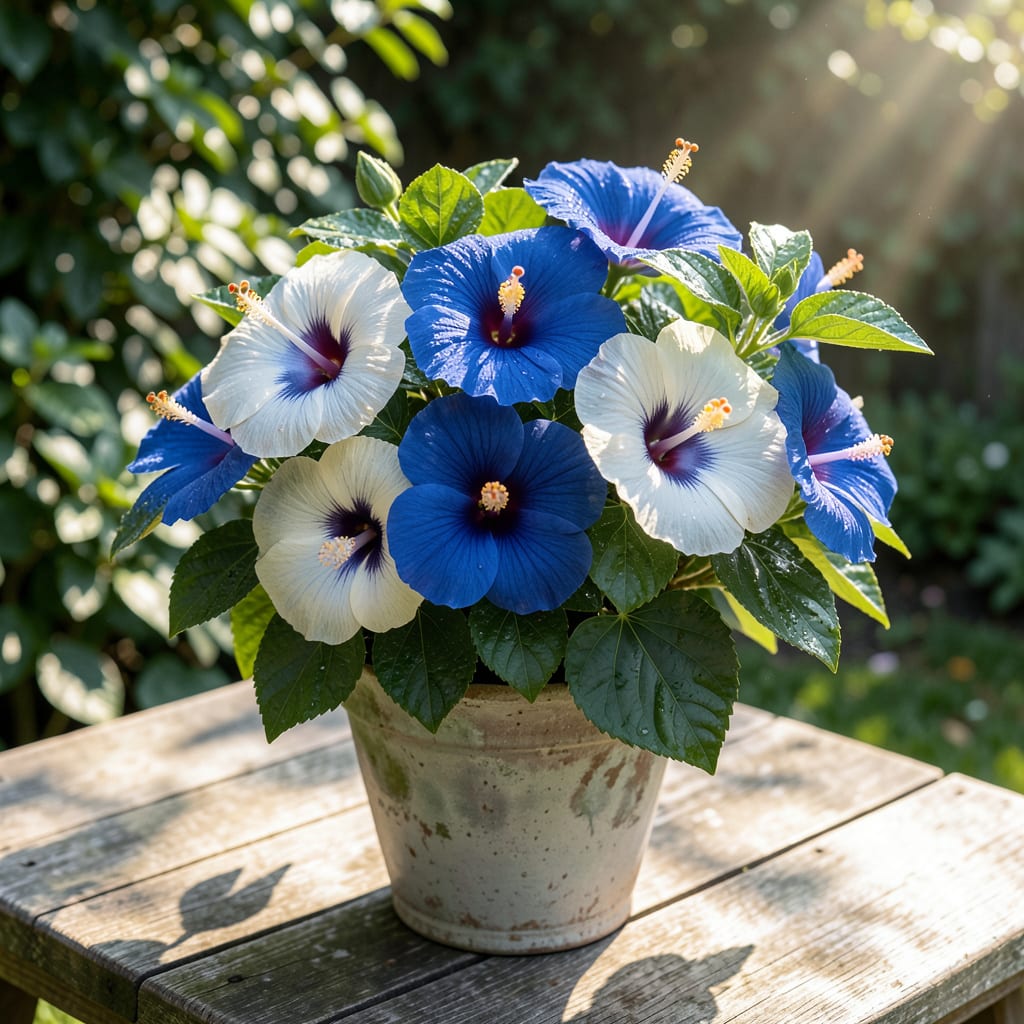
Blue and white hibiscus brings tropical drama to any garden. I first planted mine three summers ago, and the 6-inch blooms still stop visitors in their tracks with their striking color contrast.
This variety thrives in full sun with well-draining soil and regular watering. It’s surprisingly adaptable, growing well in both ground beds and containers. You’ll get continuous flowers from mid-summer through first frost with minimal effort.
📚 In This Guide
Here’s the method I use to cultivate these stunning tropical blooms with reliable success.
Choose a spot with full sun to partial shade, though blue and white hibiscus thrive best with at least 6 hours of direct sunlight daily. I’ve found they prefer a location sheltered from strong winds, which can damage their large, delicate flowers.
Ensure the soil is well-draining—these plants despise soggy roots. A slightly acidic to neutral pH (6.0-7.0) works best. If your soil is heavy clay, amend it with organic matter like compost to improve drainage and fertility.
Dig a hole twice as wide and just as deep as the root ball. Gently remove the plant from its container, loosening any circling roots before placing it in the hole. Position the top of the root ball 1-2 inches above the soil line to allow for settling and prevent water pooling around the stem.
Backfill with native soil mixed with compost, pressing lightly to eliminate air pockets. Water deeply after planting to help the soil settle and encourage root establishment. I always mulch around the base with 2-3 inches of organic mulch, keeping it away from the stem to prevent rot.
Keep the soil consistently moist but not waterlogged during the first 2-3 weeks after planting. Once established, blue and white hibiscus are moderately drought-tolerant but bloom best with regular watering, especially during dry spells.
Water at the base of the plant to avoid wetting the foliage, which can invite fungal diseases. A slow, deep watering 2-3 times per week is ideal, depending on your climate and soil type. In extreme heat, you may need to water daily.
Feed your hibiscus with a balanced, water-soluble fertilizer (10-10-10 or 20-20-20) every 2-4 weeks during the growing season. I switch to a low-phosphorus fertilizer in late summer to encourage more flowers and less foliage growth.
Yellowing leaves often signal a nutrient deficiency, usually nitrogen. If this happens, apply a nitrogen-rich fertilizer to restore vibrant green foliage. Always follow the package instructions for dilution rates to avoid over-fertilizing, which can burn the roots.
Prune lightly after each flowering cycle to encourage bushier growth and more blooms. Remove spent flowers and any dead or diseased branches. I use clean, sharp pruners to make cuts just above a leaf node or bud, which helps direct new growth.
In late winter or early spring, perform a more thorough pruning to shape the plant and remove any wood damaged by cold. Blue and white hibiscus can be sensitive to frost, so in cooler climates, consider growing them in containers that can be moved indoors during winter.
These small adjustments make a surprising difference in your garden’s success.
Sunlight Strategy: The 6 hours of direct sunlight mentioned in Step 1 isn’t just a suggestion—it’s the minimum for vibrant blooms. I learned this the hard way after planting mine in a too-shady corner. If your space only gets partial sun, prioritize morning light over harsh afternoon rays.
Planting Position: In Step 2, raising the root ball 1-2 inches above soil level prevents more problems than you’d expect. I’ve seen established plants suffer from stem rot when this small elevation was skipped. Press the soil gently but firmly to eliminate air pockets that could stress the roots.
Watering Wisdom: During those first 2-3 weeks after planting, consistent moisture is critical. I set a phone reminder for the 2-3 times weekly deep watering until it became habit. The key is moisture at the roots, not on the leaves—wet foliage in evening hours invites trouble.
Soil Preparation: Before planting, test your soil’s drainage by digging a 1-foot hole and filling it with water. If it doesn’t drain within an hour, amend with compost as mentioned. This simple check saved me from losing several plants to root rot in clay-heavy soil.
Keep it in well-draining soil with 6+ hours of sunlight. Water deeply 2-3 times a week, allowing the topsoil to dry between waterings. Fertilize monthly in spring/summer with a balanced plant food for vibrant blooms.
This tropical beauty typically blooms from late spring to early fall, with peak flowers in summer. Consistent warmth (70-85°F) and proper care encourage longer blooming seasons.
Yes! Choose a large pot (12+ inches) with drainage holes. Use a quality potting mix and place it in a sunny spot. Container-grown plants may need more frequent watering and feeding.
Yellow leaves often signal overwatering, poor drainage, or nutrient deficiencies. Check soil moisture, ensure proper drainage, and adjust your watering schedule. A balanced fertilizer can help restore health.
Try hardy hibiscus varieties (like Hibiscus moscheutos) or grow tropical hibiscus indoors near a sunny window. Move potted plants inside before the first frost to protect them from cold.
