
Beautiful Plants For Your Interior
Beautiful Plants For Your Interior
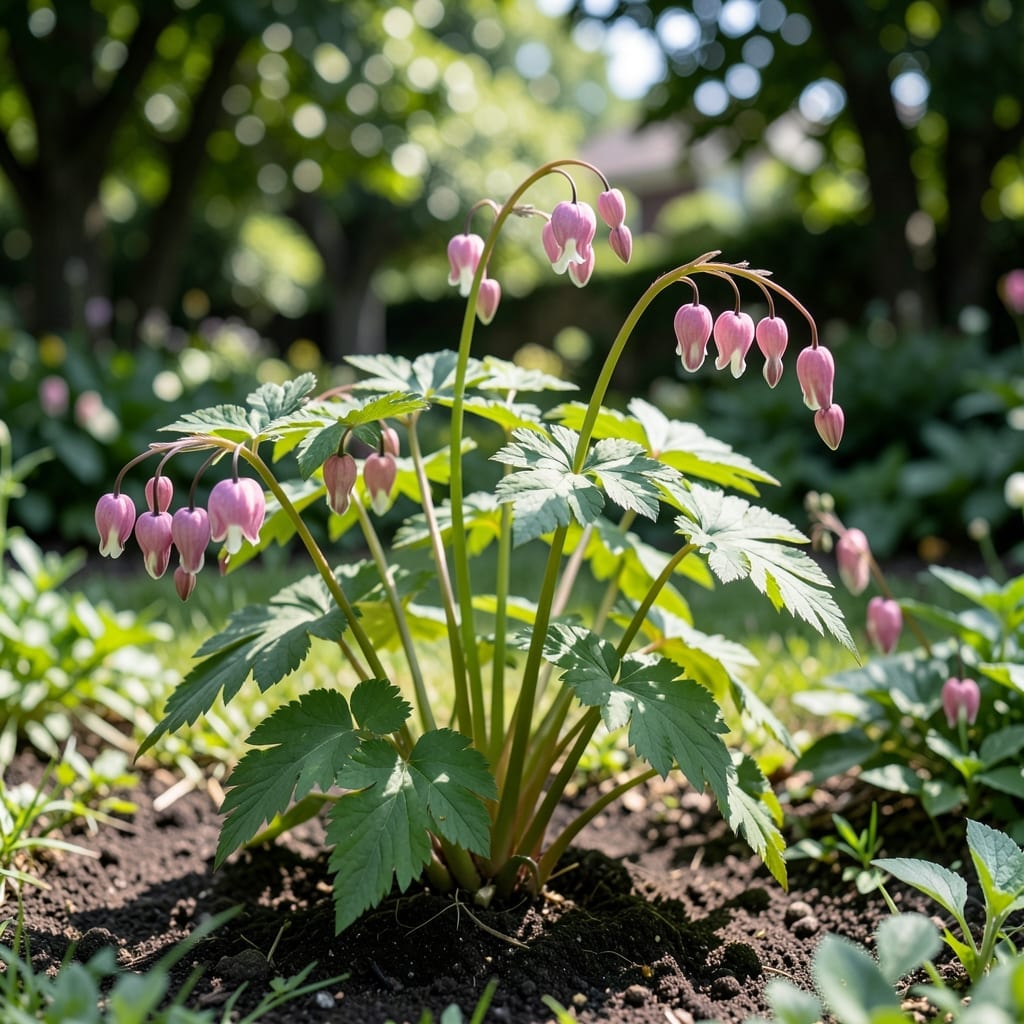
The elegant bleeding heart 🌸 captures attention with its heart-shaped flowers, but its size matters just as much as its beauty. These plants can grow 2-4 feet tall, making them a stunning addition to any garden.
Understanding their mature dimensions helps you plan the perfect spot. Whether you’re working with limited space or a sprawling yard, knowing how big they’ll get is crucial.
I’ll share the typical growth patterns and how to manage their spread. Let’s discover how to make these plants thrive in your landscape.

The bleeding heart plant comes in several popular varieties, each with its own mature size and growth habits. Most gardeners are familiar with the classic Dicentra spectabilis, which is the largest type.
Understanding the height and spread of each variety helps you choose the right one for your space. Some stay compact while others grow quite tall.
🌸 Bleeding Heart Size by Variety
| Variety | Height | Spread |
|---|---|---|
| Dicentra spectabilis | 2-4 feet | 2-3 feet |
| Dicentra eximia | 1-1.5 feet | 1-2 feet |
| Dicentra formosa | 1-1.5 feet | 1-2 feet |
The Dicentra spectabilis is the most common variety, reaching 2-4 feet tall with a similar spread. Its arching stems and heart-shaped flowers make it a showstopper.
For smaller spaces, Dicentra eximia and formosa stay more compact at 1-1.5 feet tall. These are perfect for border plantings or containers.
I’ve found that soil conditions can affect size. Rich, well-draining soil helps plants reach their full potential. Poor soil may result in stunted growth.
Light also plays a role. While they prefer partial shade, too little light can limit their size. Aim for 4-6 hours of morning sun for best results.
Watering consistently keeps them growing strong. These plants like moist but not soggy soil. A 2-inch mulch layer helps retain moisture.
In my garden, the Dicentra spectabilis plants always impress with their height. Their arching stems create beautiful focal points in shady areas.
Remember that mature size is reached after 2-3 years. Be patient and give them time to establish.
Several key factors determine how large your bleeding heart plants will grow. I’ve learned that soil quality plays a huge role in their development.
Rich, well-draining soil with plenty of organic matter helps these plants reach their full 2-4 foot potential. Poor soil often leads to smaller, weaker plants.
🌱 Key Growth Factors
Sunlight exposure is another critical factor. While bleeding hearts prefer partial shade, they need 4-6 hours of morning sun to reach their maximum size. Too much shade can result in leggy, sparse growth.
I’ve noticed that consistent watering is essential, especially during dry spells. These plants thrive with 1-2 inches of water weekly, but avoid soggy conditions to prevent root rot.
Your USDA hardiness zone also matters. Bleeding hearts grow best in zones 3-9. In colder climates, they may stay smaller, while in warmer zones, they can reach their full mature size more quickly.
Finally, proper pruning helps maintain size and shape. I recommend cutting back faded foliage after blooming to encourage healthy new growth and prevent overgrowth. ✂️