
Beautiful Plants For Your Interior
Beautiful Plants For Your Interior
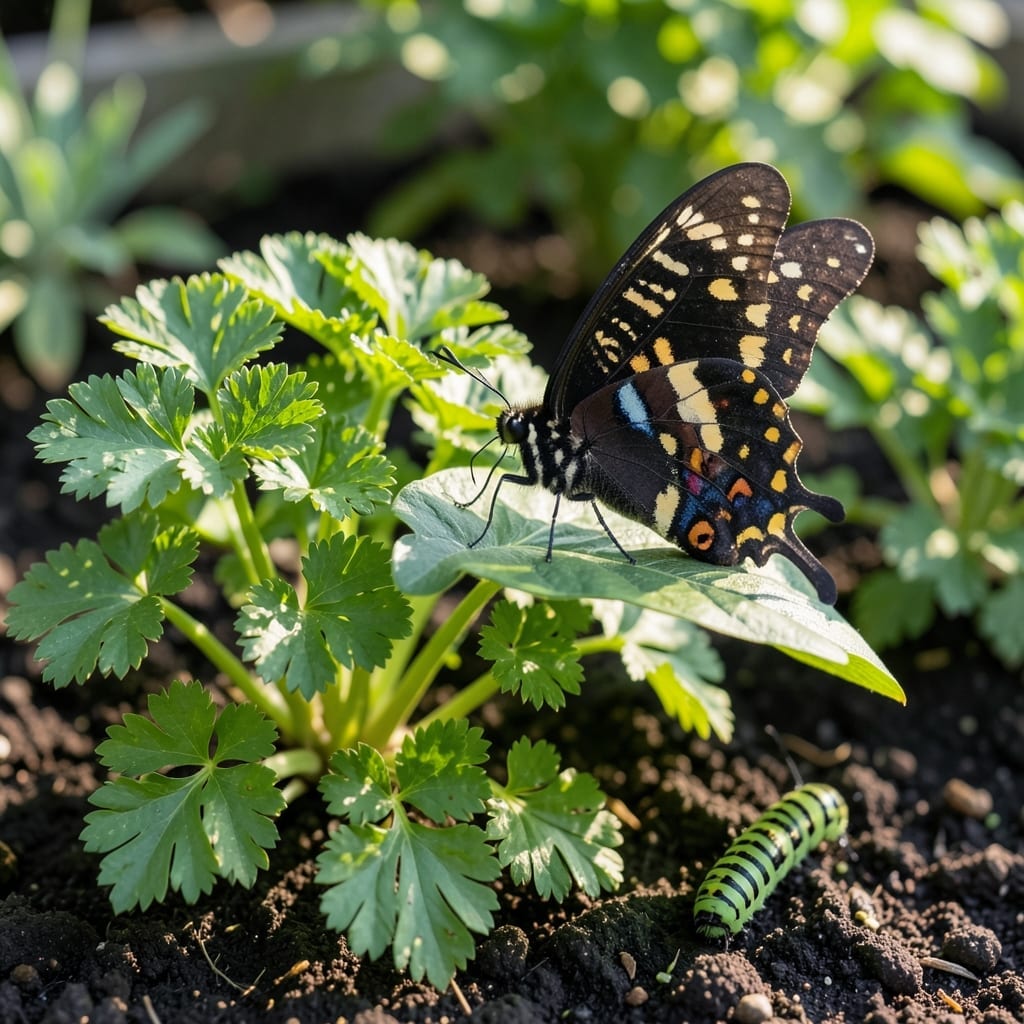
Black swallowtail butterflies thrive in open woodlands, meadows, and gardens, favoring host plants like parsley, dill, and carrots. Their lifecycle includes egg, caterpillar, chrysalis, and adult stages over 30-45 days.
I’ve noticed these butterflies are particularly drawn to sunny areas with abundant nectar sources, which explains their frequent garden visits. Their transformation process is fascinating—each stage is perfectly adapted to its environment, from the tiny eggs laid on host plants to the 30-45 day journey to adulthood. 💫
What’s remarkable is how they’ve evolved to rely on specific plants not just for food but for survival at every growth phase. This makes them incredible pollinators and a joy to observe in the wild.
💡 In This Article
These butterflies flourish in sunlit areas with minimal wind interference, as their delicate wingspan of 3-4 inches makes heavy winds challenging. Open woodlands provide the perfect balance of sunlight and shelter, while meadows offer abundant wildflowers for nectar.
The key to their habitat preference lies in the availability of specific host plants, which are critical for egg-laying and caterpillar development. 🌿
Host plants like parsley, dill, and carrots belong to the Apiaceae family, which contains compounds that caterpillars can metabolize efficiently. These plants produce furanocoumarins, chemicals that deter most herbivores but are tolerated—and even sought out—by black swallowtail larvae. This evolutionary adaptation ensures the caterpillars have a food source with minimal competition. 🔥
Regional variations exist in their habitat choices. In the eastern U.S., they’re commonly found near butterfly weed and milkweed, while western populations favor fennel and citrus plants. This flexibility allows them to thrive across diverse ecosystems, from coastal dunes to mountain meadows up to 8,000 feet elevation. ✨
The relationship between these butterflies and their host plants is a classic example of obligate mutualism. The plants benefit from pollination as adult butterflies feed on nectar, while the butterflies rely on the plants for reproduction. Without these specific species, the black swallowtail’s lifecycle would collapse, as their caterpillars refuse to eat other foliage. 💫
For gardeners, understanding this connection means planting clusters of host plants in sunny, protected spots. A single dill plant can support dozens of caterpillars, and placing it near nectar sources like zinnia or lantana creates an ideal ecosystem.
This mimicry of natural habitats ensures these butterflies not only visit but complete their entire lifecycle in your garden. 🌟
They primarily feed on plants in the Apiaceae family, like parsley, dill, and carrots. These host plants are essential for their survival.
In the wild, adult black swallowtails live for about 2-4 weeks. Their main focus is mating and laying eggs to continue the cycle.
They play a key role as pollinators, helping fertilize plants as they feed on nectar. Their presence also indicates a healthy ecosystem.
They’re most active from late spring to early fall, especially on warm, sunny days. Look for them in gardens or open meadows.
Yes! You can attract them by planting host plants and providing a safe environment. Avoid pesticides to protect them.