
Beautiful Plants For Your Interior
Beautiful Plants For Your Interior
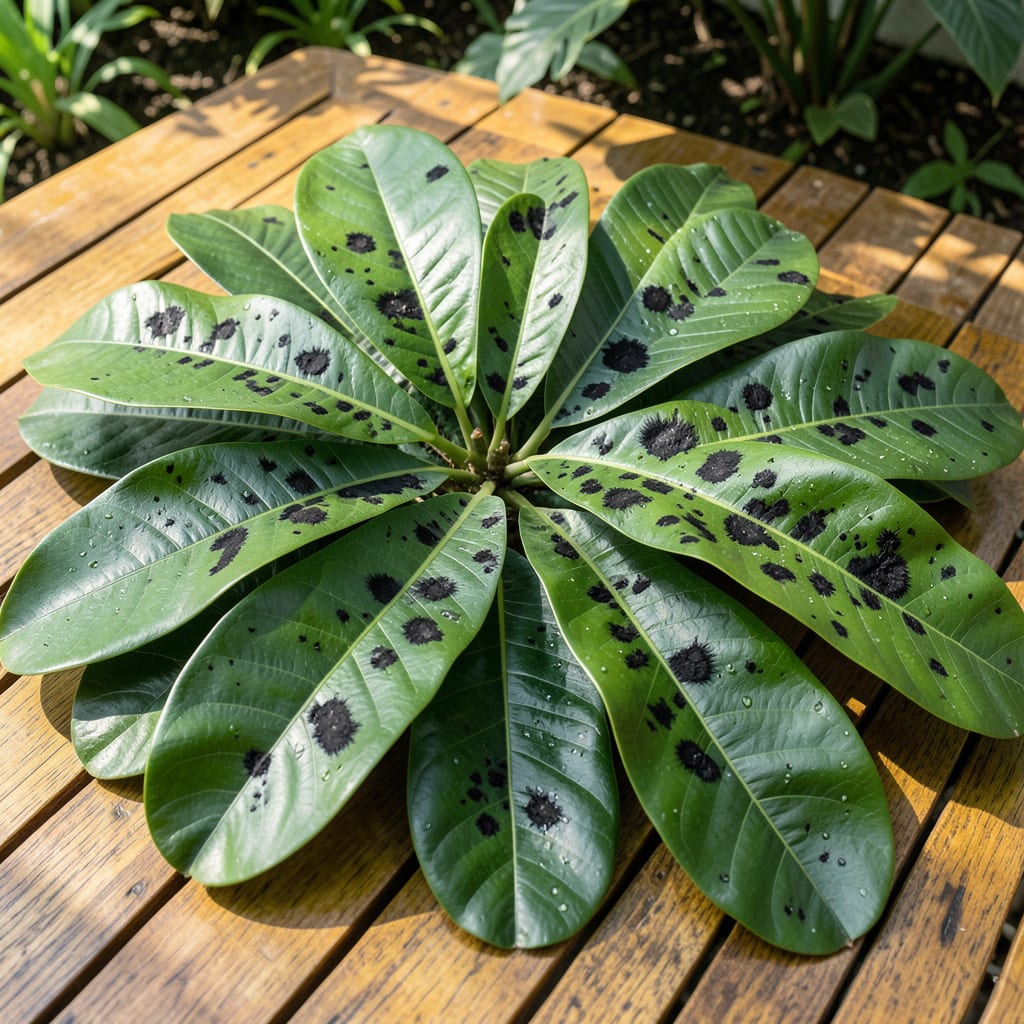
Those black spots on your plumeria leaves aren’t just unsightly—they’re a red flag. I’ve battled this exact issue in my own garden, and the solution starts with proper diagnosis.
Most cases trace back to sooty mold or fungal infections, often triggered by overhead watering or poor air circulation. Left unchecked, it spreads fast and weakens the plant’s vigor.
With the right approach, you can clear it up in 2-3 weeks. The fix involves simple adjustments to watering, airflow, and a targeted treatment for existing spots.
Works for potted or in-ground plumerias. Here’s how to restore those lush, spot-free leaves.
Black spots on plumeria leaves are typically a sign of underlying issues, often tied to environmental stress, pests, or pathogens. Here’s a breakdown of the most common causes:
Fungi like Alternaria or Phyllosticta thrive in warm, humid conditions, leading to dark, irregular spots. These pathogens spread via water splashes or contaminated tools. Overhead watering and poor air circulation exacerbate the problem.
This black, powdery coating is a secondary issue caused by honeydew—a sticky substance excreted by pests like aphids, mealybugs, or scale insects. The mold itself doesn’t directly harm the plant but blocks sunlight, weakening the leaves over time.
Excessive moisture from overwatering or poor drainage can stress the plant, making it susceptible to infections. Conversely, drought stress or nutrient deficiencies (e.g., potassium or magnesium) may also trigger leaf discoloration.
Bacteria such as Xanthomonas can cause water-soaked lesions that turn black. These spots often have a yellow halo and spread rapidly in wet, crowded conditions.
Identifying the root cause is key to treatment—inspect leaves closely and adjust care practices accordingly.
Tackling black spots on plumeria leaves starts with identifying the cause. Below are targeted fixes paired with prevention tips to keep your plant thriving.
Fix: Wipe leaves gently with a damp cloth dipped in mild soapy water (1 tsp dish soap per quart of water). For stubborn cases, use neem oil spray (mix 1 tbsp neem oil + 1 tsp dish soap + 1 quart water) every 7–10 days until resolved. Rinse leaves afterward to avoid residue.
Prevention: 💡 Control sap-sucking pests like aphids or scale, as they excrete honeydew that feeds sooty mold. Inspect leaves weekly and treat pests promptly with insecticidal soap.
Fix: Remove infected leaves and discard them (do not compost). Apply a copper-based fungicide or a baking soda solution (1 tsp baking soda + 1 quart water + a few drops of dish soap) to the remaining foliage. Repeat every 10 days until spots disappear.
Prevention: 🌡️ Improve air circulation around the plant by spacing it properly and pruning dense growth. Water at the base to keep leaves dry, and avoid overhead watering.
Fix: Let the soil dry out completely between waterings. Repot the plumeria in well-draining soil (mix 50% potting soil with 50% perlite or sand) and ensure the pot has drainage holes.
Prevention: ✨ Use a moisture meter to check soil dryness before watering. Stick to a consistent schedule—plumerias prefer slightly dry conditions over soggy roots.
Fix: Fertilize with a balanced, water-soluble fertilizer (10-10-10 or 20-20-20) every 2–4 weeks during the growing season. For magnesium deficiency (yellowing with black spots), add 1 tbsp Epsom salt to a gallon of water and spray foliage monthly.
Prevention: 🎯 Test soil annually and adjust fertilizers based on results. Avoid over-fertilizing, which can burn roots and worsen stress.
Fungal spots are irregular with fuzzy edges, while pest-related spots often appear with sticky residue or visible insects. Sooty mold looks like black dust and wipes off easily.
Yes, with proper care most plumerias bounce back in 2-3 weeks. Remove damaged leaves and maintain good airflow to speed up recovery.
A baking soda solution or neem oil spray works well for mild cases. For severe infections, copper fungicide may be needed.
Overhead watering is the top culprit—it spreads spores and keeps leaves wet. Always water at the base in the morning.
