
Beautiful Plants For Your Interior
Beautiful Plants For Your Interior
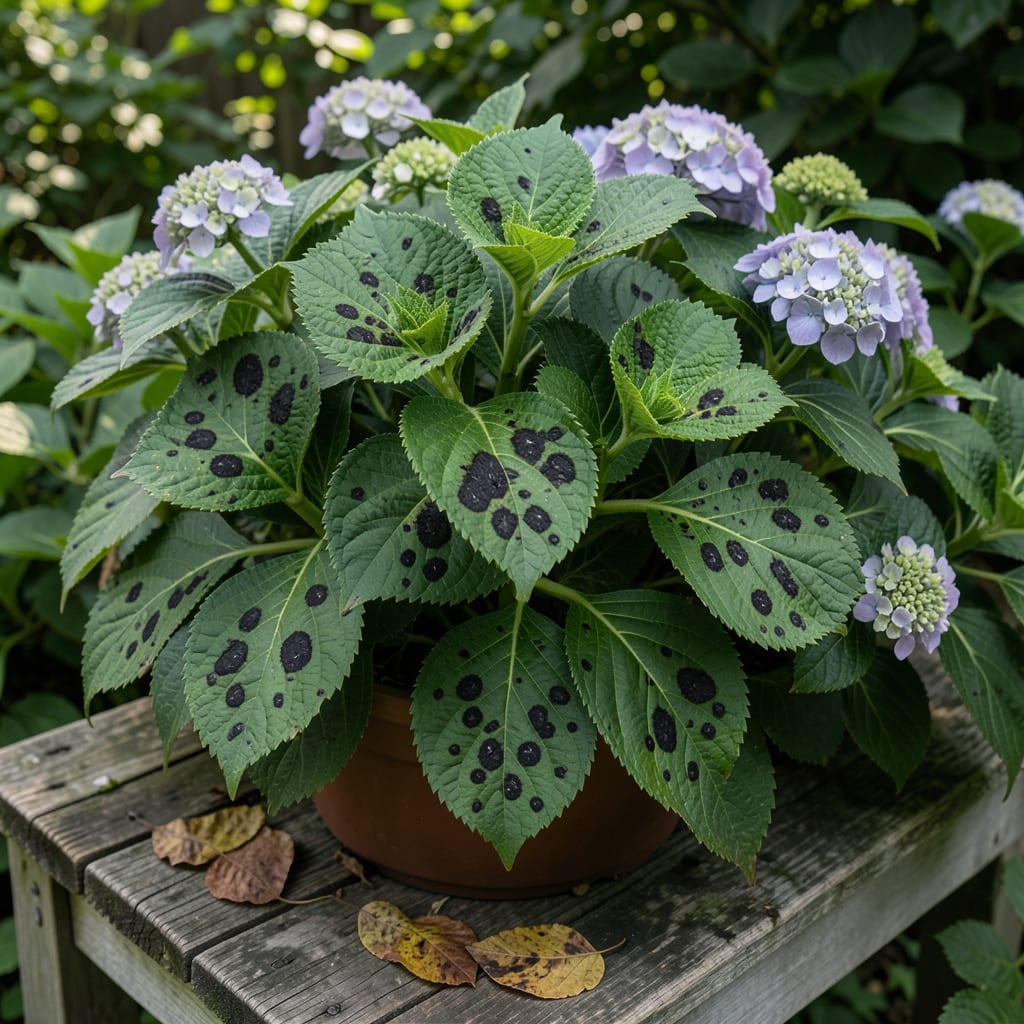
Those black spots on your hydrangeas aren’t just ugly—they’re stealing your plant’s energy. I lost two bushes before figuring out the pattern: it’s almost always a fungal party crashing on wet leaves.
The usual suspects are anthracnose or leaf spot, thriving in humid, crowded conditions. Overhead watering and poor air flow roll out the welcome mat. My hydrangeas cleared up within 2 weeks once I adjusted these.
Organic fixes work surprisingly well. Neem oil, baking soda spray, or simply removing affected leaves can stop the spread. Prevention is easier than cure, and it starts with morning watering and proper spacing.
Healthy hydrangeas bounce back fast. With the right approach, you’ll see clean, vibrant leaves returning by next blooming cycle.
Black spots on hydrangea leaves and stems are almost always a sign of fungal infection. Several pathogens thrive in the moist, shaded conditions hydrangeas love, and once they take hold, they spread quickly. Below are the most common fungal culprits and why they appear:
Cercospora species produce small, circular black or purple-brown spots with lighter centers. This fungus overwinters in plant debris and releases spores in warm, wet weather (60–80°F). Poor air circulation and overhead watering create the perfect environment for spores to germinate and infect new foliage.
Colletotrichum and Gloeosporium fungi cause irregular, sunken black spots, often with yellow halos. These pathogens spread via splashing water—heavy rain or sprinklers can carry spores from infected soil or plant debris to healthy leaves. High humidity and crowded plantings accelerate the disease.
Septoria infections start as tiny, water-soaked spots that darken to black. The fungus thrives in consistently wet foliage, especially in gardens with poor drainage or dense canopies. Unlike Cercospora, Septoria spots often merge, forming large necrotic patches.
While fungi are the direct cause, environmental stressors weaken hydrangeas and make them more susceptible. Overhead watering, lack of pruning (which reduces airflow), and excess nitrogen (promoting tender, fungus-prone growth) all contribute to the problem. Shade-loving hydrangeas planted in full sun may also develop stress-related spot outbreaks.
Black spots on hydrangea leaves are usually easy to treat once you identify the cause. Below are targeted solutions for the most common culprits, along with simple prevention tips to keep your plants healthy.
Fix: Remove and destroy affected leaves to stop the spread. Apply a copper-based fungicide or a DIY mix of 1 tsp baking soda + 1 quart water + a few drops of dish soap every 7–10 days until spots disappear. For severe cases, use neem oil (mix 2 tbsp per gallon of water) and spray evenly, especially on leaf undersides.
Prevent: Improve air circulation by spacing plants 3–4 feet apart. Water at the base (not overhead) in the morning so foliage dries quickly. 💡 Pro tip: Mulch with straw or pine needles to prevent soil splashing onto leaves.
Fix: Let the soil dry slightly between waterings. If the plant is in a pot, ensure it has drainage holes. For soggy garden soil, amend with compost or sand to improve drainage. Trim any blackened, mushy roots and repot if necessary.
Prevent: Use a moisture meter to check soil before watering—hydrangeas prefer moist but not soggy conditions. Raise pots off the ground to avoid waterlogging.
Fix: Move potted hydrangeas to a spot with dappled sunlight or morning sun only. If leaves show scorching (brown/black edges), provide afternoon shade. For transplant shock, keep soil consistently moist and avoid fertilizing for 2–3 weeks.
Prevent: Acclimate plants gradually to new conditions. Use shade cloth during heatwaves, and group pots together to increase humidity.
Fix: Blast aphids or mites off with water, then apply insecticidal soap or neem oil. For slugs/snails, set up beer traps or sprinkle diatomaceous earth around the base.
Prevent: Inspect leaves weekly for pests. Encourage natural predators like ladybugs by planting companion flowers (e.g., marigolds) nearby.
Yes, fungal spores can travel via wind or splashing water to nearby plants. Keep infected hydrangeas isolated and avoid overhead watering to prevent spreading.
With consistent fungicide or neem oil applications, you should see improvement in 1-2 weeks. Full recovery may take a full growing season.
Remove only severely affected leaves to improve air circulation. Minor spots can be treated without pruning. Always sanitize pruners between cuts.
It may produce fewer blooms as it focuses energy on recovery. Maintain consistent care and you’ll see normal flowering return next season.
